
 E-Paper



Economy, security two main pillars for India-UK cooperation in Indo-Pacific
India, Britain can come together to offer alternative sources of transparent financing for infrastructure projects and to roll out new technologies such as 5G, people familiar with the matter said


Economy and security are set to be the two main pillars for cooperation between India and the UK in the Indo-Pacific against the backdrop of concerted efforts by the global community to counter China’s assertiveness across the region.
With virtually no country capable of matching China’s deep pockets in terms of cheap financing for its Belt and Road Initiative (BRI), India and the UK can come together to offer alternative sources of transparent financing for infrastructure projects and to roll out new technologies such as 5G, people familiar with the matter said on condition of anonymity.
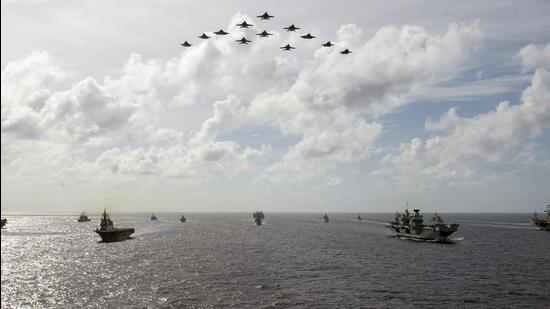
In the realm of maritime security, the UK plans to have a persistent presence in the western Indian Ocean by deploying two offshore patrol vessels in the region from 2022 and a littoral defence group, based around amphibious vessels, from 2023, the people said. These deployments will be centred round the British naval base at Duqm in Oman.
The UK also has a military presence at four more locations in and around the Indian Ocean – Kenya, Diego Garcia, Brunei and Singapore.
Also Read: The Pakistan factor: Why India, China ties remain challenging since 1971
There are also plans for more complex naval exercises and joint training to build inter-operability between the navies of the two countries. In June, the UK posted a liaison officer at the Indian Navy’s Information Fusion Centre for the Indian Ocean Region in Gurugram, a facility that tracks shipping in the region and monitors security threats.
In keeping with an “Indo-Pacific tilt” in its integrated defence and foreign policy review published earlier this year, the UK is looking to work with trusted partners such as India and the Association of Southeast Asian Nations (Asean) both to secure its presence in the region and to put in place security arrangements that ensure sea trade routes remain free and open.
The people cited above said such maritime security arrangements are essential in view of potential flashpoints in the Indian Ocean and the South China Sea.
These arrangements will also build on work done together by India and the UK in regions such as the western Indian Ocean, where the two countries have collaborated in countering piracy.
The Aukus alliance forged by the US, the UK and Australia reflects the commitment of these three countries to ensure that the seas remain open and secure by providing Australia nuclear-powered submarines.
Despite the negative fallout from the Aukus alliance because of Australia’s cancellation of a lucrative contract with France for conventional submarines, the people noted that there was a deep level of trust between the UK and France, which is reflected in their security, intelligence and counterterrorism cooperation.
The people said the Indo-Pacific has become the focus of interest for the international community because of the dynamic growth of trade in the region. At the same time, the region has become more contested and there is a need to secure and keep open maritime trade routes, they said.
Even as countries in the region work to make supply chains more diverse and resilient, India and the UK can also work together to exploit opportunities for rolling out trusted technologies in areas such as 5G, the people said.
In terms of countering China’s role in infrastructure projects through the BRI, the people pointed to the potential for the UK and India to work together on the US-led Build Back Better World (B3W) initiative, including offering alternative sources of financing to Indian Ocean region countries.
In this context, they noted the new India-UK Partnership on Infrastructure Policy and Financing, which will help catalyse private finance flows into India’s National Infrastructure Pipeline (NIP), and the UK’s plans to invest $1.2 billion in green projects and renewable energy in India.
Though there are occasional disagreements between the two sides – such as India’s concerns about the activities of pro-Khalistan elements in the UK and a recent row on Covid-19 vaccine certificates – these are outweighed by the strong cooperation in key areas such as trade and defence and the top leadership in both countries has also thrown its weight behind transforming the bilateral relationship, the people said.


