
 E-Paper



Ecostani: Himalayas need uniform scientific norms for sustainable development
State governments have adopted a fragmented approach, with planning based on local political pressures and haphazard bureaucratic decision-making

 Prefer HTon Google


The cloudburst intensity in the Himalayas, especially in the north-western parts, appears to have increased in recent decades, causing widespread destruction and loss of lives and property. Unplanned and unscientific development in the most vulnerable Himalayan regions has massively contributed to this. There is no holistic developmental approach. State governments have adopted a fragmented approach, with planning based on local political pressures and haphazard bureaucratic decision-making.
Science has rarely played a role in defining the developmental paradigm of the Himalayan states. Geological or environmental impact studies are not typically required for approval of most road construction projects. In cases where they are, as in the Char Dham road construction project, the Central government divided the projects into components to avoid the mandatory environmental impact assessment.
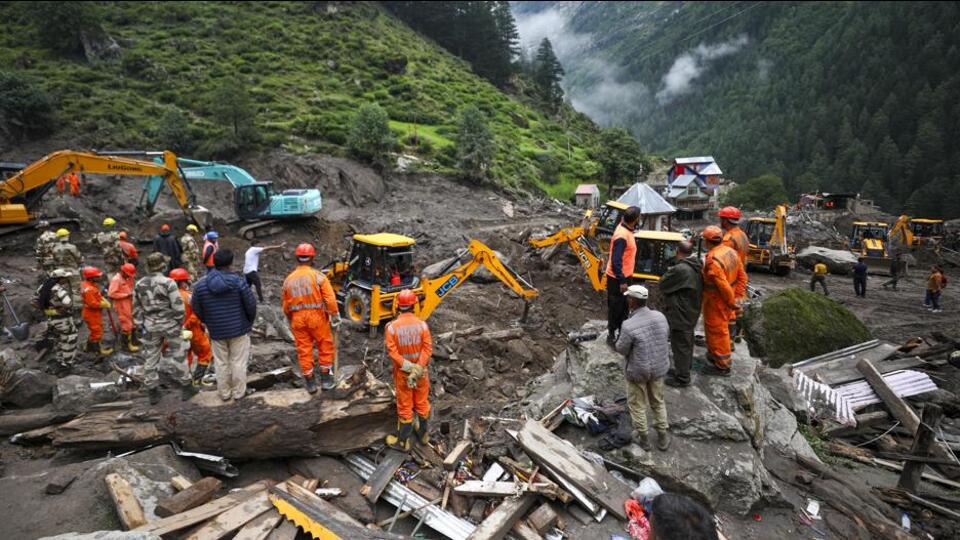
The fallout is clear in repeated landslides, flash floods, and deforestation along the highway. Dharali in Uttarakhand’s Uttarkashi district, which suffered a glacial lake burst-induced flash flood this month, is also on the Char Dham highway route.
The state governments have failed to control the unplanned development along the now expanded highways. Hotels, resorts, and homestays have mushroomed across the Himalayan belt to cater to the ever-increasing tourist inflow. There are no norms on what sort of buildings should come up in the ecologically sensitive Himalayan belt outside the municipal limits.
The use of heavy earth-moving machinery has become rampant for road widening and the construction of buildings. Floodplain management is almost non-existent in the Himalayan region. In both Dharali and Chisoti, the scene of the cloudburst in Jammu and Kashmir, buildings had come up in the floodplains. The swollen rivers flooded the floodplains amid heavy rainfall. Dams have also accentuated siltation in the Himalayan rivers.
In Chisoti, a pilgrim camp was built by flattening a floodplain. No lessons were learnt from the tragedy that struck when a cloudburst hit a pilgrim camp built on the dried part of a riverine for the Amarnath Yatra in 2022. There are multiple instances of flash floods causing havoc in the floodplains across the Himalayan region.
There have hardly been any studies to identify the vulnerable or no-go areas for any developmental activities in the region. Efforts to identify such areas may face resistance from local populations, who believe that the demarcation of no-go areas could hamper their economic activity. Those who may support the demarcation would be in a small minority, as political parties accentuate the fear of loss among locals for their vested interests.
A Union science and technology department vulnerability study of the Himalayas in 2018-19 found that most of the districts in the region are highly vulnerable to natural disasters. The vulnerability is not only because of climate change but also due to population pressure.
From 2013 to 2022, the Himalayan region experienced 44% of all the disasters in the country, according to a Centre for Science and Environment study. The region suffered 192 floods, landslides, and thunderstorms. The report cautioned that cloudbursts in 2022 and 2023 were a precursor to more such disasters.
The Himalayan region is facing a higher temperature rise compared to the rest of India. An Intergovernmental Panel on Climate Change (IPCC) report said the average rise in temperature at the national level was 1.5°C. The rise was 2.5°C in the Himalayan region, which has lost over 40% of its ice. The region is likely to lose up to 75% of the ice by the end of this century.
As much as 90% of Himalayan agriculture is rain-fed. The loss of ice will make it difficult to sustain the livelihoods in the region and continue to endanger the lives of those in the plains who depend on water from the Himalayas, the IPCC report said.
As many as 1,297 people died due to flash floods until July 31, 2025, compared to 1,287 in 2024 and 862 in 2023. In August, over 100 people died in flash floods in Uttarakhand and Jammu and Kashmir. Experts believe that the number will go up in the years to come.
Studies show that extreme rainfall events are increasing in the Himalayan region. Data and scientific studies show a need for an integrated science-based Himalayan policy approach. A central ministry or a department could provide a holistic scientific and sustainable development for the ecologically sensitive Himalaya. It should have powers to direct the states to remove habitations from the flood plains, enforce uniform and science-based home and road construction norms, and help the states to adapt to climate change in a sustainable way.


