E-Paper



Elderly couple marry under Madhya Pradesh’s Kanyadan scheme, get ₹11,000
A 65-year-old woman married her 75-year-old live-in partner in Madhya Pradesh’s Satna district, becoming the oldest beneficiaries of the state government’s scheme that offers ₹11,000 monetary aid and gifts worth ₹34,000 to a poor woman on her marriage


Bhopal/Satna: A 65-year-old woman married her 75-year-old live-in partner in Madhya Pradesh’s Satna district, becoming the oldest beneficiaries of the state government’s scheme that offers ₹11,000 monetary aid and gifts worth ₹34,000 to a poor woman on her marriage.
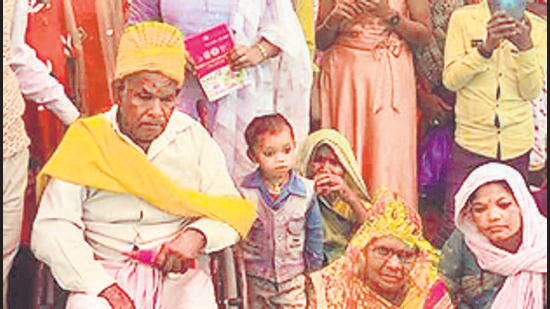
According to government officials, the elderly couple, Bhagwandin (75) and Mohania (65) — both residents of Deori village —got married under the Mukhyamantri Kanyadan Scheme, which was introduced for marriage of poor couples.
Ramkhelawan Patel, the minister of state for panchayat and rural development, handed over the money and household items worth ₹34,000 to the elderly couple on Thursday.
“A total of 130 couples got married in Deori on Thursday but I am happy to see the marriage of this elderly couple,” said Patel. “They broke all the records and shunned social stigma that there is no age bar for marriage.”
Bhagwandin, who is specially abled by birth, was married for 50 years and did not have any children. His wife died 11 years ago. This was Mohania’s first marriage. They were in a live-in relationship for the past few years, said villagers, adding the woman was taking care of Bhagwandin.
“The villagers wanted to give a name to our relationship, so we agreed to marry,” said Mohania. “We are happy now.”
Omkar Singh, Deori panchayat secretary, said the villagers persuaded the two to get married. As Bhagwandin was unable to take pheras due to physical limitations, village youths carried him in their arms for marriage rituals, said Singh.
“The couple was living together and their relationship was a very pious one, so we asked them to get married,” said Ramesh Kumar Patel, a local resident. “The couple didn’t have much money and they did not have any relatives to make arrangements for the marriage, so we registered them under the Mukhyamnatri Kanyadan Scheme.”
(With inputs from Amit Singh)