
 E-Paper



Electoral funding: The big money game
Speaking at the Times Now Summit 2024, Union finance minister Nirmala Sitharaman said she declined the offer to contest the 2024 Lok Sabha polls as she does not have ‘that kind of money’

 Prefer HTon Google


Elections cost money and that’s not a secret. But when Union finance minister Nirmala Sitharaman said she declined the Bharatiya Janata Party (BJP) president JP Nadda’s offer to contest the upcoming Lok Sabha elections from Tamil Nadu or Andhra Pradesh citing lack of money, it reiterated the gravity of electoral funding.
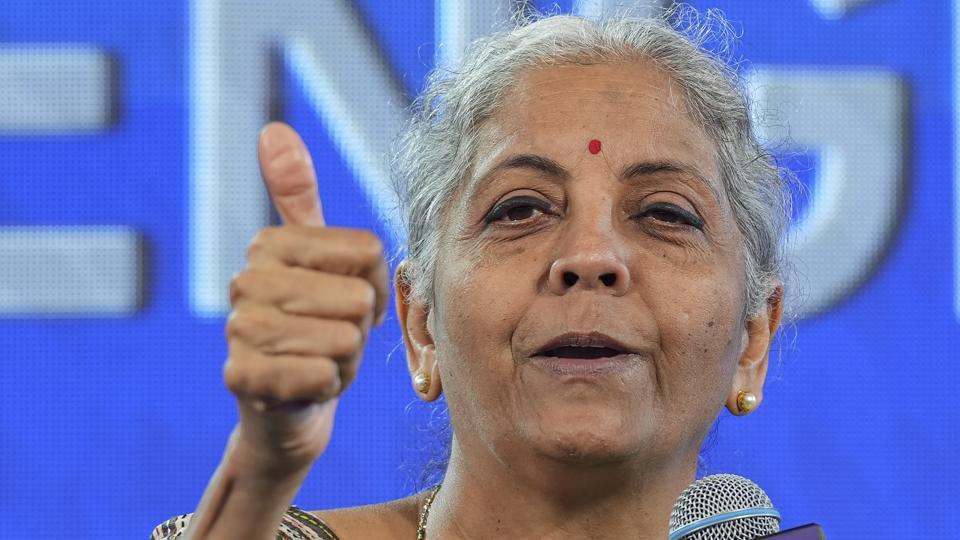
Speaking at the Times Now Summit 2024, the minister said that she declined the offer after she was given the choice to contest from two states.
“After thinking over a week or 10 days, I just went back to say...maybe not. I do not have that kind of money to contest.” In a lighter vein she also added that the Consolidated Fund of India does not belong to her.
Although there are stringent rules in place to check the misuse of money in elections, the spending by parties and candidates individually has been a cause of concern for the Election Commission of India (ECI). The poll panel’s limits on spending by parties for Lok Sabha and Assembly polls are not adhered to, as parties find ingenuous ways of justifying spending over the prescribed cap.
In the last set of assembly polls held in November-December 2023 — Mizoram, Madhya Pradesh, Chhattisgarh, Rajasthan and Telangana — the ECI declared seizures over ₹1,760 crore, which was more than 7 times the seizures made in previous assembly elections in these states in 2018.
In 2016, polls in two assembly constituencies of Thanjavur and Arvakurichi in Tamil Nadu had to be rescheduled thrice for violation of rules by parties that were found guilty of using money and freebies. This was the first time that the poll panel took the decision to defer polls after glaring misuse of money to impact elections came to light.
Distribution of cash and freebies during the electoral process with the intent to influence voters is defined as “bribery” under election rules and is a punishable offence.
Taking cognisance of the loopholes that parties and candidates leverage to woo voters, there have been suggestions from former election commission officials, including former chief election commissioners (CEC), to curb the influence of illegal money and allow state funding of elections.
The suggestion was first made by the Indrajit Gupta Committee, which said that state funding will offer a fair playing field for parties with less money. The Law Commission in its 1999 report agreed to the suggestion, but with a caveat that state funding of elections is “desirable” if political parties are prohibited from taking funds from other sources.
Former CEC TS Krishnamurthy suggested the setting up of a national election fund to check the use of illegal money and said donations to political parties should be stopped and all expenses banned.
In 2021, the election commission set up a committee headed by Harish Kumar, an ex-IRS official, to submit a report on how expenditure limits can be controlled and monitored. Following the demand from political parties to raise existing election expenditure limit for candidates, the poll panel agreed in 2022 to enhance the existing election expenditure limit for candidates.
For Parliamentary constituencies, the limit was increased from ₹70 lakh to ₹95 lakh for bigger constituencies with more voters, and from ₹54 lakh to ₹75 lakh for smaller constituencies. For assembly constituencies, it was revised from ₹28 lakh to ₹40 lakh and ₹20 lakh to ₹28 lakh, respectively, depending on the size and population of the constituencies.
For the general elections beginning April 19, the poll panel is rolling out the election seizure management system to check the misuse of money. It is a platform where enforcement agencies including the police, banks, Income Tax department, Excise department, Indian Railways, airports and other departments, will together share information of their activities pertaining to elections in real time for better coordination and intelligence-sharing.


