
 E-Paper



Ex-Indian diplomat raises concerns on Trump's H-1B visa fee hike: ‘Tax on trust’
Former Indian diplomat Syed Akbaruddin termed the $100,000 visa fee a barrier on “bridge of talent”.

 Prefer HTon Google


Criticising the $100,000 fee imposed by the US administration on H-1B visa petitions, former Indian diplomat Syed Akbaruddin termed it a tax on trust as he warned that the move would damage the goodwill sahred by India and the US.
Akbaruddin, former Indian Permanent Representative to the United Nations, said that the fee hike on H-1B visa is a barrier on a “bridge of talent” saying that taxing skilled migration harms both nations and could drive opportunities elsewhere.
"We must acknowledge that the H-1B visa is a win-win for both sides. Indian engineers saw that as a ladder to global careers and a number of Indians have followed that route and today are in important positions in the US. For American firms, it was also a lifeline to skills they cannot always find at home. H-1B was a bridge between the US and India. However, today, it's not seen as a ladder, but it's seen as a loophole," Akbaruddin told ANI.
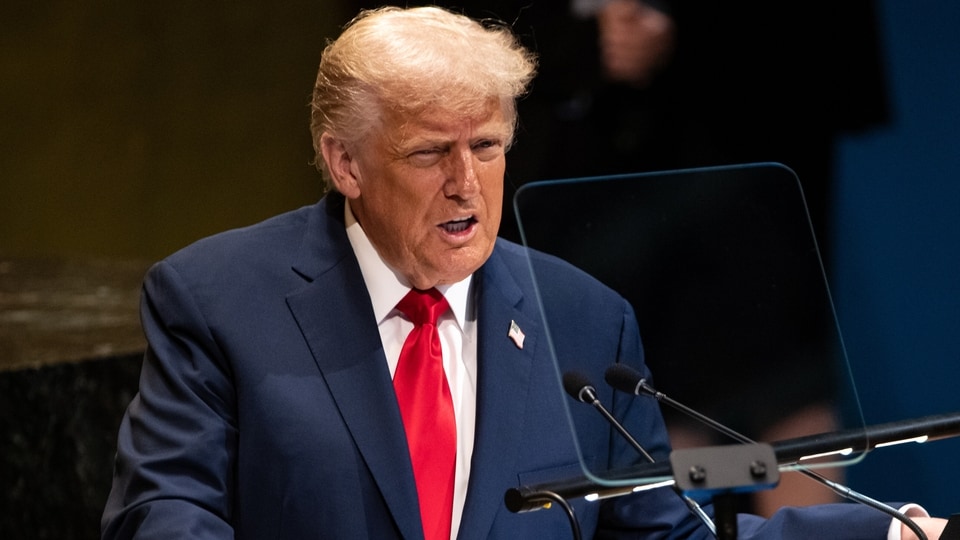
US President Donald Trump last week signed a proclamation imposing a steep fee of $100,000 on H-1B visa petitions, a move that impacts the Indian community the most as they comprise over 70 per cent of H-1B visa holders in the US.
"Taxing talent is a race we will both lose. Partners don't choke talent. They actually channelise talent. A USD 100,000 toll on a bridge of talent will hurt both sides of that bridge. It's not one side. And public goodwill is perishable. And we need to handle dreams of young people very carefully. If tariffs are a tax on goods, this toll on H-1B is a tax on trust," he said.
Akbaruddin said that the H-1B visa programme benefitted Indian talent and the US society. “Thousands of young Indians who have bridged the difference between India and the US have benefited and so has US society,” he said.
As per the new order, the new visa fee applies to petitions filed after September 21, 2025. Under the proclamation, a $100,000 payment must accompany every new H-1B visa petition filed after the deadline, including entries in the 2026 lottery.
The former Indian diplomat said that Indian Global Capability Centres (GCCs) could be a “home-shoring solution” and could absorb returning talent and boost exports.
"Global Capability Centres (GCCs) can become India's H-1B visa... Because if you do not allow talent to go out, then work will come inside and talent will migrate here. We need to look at it not as a loss, but as a need to recalibrate... We need to seize the immediate threat that is gone because now they [US] have said that this will only start applying from the next review, which is somewhere in March... If America is hesitating to take talent, Bengaluru should take it, or Canada will take it. Talent will go where opportunity is. And therefore, we need to look at this and plan for the opportunity which is coming," he said.
"Today, 68 billion exports go out from GCCs in India. And the prediction is that by 2030, this will become about 128 billion. And they say that the median salaries for these centres are about equivalent to what is Germany's per capita income. You can see how these centres are progressing. They are about 1400 or so right now. And the prognosis is that by 2030, these will become 2400," he said.
He stressed a "come home to build" policy, adding, “GCCs need not be Swadeshi. They are companies which are working globally. It is global and local combined. We need to understand that India has to plug into global value chains and global capability centres, but talent is our own. It has to be a mixture of our human resources and investment and innovation coming from outside.”
(With ANI inputs)


