E-Paper



Expect a chilly winter, higher than normal cold wave days: IMD
Spatial maps indicate that parts of Haryana, Rajasthan, Delhi and Gujarat are expected to record below normal temperatures.

 Prefer HTon Google


New Delhi: Expect a chilly winter as higher than normal cold wave days are expected to impact parts of central India as well as some regions in northwest and northeast India, according to the India Meteorological Department (IMD). The polar vortex (explained below) is expected to drive down temperatures over these regions, officials said.
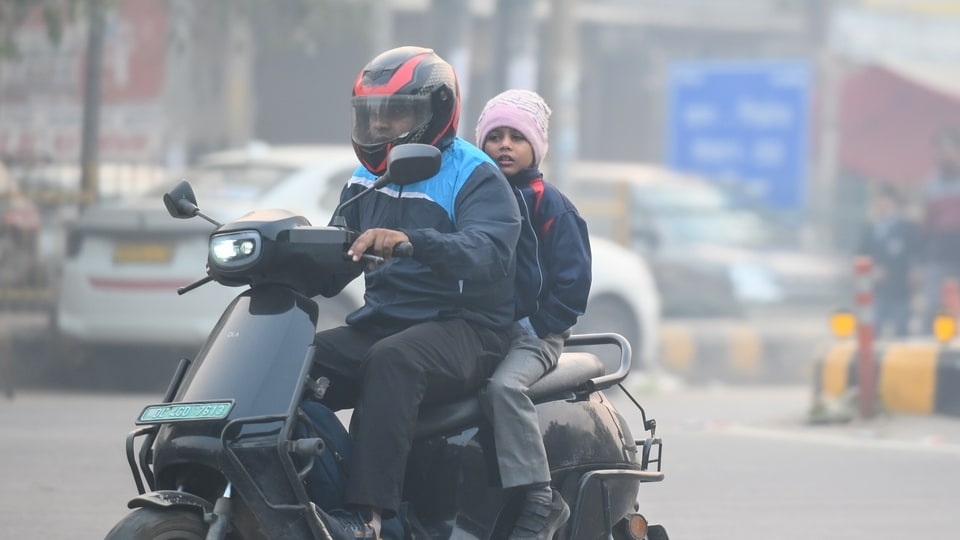
Spatial maps indicate that parts of Haryana, Rajasthan, Delhi and Gujarat are expected to record below normal temperatures.
There is likely to be one to four or more cold wave days over these regions during December to February next year compared to normal average, IMD said. Normally five-six days of cold wave are expected over NW India during these three months.
A cold wave is declared if the minimum temperature is less than about 90% daily temperatures recorded and minimum is less than 15 degree C. This condition should prevail for three consecutive days to be declared as a cold wave event.
Further, normal to below-normal minimum temperatures are likely over most parts of central India and adjoining peninsular and northwest India while above normal minimum temperatures are likely over the remaining parts of the country, IMD has projected.
During December, normal to below-normal monthly minimum temperatures are likely over most parts of central and northwest India, northern parts of peninsular India. Maximum or day temperatures during December are likely to be above normal over most parts of the country except many areas of central India and adjoining northwest and peninsular India, where normal to below maximum temperatures are likely, IMD has said.
Monthly rainfall over the country as a whole during December is most likely to be normal (79- 121 % of the long-period average (LPA)). Above-normal rainfall is expected over many areas of peninsular India and west-central India, as well as parts of east-central and northeast India. The rest of the country is expected to record below normal rainfall.
Polar vortex
The polar vortex modulation-influenced temperatures over northwest and central India in November is expected to lead to largely below normal temperatures. The polar vortex along with La Nina conditions are expected to lead to very cold conditions through the next three months, officials said.
“Below normal temperatures and cold wave conditions over Madhya Pradesh had something to do with the polar vortex and the La Nina conditions. Now again the polar vortex has started impacting,” said OP Sreejith, scientist and head, Climate Monitoring and Prediction Group, IMD.
The polar vortex is a large area of low pressure and cold air surrounding both of the Earth’s poles. It always exists near the poles, but weakens in summer and strengthens in winter, according to the National Oceanic and Atmospheric Administration.
“The forecast is based on a dynamical system. Not many western disturbances are expected over the winter period this time and La Nina will have an impact,” added M Mohapatra, director general, IMD,.
La Niña is favoured to continue into the Northern Hemisphere winter, with a transition to ENSO-neutral most likely in January-March 2026 (61% chance), according to IMD.
La Niña refers to the periodic large-scale cooling of the ocean surface temperatures in the central and eastern equatorial Pacific Ocean, coupled with changes in the tropical atmospheric circulation, including changes in winds, pressure and rainfall patterns. Typically, La Niña brings climate impacts that are the opposite of El Niño, especially in tropical regions. La Nina is associated with harsh winters in India.
During November, normal to below normal minimum temperatures were experienced over most parts of the country except many areas over Northeast India and Peninsular India. In November, there was a 42.8% rain deficiency over the country with 78.1% deficiency over NW India; 8.9% excess over east and northeast India; 51.3% deficiency over central India; 43.6% deficiency over South Peninsula.