E-Paper



Experts say monsoon weak, running behind schedule
By June 10, the monsoon usually covers cover large parts of Maharashtra, Telangana and Andhra Pradesh.


New Delhi: The monsoon is running several days behind schedule in covering peninsular India and is in the midst of a so-called weak phase, a potential cause for concern for farmers who are waiting to sow their crops, experts said on Wednesday. By June 10, the monsoon usually covers cover large parts of Maharashtra, Telangana and Andhra Pradesh. This year, it has so far covered most parts of Tamil Nadu, Kerala and south interior Karnataka. It has also covered almost all of northeast India.
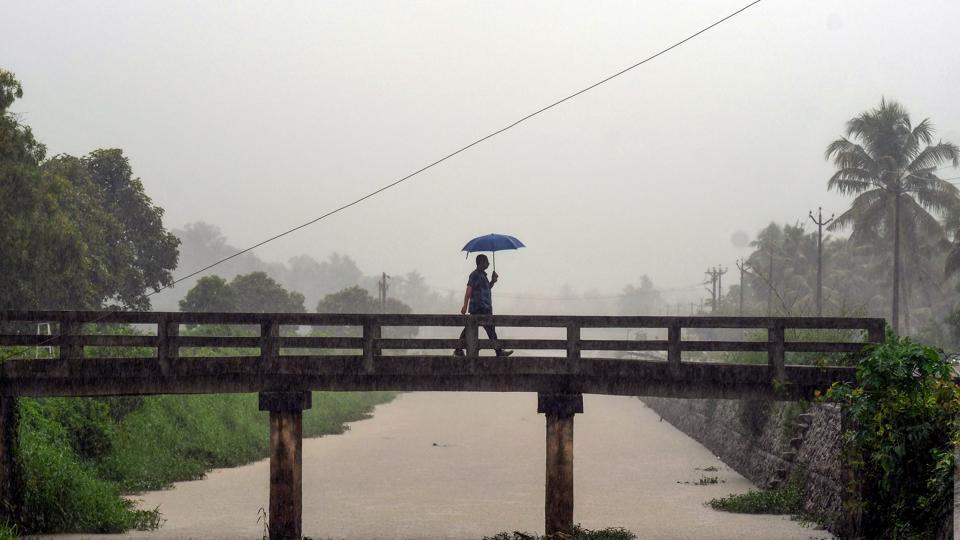
On Wednesday, IMD did not provide an outlook on whether the monsoon will advance further over the next few days. “There is almost a 5-7 day delay in the progress of the monsoon. It is presently in a weak mode. Monsoon moves in bursts, sometimes it’s in a weak phase while sometimes it’s in vigorous phase. If a low-pressure area forms over Bay of Bengal in the next few days, then it will propel the monsoon. But we are not seeing any chances of such a low-pressure area developing. Slow monsoon progress may affect sowing but normally most states have a large window with time up to July 15 for sowing,” explained DS Pai, director of Institute of Climate Change Studies and former climate scientist at IMD Pune.
However, IMD denied the monsoon is in a weak phase. “We cannot say that the monsoon is in a weak phase. Wherever monsoon has arrived, there has been excess rainfall except Kerala. We are expecting a cyclonic circulation to form over Arabian Sea which will help the monsoon move forward,” said M Mohapatra, director general, IMD.
The monsoon rains are critical this year because northwest and central India are experiencing a very prolonged extreme heat and dry spell which started in March. The monsoon season, which begins on June 1, is crucial for summer crops and accounts for about 70% of India’s annual rainfall. It is especially critical to the country’s agriculture, which is one of the mainstays of its economy. A good monsoon spurs farm produce and improves rural spending. Monsoon rains are a lifeline for about 60% of the country’s net cultivated area that has no irrigation. The monsoon impacts inflation, jobs, and industrial demand.
IMD’s initial forecast of a robust monsoon onset around May 27 raised hopes for a good and early sowing but after a robust onset over Andaman and Nicobar region on May 16, monsoon went into a lull from May 20 to 26. IMD declared its onset over Kerala on May 29, three days ahead of its normal date on June 1 but experts said it may have jumped the gun as the rainfall criterion for monsoon onset remained unmet on that day. Since May 29, the monsoon’s progress has not been robust. There is currently a 42% rain deficiency at the national level. Out of 36 subdivisions in the country, 22 have large deficiency (over 60% deficit) in rainfall.
Monsoon rainfall from June to September is likely to be “normal” at 103% of Long Period Average with a model error of +/-4%, IMD said on May 31. Rainfall across the country during June is likely to be normal (92 to 108% of LPA), IMD predicted.
“The progression of the monsoon over India is a battle between the dry summer air and moist monsoon winds. To win the battle, the monsoon must push away the dry air either on its own or with the support of the tropical intra-seasonal oscillation. For brevity, the tropical intraseasonal oscillation could be visualised as bands of clouds and rain that move northwards and eastwards from the equator. When they are not located over India, the dry air wins and the monsoon’s progress gets stalled. Currently, these bands are not present over the Indian region, so the monsoon is left alone in this battle,” explained Akshay Deoras, an independent meteorologist and doctoral researcher at the UK’s University of Reading.
“The Madden-Julian Oscillation (MJO), which is an important mode of the tropical intraseasonal oscillation, propagates eastwards along the equator. It is currently located over Africa, but models suggest that it will reach the Indian Ocean in the second fortnight of June, so rainfall activities in India will increase from the week commencing 13 June. During this week, we can expect the monsoon to reach states such as Goa, Maharashtra, Odisha, West Bengal and Bihar. The monsoon is not expected to reach Delhi-NCR before 20 June, but pre-monsoon thunderstorms will commence after 15 June. Overall, the rainfall situation for most of India during the second fortnight of June looks better than that during the first fortnight. However, below average rainfall is expected in most areas, including the monsoon core zone, until 20 June. So kharif sowing in the monsoon core zone will extensively depend on the monsoon’s performance in the second fortnight of June,” he added.