
 E-Paper



Family dispute mediation can further harm women facing violence: SC judge Nagarathna
SC judge BV Nagarathna said mediation in family disputes can be harmful for women facing violence, coercive control or a serious imbalance of power.

 Prefer HTon Google


New Delhi
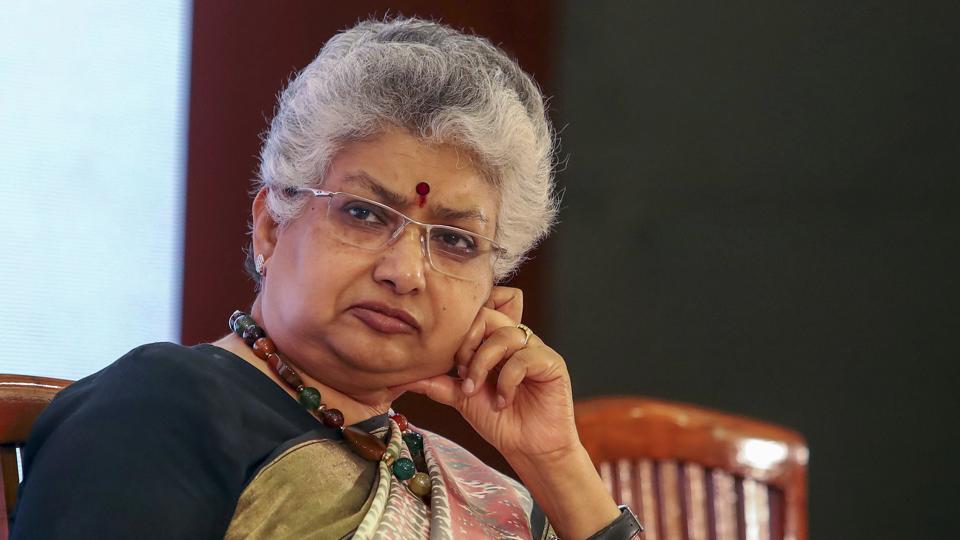
Supreme Court judge Justice BV Nagarathna on Saturday cautioned that mediation in family disputes could further traumatise women who are victims of violence, coercive control or a serious imbalance of power.
Speaking at a regional conference of the Supreme Court Committee for Family Court Matters in Guwahati, she said mediation cannot substitute adjudication and that a woman’s bargaining position is as worthy as her legal entitlement.
Sharing her views on “ADR versus Adjudication in Family Disputes”, Justice Nagarathna examined the issue from the perspective of women. She said mediation offers speed, privacy and confidentiality, allowing women to reach decisions on the return of stridhan, their children’s schooling and a lump-sum payment in place of instalments.
But in cases where women are victims of violence and suppression, the judge said, “I wish to emphasise that none of this applies where there is violence, coercive control or a serious imbalance of power. There, mediation is not merely inappropriate but could potentially be harmful or dangerous, and may result in further traumatisation.”
Justice Nagarathna, who is tipped to become the Chief Justice of India (CJI) in September next year, said, “Mediation is not meant to be substituted for adjudication and a woman’s bargaining position is worth precisely what her legal entitlement is worth.”
She said that family courts were never intended to be spaces that encouraged adversarial actions but now function as civil courts merely under a different name. Looking at the pendency of cases in these courts, the judge said that no party wants to litigate for years and would rather resolve disputes expeditiously.
Highlighting gaps in the existing mediation process, she proposed that in mediation of child custody cases and visitation rights, the focus should not be on getting a custody decree but on arriving at a “mediated parenting plan”. To achieve this goal, she proposed that a qualified child psychologist be attached to the mediation process rather than be consulted later for a report.
Stressing the need for “child-inclusive” mediation, the judge said that experience has shown that in a contested custody matter, the counsel for each parent is only seeking to establish that the other parent is unfit. “Is not a mediated parenting plan a better instrument than a custody decree,” the judge said, suggesting that a trained child psychologist must ascertain the views of the child and convey them to the parents during mediation.
Based on this, a parenting plan must be drawn up that could be reviewed by returning to the mediator. “The welfare of the child is paramount, and the rights of parents are subordinate to it. The difficulty is not with the principle. But, adversarial procedure is structurally ill-suited to serving it,” she said.
To ensure this is practical, Justice Nagarathna, who is Chairperson of the Supreme Court Committee for Family Court Matters, said that the 820-odd family courts across the country should be provided with a permanent, qualified counselling and mediation unit, with psychologists and social workers on the regular establishment rather than on annual contracts.
She also talked of integrating technology to enable remote hearings and online mediation through videoconferencing to provide convenience to litigants accessing mediation.
Dealing with yet another vulnerable section of society — the elderly — Justice Nagarathna stated that for cases under the Maintenance and Welfare of Senior Citizens Act, 2007, every District Legal Services Authority must constitute a dedicated geriatric mediation panel, drawn from persons trained in ageing and dependency rather than the general panel. This should also have an outer limit for completing a mediation process corresponding to the 90 days the statute promises.
Other Supreme Court judges, including Justices Ujjal Bhuyan and NV Anjaria, are attending the two-day regional conference along with chief justices of the Eastern Zone high courts, namely the high courts of Calcutta, Jharkhand, Manipur, Meghalaya, Orissa, Patna, Sikkim and Tripura.


