
 E-Paper



Fight over Shiv Sena only between Uddhav, Shinde: Election Commission to Supreme Court
The Election Commission of India on Wednesday told the Supreme Court that the dispute over Shiv Sena’s name and bow-and-arrow symbol should be fought only between Maharashtra chief minister Eknath Shinde and his rival Uddhav Thackeray as the poll body already discharged its quasi-judicial duty of determining the issue.

 Prefer HTon Google


The Election Commission of India (ECI) on Wednesday told the Supreme Court that the dispute over Shiv Sena’s name and bow-and-arrow symbol should be fought only between Maharashtra chief minister Eknath Shinde and his rival Uddhav Thackeray as the poll body already discharged its quasi-judicial duty of determining the issue.
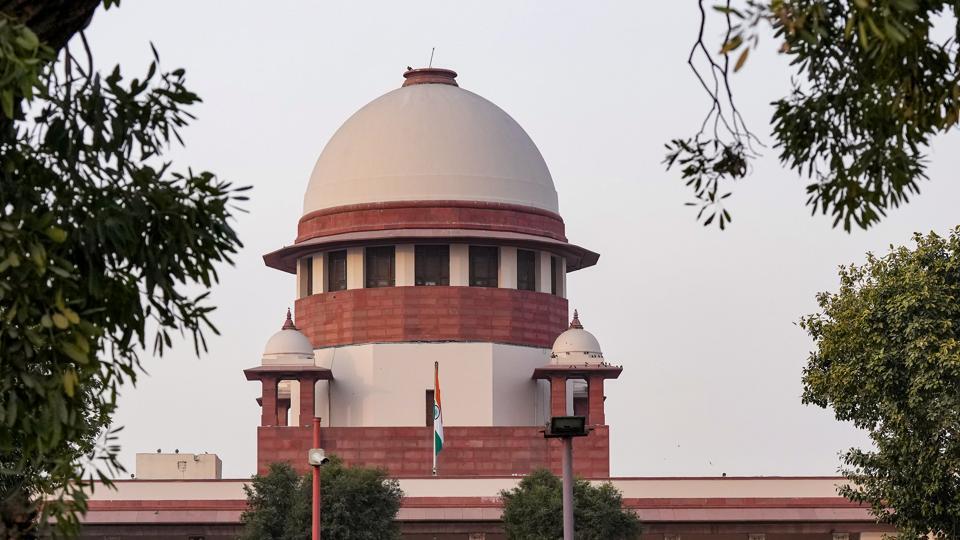
In its affidavit, ECI maintained that the February 17 order allotting Shiv Sena’s name and symbol to Shinde was passed in exercise of the commission’s authority under para 15 of the Election Symbols (Reservation and Allotment) Order, 1968, as a quasi-judicial body.
“Since the impugned order was passed not in an administrative capacity of the commission but in a quasi-judicial capacity under Para 15 of the Symbols Order, it has no contentions to make on merits of the case as the impugned order is a well-reasoned order and covers all the issues raised by the petitioner,” said ECI in response to an appeal filed by Thackeray against the order.
ECI added that it has become functus officio (already discharged its duty) for the present case, and need not be made a party to Thackeray’s petition at all. “The answering respondent does not have any submissions to make on merits, and submits that it was for the contesting parties i.e., the petitioner (Uddhav) and respondent no.1 (Shinde) to make submissions on the merits of the case,” it said.
On February 22, the top court turned down Thackeray’s plea to stay the ECI order, clearing the decks for the Shinde-led group to take over the party’s offices, other properties and bank accounts. Even as it admitted Thackeray’s appeal against the order and issued notices to Shinde and ECI, the bench, headed by Chief Justice of India (CJI) Dhananjaya Y Chandrachud, said it cannot stay the decision or restrain Shinde from claiming the party’s name or properties.
In his petition, Thackeray submitted that ECI failed to act as a neutral arbiter in the feud. He said the ECI order dealt with issues directly linked to a batch of petitions before a Constitution bench of the Supreme Court. The Constitution bench is separately adjudicating a bundle of legal issues arising out of the dramatic fall of Thackeray’s government last year.
In its order on February 17, ECI ruled that Shinde’s faction will inherit the original party’s name and its symbol, capping an eight-month-long battle between the two leaders over control of the regional party that suffered a vertical split last year when Shinde and 39 other legislators walked out of the party then led by Thackeray, and joined hands with the BJP to form the government.
ECI followed the procedure laid down in a 1971 Supreme Court judgment, which says such cases must be decided on the basis of a triple test. ECI found that the conclusion of the first two benchmarks were inconclusive.
The first test — objectives of the party constitution — was deemed improper because the 2018 constitution of the Shiv Sena was found to be undemocratic. The second test — that of the majority in the organisational body of the party — was also not considered because the poll panel found that neither side provided accurate details of internal bodies. Therefore, ECI relied on the third prong — the test of majority in the legislative wing. Here, the body found that 40 of the 55 members of legislative assembly and 13 of the 18 Lok Sabha members backed Shinde.
But Thackeray argued that the Sena constitution recognised the Pratinidhi Sabha as the apex representative body of the party and that he had the support of 160 of its 200 members.



