
 E-Paper



Five reasons that led to Delhi’s monsoon mess
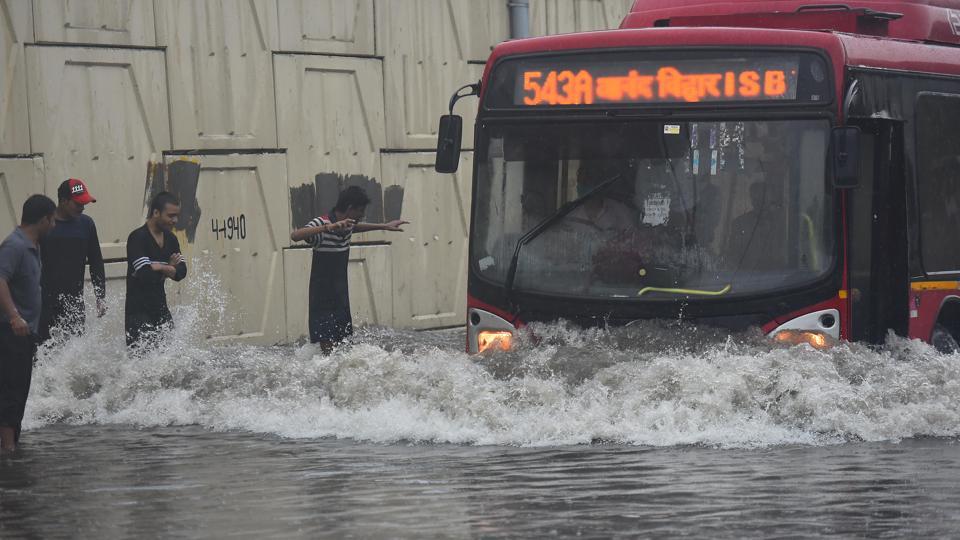
Seasonal monsoon rains played havoc with the national capital’s infrastructure in the past 24 hours, as Delhi’s stretched civic amenities came under severe stress amid the Covid-19 outbreak

 Prefer HTon Google


New Delhi: Seasonal monsoon rains played havoc with the national capital’s infrastructure in the past 24 hours, as Delhi’s stretched civic amenities came under severe stress amid the unprecedented coronavirus disease (Covid-19) outbreak. Here are five reasons that led to Delhi’s monsoon mess:
Are Delhi-NCR’s waterways lost?
“When there were fewer houses, buildings, and other infrastructure in Delhi, there were small waterways more like tiny streams that would allow water to move. But now societies have stormwater drains. We have urbanised in a way that waterways are blocked for good. The other drains that are ferrying the water have to be cleaned. Why aren’t they cleaned before every monsoon?” asked Shashank Shekhar, assistant professor, department of geology, Delhi University. Most stormwater drains carry sewage instead of rainwater.
More rain in less time
Gurugram weather station recorded 15.8 centimetres (cm) of rainfall on Thursday morning. While Safdarjung, Palam and Delhi Ridge weather stations recorded 5.5 cm; 8.8 cm and 7.7 cm of rainfall, respectively, on Wednesday.
Most of these intense bursts of showers were recorded between three and five hours.
In 2016, 11 cm of rain was recorded in Delhi in a few hours, triggering extensive flooding of the Indira Gandhi International (IGI) Airport.
“This appears to be in line with the general trend of heavy rains in a short span of time that are being increasingly recorded across the country. Urban planners in Delhi should factor these discernible changes,” said RK Jenamani, senior scientist, India Meteorological Department (IMD)
Lack of desilting
The public works department (PWD) authorities and civic officials have acknowledged that this year the de-silting of drains was delayed by about one-and-a-half months because of the Covid-19 outbreak. “Shortage of the workforce was one of the biggest challenges faced by us this year. It affected desilting work as well. Usually, we aim to clean drains by May 31 or the latest by June 15 ahead of the onset of the monsoon in the city. But that was not the case this year. We require up to 1,500 labourers for the desilting process, but this year the workforce was reduced to 50% because of the pandemic,” said a senior PWD official on condition of anonymity.
Old drainage plan
Delhi’s drainage system is antiquated, as it dates back to 1976, when the needs and the density of population in the national capital were different.
The new drainage master plan, developed by Indian Institute of Technology (IIT)-Delhi, is yet to be implemented.
No percolation
Delhi’s paved areas have seen an exponential rise.
The run-off of water from a paved area is far higher than natural areas.
For example, for one unit of rain, a paved area will generate 95% of run-off, as compared to 50% for a natural area. This has led to a massive uptick in the volume of water that needs to be drained in the national capital.


