
 E-Paper



Food output may drop this year amid price rise concerns
Planting of key kharif or summer-sown crops, which account for half of the country’s annual food output, was 1.5% lower on August 26 compared to last year, according to farm ministry data

 Prefer HTon Google


India’s food output is likely to fall after six straight record harvests, as extreme weather dented sowing of crops, such as rice and pulses, raising concerns about inflation and tight supplies, data from the farm ministry indicates.
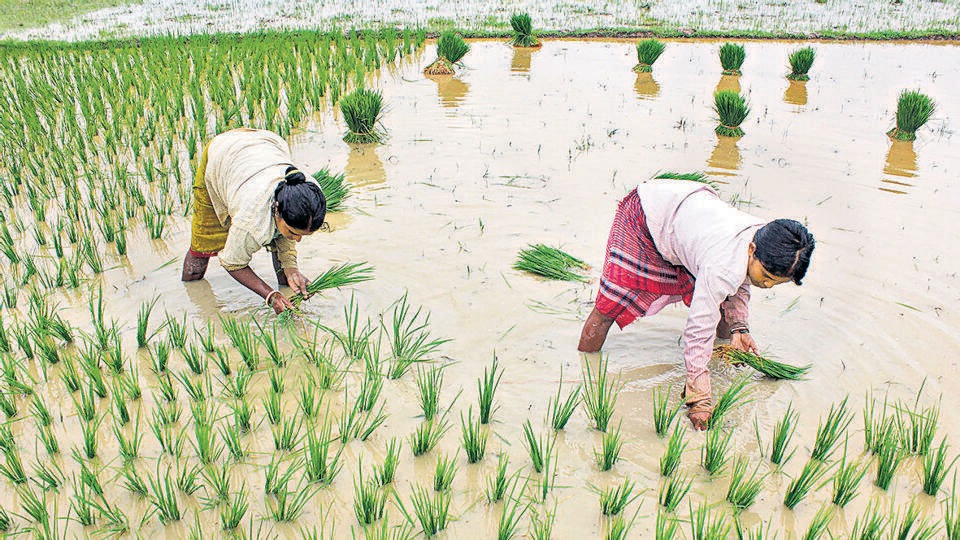
Planting of key kharif or summer-sown crops, which account for half of the country’s annual food output, was 1.5% lower on August 26 compared to last year, according to data. The total area sown stood at 104.5 million hectares.
ALSO READ | India pushes multi-year deals to secure supplies of fertilisers
India recorded its hottest March this year. This cut winter wheat production, officially estimated to be the lowest in three years at 106 million tonnes.
Now, acreage of summer rice has shrunk nearly 6%, as on August 26 compared to last year due to patchy rains, the data showed. Planting of rice stood at 36.7 million hectares versus 39 million hectares in the previous year.
Farmers sowed pulses, considered essential commodities, in 12.7 million hectares, down 5.2% compared to the 13.4 million hectares planted last year, according to the data.
The June-to-September monsoon, which waters nearly 60% of the country’s net-sown area, has been quite uneven, damaging crops. Overall, the rains have been 7% surplus till August 28 since monsoon onset on June 1, data from the India Meteorological Department (IMD) showed.
However, rainfall has been scanty in many states, causing drought. In several others, excess rains led to flooding. Rains in West Bengal, the country’s largest rice grower, were 28% deficient. Other paddy-growing states too had large rainfall deficits, such as Uttar Pradesh (-44%), Bihar (-40%) and Jharkhand (-28%), stunting paddy crops.
Cereal prices are already rising, although the state-run Food Corporation of India (FCI) has ample rice reserves. The government held 41 million tonnes of rice stocks as of August 1, way above the buffer requirement of 13.5 million tonnes by July 1. But wheat reserves have declined to their lowest levels in 14 years.
On August 21, the food ministry tweeted: “There is no such plan to import wheat into India. Country has sufficient stocks to meet our domestic requirements and @FCI_India has enough stock for pubic distribution.”
Official price data showed, on August 26, the all-India average retail price of fair-quality rice stood at ₹37.63 a kg, up 6.2% on an annual basis. The price of wheat was up 12% to ₹30.89 a kg versus ₹27.09 per kg year-on-year.
“Rice output could go down by 10%-15%,” said Siraj Hussain, a former Union agriculture secretary. According to Hussain, this could stoke inflation in basic staples and the government will need to offer its rice stocks for open-market sales to tame prices.
India is the world’s largest rice exporter, accounting for 40% of global shipments. The Centre is weighing plans to restrict overseas sales of some non-premium varieties of rice to boost domestic supplies and put a lid on rising cereal prices, a person aware of the development had told HT on Friday.


