E-Paper



Assembly elections in 5 states explained in 4 charts
The five states combined send 83 members -- Madhya Pradesh 29, Rajasthan 25, Telangana 17, Chhattisgarh 11 and Mizoram 1 -- to the Lok Sabha

 Prefer HTon Google


The Election Commission of India announced elections to the state assemblies of five states – Rajasthan, Madhya Pradesh, Chhattisgarh, Telangana, and Mizoram – on October 9. Mizoram will go to polls on November 7. Chhattisgarh will have a two-phase election on November 7 and 17. Madhya Pradesh, Rajasthan and Telangana will have polls on November 17, November 23 and November 30 respectively. The results of this round of elections – the last round of state elections before the Lok Sabha election in 2024 – will be announced on December 3. Here are four charts explaining the nature of the contest in detail.
Power has largely alternated between just two parties in each state
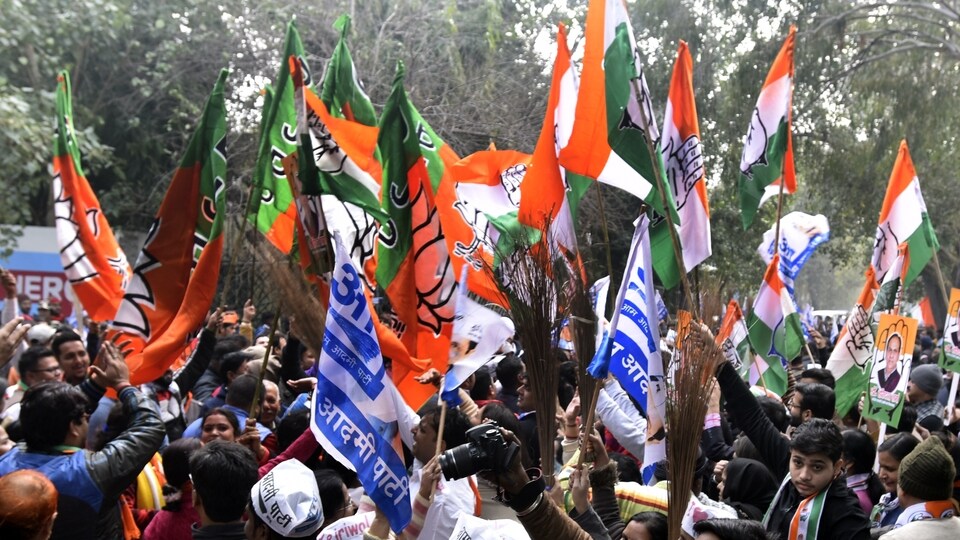
Elections in all five states going to polls have largely been a contest between two parties in recent times. The three Hindi belt states -- Rajasthan, Madhya Pradesh, and Chhattisgarh --usually choose either a Bharatiya Janata Party (BJP) or a Congress government. Even in Telangana – where the Bharat Rashtra Samithi (BRS was formerly known as Telangana Rashtra Samithi) has been incumbent since the state’s formation in 2014 – the polls so far have been a contest largely between just two parties: the BRS and the Congress. This pattern is also true of Mizoram, which has alternated between a Mizo National Front (MNF) and a Congress government since the 1980s.
This similarity does not mean these states are socio-economically similar
To be sure, it will be a mistake to take the similarity in results to mean that the five states are socio-economically similar. In fact, they are significantly different. 90% or more of the population of the three Hindi belt states is Hindu, compared to 85% in Telangana and just 1% in Mizoram, according to the 2019-21 National Family Health Survey (NFHS). The non-Hindu population in Telangana is primarily Muslim while they are Christian in Mizoram. Even the Hindu population of the three Hindi belt states is not homogeneous. For example, just 7% of Chhattisgarh’s population is Hindus from castes other than Scheduled Castes (SC), Scheduled Tribes (ST), or Other Backward Classes (OBCs); while this share is 16% in both Madhya Pradesh and Rajasthan. 28% of Chhattisgarh’s population belongs to Hindu Scheduled Tribes (ST), the highest among states, while this share is 20% in Madhya Pradesh and 13% in Rajasthan. On the other hand, Scheduled Caste (SC) population in Rajasthan is 4-5 percentage points more than in the other two states. The economic condition of the population in these states also varies drastically. Out of 36 states and Union Territories (UTs), Mizoram and Telangana are ranked 12th and 14th by the average asset score of their population in the 2019-21 NFHS. Rajasthan, Madhya Pradesh and Chhattisgarh are much poorer in comparison: ranked 21st, 26th, and 27th respectively.
Although close to Lok Sabha elections, state results may not predict Lok Sabha results
The five states combined send 83 members -- Madhya Pradesh 29, Rajasthan 25, Telangana 17, Chhattisgarh 11 and Mizoram 1 -- to the Lok Sabha, three more than Uttar Pradesh does. This size combined with the fact that their state elections will be followed closely by national elections may prompt one to read the former as a predictor of the latter. However, the 2019 Lok Sabha results show that electors can vote very differently in state and national elections. For example, the BJP won just 29% of the 679 assembly constituencies (ACs) in the 2018 assembly elections in these states, but went on to win 69% of them when national elections were held in 2019. The direction of the results did not change in Telangana and Mizoram, where the BRS and MNF respectively won majority of the ACs in both 2018 and 2019. It is in three Hindi belt states where the result changed drastically between the two elections: from 38% seat share for the BJP in 2018 to 86% at AC-level in 2019.
This does not take away the importance of these elections for the BJP and the Congress
That these state elections will not predict Lok Sabha elections does not take away their importance for the BJP and the Congress, the two biggest parties in national elections. In 20 big states and Delhi (the list of states is the same HT used for a caste analysis of chief ministers in August) the share of Congress chief ministers had largely remained more than 20% before 2016. From the middle of 2016, this share has largely remained below 20%. On the other, the share of BJP chief ministers dropped below 30% for the first time since 2019 this year after it lost the Karnataka elections. Clearly, both parties have reason to contest these state elections seriously. Not only does a good performance in state elections affect the Rajya Sabha strength of these parties, but it also has a bearing on their negotiating strength with allies ahead of the coming Lok Sabha elections.