
 E-Paper



Free electricity, tiffin boxes, smartphones: CMs of poll-bound states announce hundreds of new schemes
Rajasthan CM Vasundhara Raje promised to provide subsidised smartphones to 10 million poor people in the state with free data for the first six months. Her counterpart in Madhya Pradesh, Shivraj Singh Chouhan, has vowed to give a smartphone to every student who takes admission in a government college.


Government sops to woo voters are not unusual before elections. This time, the chief ministers of four election-bound states — Rajasthan, Madhya Pradesh, Chhattisgarh and Telangana — have announced hundreds of new schemes, from offers of smartphones with free data to tiffin boxes to free electricity to jobs, with an eye on the polls.
That’s in addition to construction of new roads and bridges , plans for which have been announced in the last few months.
If implemented, these sops could eat up to 35% of the total revenue expenditure proposed in the budgets of these states for current financial year. Economists say announcing sops without proper planning derails the long-term fiscal management entailed by the Fiscal Responsibility and Budget Management Act, 2003. But there is no provision in the law which prevents the announcement of sops with an eye voters. In fact, the Election Commission’s model code of conduct prohibits announcements of government schemes only after the elections schedule is announced.
The growing trend of offering freebies was challenged in the Supreme Court, which in 2013 directed the Election Commission to frame guidelines on election manifestos and misuse of freebies. However, the commission after consultation with political parties, came out with an advisory on framing of manifestos, but expressed its inability to check freebies.
“The Election Commission cannot do much,” said former chief election commissioner S Y Quraishi. “The commission’s jurisdiction starts only after the poll schedule is announced, which is normally 45 days before the polling. Nowadays, offering sops starts several months before elections are announced”.
Election watchers say the trend of offering incentives to voters has gained momentum in the recent years as elections are now being contested with greater intensity. With voters becoming blasé over traditional bijli, pani and sadak (power, water and roads) promises, parties are getting innovative with promises that provides immediate gratification such as free phones loaded with data, laptops and bicycles.
Rajasthan CM Vasundhara Raje promised to provide subsidised smartphones to 10 million poor people in the state with free data for the first six months. Her counterpart in Madhya Pradesh, Shivraj Singh Chouhan, has vowed to give a smartphone to every student who takes admission in a government college.
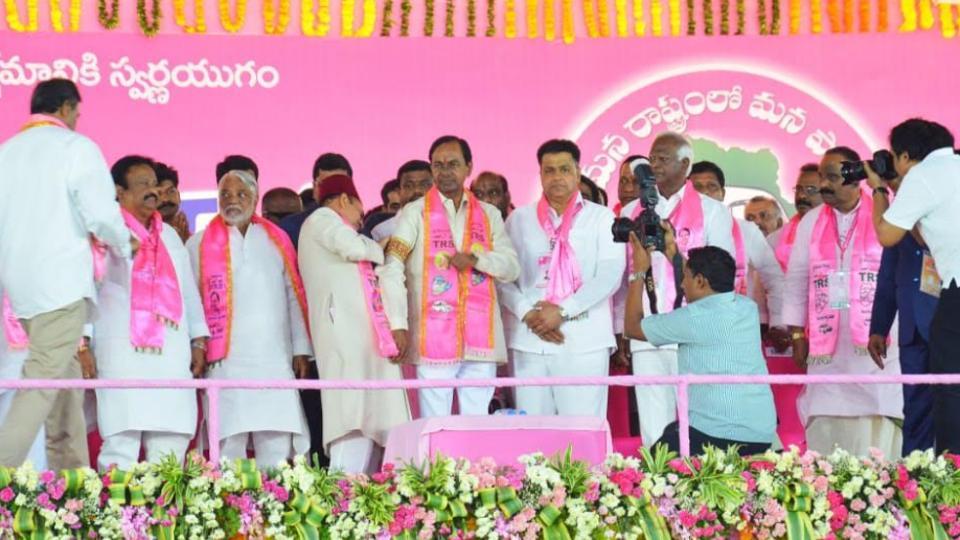
Chhattisgarh chief minister Raman Singh says his government will give tiffin boxes to all labourers working under the Mahatma Gandhi Rural Employment Guarantee Scheme tol improve their health. Telangana chief minister K Chandrashekar Rao hiked remuneration for educators in religious schools three-fold just before deciding to recommend dissolution of the state assembly on September 6.
Farmers, an influential vote bloc, are the biggest target group of sops this election season.
Chouhan has been claiming on the campaign trail that his government has spent ?35,000 crore for farmers’ welfare this year. Rao credits himself with India’s first pro-sowing incentive scheme called Rythu Bandhu (friend of farmers). Raje dedicated her budget to farmers with at least a dozen schemes, including a farm loan waiver from cooperative banks. Raman Singh just last week announced ?300 per quintal in addition to the minimum support price (MSP) to paddy farmers.
Vijay Vir Singh of the economics department at the University of Rajasthan says that freebies do not contribute to the economy in any way. “Giving sops does not make economic sense. It’s a populist measure but does not lead to economic growth,” he said.
Bhopal-based economist Jayantilal Bhandari said these schemes look good on paper but does not do much for the people instantly as their implementation takes time.
The common refrain of the ruling party functionaries in the election-bound states is that the new schemes are an extension of the good work being done by the governments and show the incumbent parties’ intentions of promoting public welfare.
Opposition parties term the sops an indication of governance failure. “If the state government has done so well, why is the chief minister (Vasundhara Raje) making so many announcements knowing well she cannot implement them?” asked Rajasthan Congress chief Sachin Pilot.
The four states are expected to go to the polls in November-December this year.
(With inputs from Ranjan in Bhopal, Ritesh Mishra in Raipur and Urvashi Dev Rawal in Jaipur)


