E-Paper



Freedom of speech to Article 370's abrogation: Historic judgments delivered by CJI Surya Kant
Justice Kant was sworn in as the 53rd Chief Justice of India on Monday. Since his elevation to the top court, he has been part of more than 300 benches.

 Prefer HTon Google


Justice Surya Kant was sworn in as the 53rd Chief Justice of India on Monday, as President Droupadi Murmu administered the oath at a ceremony attended by Vice President CP Radhakrishnan and Prime Minister Narendra Modi. He will remain in charge for about 15 months, until he demits the office on February 9, 2027, on reaching the age of 65 years.
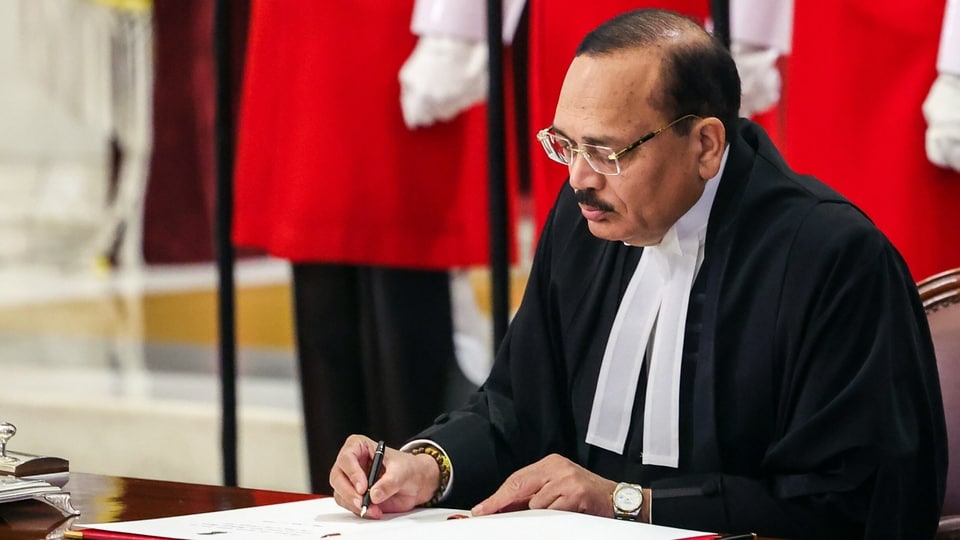
Justice Kant, who comes from a middle-class family in Haryana’s Hisar, began his professional journey as a small-town lawyer before reaching the apex court. Over his tenure at the Supreme Court, he has been part of several key verdicts, including those related to the abrogation of Article 370, free speech, and Bihar’s electoral roll revision.
Since his elevation to the top court, he has been part of more than 300 benches. Here is a look at some of the key judgments he was involved in:
Abrogation of Article 370
Justice Kant was a part of the bench that delivered the historic verdict on the abrogation of Article 370, which led to the removal of Jammu and Kashmir’s special status.
Bihar’s electoral roll revision
Justice Kant was part of the bench hearing the case on Special Intensive Revision (SIR) of voter list in Bihar ahead of the elections.
He was the one who nudged the Election Commission to disclose the details of 65 lakh voters excluded from the draft electoral rolls while hearing a batch of petitions challenging the poll panel’s decision.
Freedom of speech
Justice Kant’s bench had also made the observation that “freedom of speech is not a licence to flout societal norms”, while warning popular podcaster Ranveer Allahbadia for his "derogatory" remarks.
Notably, this case was against several stand-up comedians of the hit show “India’s Got Latent”, including popular comedian and host Samay Raina. The bench had pulled up the comedians for making fun of disabled people on the show and ordered the Centre to prepare guidelines for regulating online content.
In another judgment related to freedom of speech, Justice Kant headed a bench that criticised Madhya Pradesh minister Vijay Shah over his remarks against Colonel Sofiya Qureshi. The bench said that every word spoken by a minister must be said with care.
Timelines for governors & president to grant assent to bills
The new CJI was also part of a CJI five-judge Constitution bench led by his predecessor Justice BR Gavai, which held that the court cannot set timelines for governors or the president to give assent to bills passed by state assemblies.
However, the bench also ruled that governors do not have “unfettered” powers to keep the bills pending for “perpetuity”.
Sedition law
Justice Kant was also part of the bench that put the colonial-era sedition law on hold. It had ruled that no new FIRs can be filed under the law until the government completes its review.
Women-centric rulings
He also led a bench that restored a woman sarpanch who had been unlawfully removed from office and called out gender bias in the case.
Notably, Justice Kant is also known for directing that one-third of seats in bar associations, including the Supreme Court Bar Association, should be reserved for women.
Other notable cases
CJI Kant was on the bench that appointed a five-member committee led by former top court judge Justice Indu Malhotra to look into the security breach during Prime Minister Narendra Modi’s visit to Punjab in 2022, saying such issues needed “a judicially trained mind”.
He also upheld the 'One Rank-One Pension' scheme for defence forces, calling it constitutionally sound, and continues to hear petitions from women officers in the armed forces seeking equal treatment in permanent commission.
In a 2023 judgment, he called it a “serious societal threat” and told the CBI to investigate 28 cases that showed an “unholy nexus between banks and developers” which cheated homebuyers.
He also headed a bench that granted bail to former Delhi chief minister Arvind Kejriwal in the CBI excise policy case, asking the agency to work to remove the notion of being a “caged parrot”.
He was also on the bench, which in 2021 set up a three-member team of cyber experts to investigate the alleged use of Israeli spyware Pegasus to monitor certain people in India, saying the state cannot have a "free pass" every time national security is mentioned, and it cannot be the “bugbear” that the judiciary avoids.
CJI Kant was also on the seven-judge bench that overturned the 1967 Aligarh Muslim University ruling, allowing for a fresh reconsideration of its minority status.