
 E-Paper



From HT Archives: Vibrant Goa joins Indian union after diplomacy, action
On December 19, 1961, India successfully liberated Goa from Portuguese rule in Operation Vijay, marking a key moment in the country's history.

 Prefer HTon Google


New Delhi At midnight on August 15, 1947, India fought off the shackles of centuries of colonialism, and its people looked bravely into a new world, armed with a new, hard-earned independence. As India’s first Prime Minister Jawaharlal Nehru put it, India began its tryst with destiny, and awoke to life and freedom.
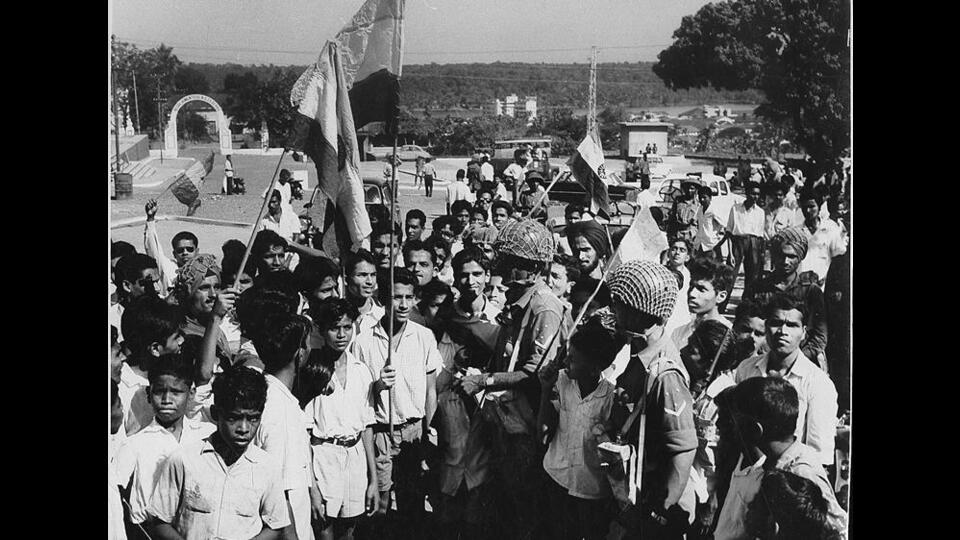
But until 14 years later, Goa still lived under foreign yoke.
In the decade-and-a-half after Independence, negotiations around the prized region of Goa had turned particularly hostile, and tensions were rising. India asked Portugal to open conversation about its future 1950, to no avail. Portugal, in turn, accused India of trying to annexe its territories. In 1953, India removed its diplomatic mission in Lisbon, and two years later, in August 1955, 5,000 non violent protesters marched against the Portuguese in Goa and were fired upon, with 22 killed.
With diplomatic channels being pursued at the global level, including at the United Nations, India decided on on December 11, 1961 that it was time to take concrete action.
The 17th Infantry Division and attached troops of the Indian Army were ordered to advance into Goa to take control of Panaji and Mormugao. They attacked, and occupied the town of Maulinguem, and on December 18, in Operation Vijay, the Indian Army moved into Goa in earnest, in three columns, one advancing into Ponda, another towards Panaji, and the third into Tivim.
By December 19, Goa was liberated..
As HT reported on the morning of December 20, the “Indian flag is flying all over Goa, Daman & Diu today as India formally took over the administration of these territories on the successful completion of Operation Vijay which began 26 hours earlier-at dawn yesterday. Life is fast returning to normalcy.”
“Lt.-Gen. J. N. Chaudhury, GOC-in-Chief, Southern Command, formally accepted the surrender of the Portuguese forces from the Portuguese commander at a simple and solemn ceremony at Panjim in an open square at the headquarters of the Portuguese army. The Portuguese flag was hauled down and the Indian flag was hoisted,” the HT report said.
But beyond the assimilation of an intrinsic part of the nation with India, the liberation of Goa was a key moment in history in many other ways. India was yet a young country, struggling to heal the wounds of the past. It had only had a functioning Constitution for a decade, had linguistically reorganised the states only five years previously, and was surrounded by hostile cross-border actors. Yet, Operation Vijay made clear to the world that though India wanted to keep the peace, this should not be construed for weakness.
In 1961, Goa joined India, and 26 years later, in 1987, became a full state -- India’s smallest, but among its most vibrant; a land of culture, the sea, and tradition. And a land inalienably Indian, highlighting the country’s celebrated ethos of university in diversity.


