
 E-Paper



Fully vaxxed won’t need Covid test to enter India
The guidelines uploaded to the Union health ministry website showed that people will now need to either submit a negative report of an RT-PCR test taken not before 72 hours from departure or their vaccination certificate to the government’s Air Suvidha portal before they board their flight.


People who have been fully vaccinated will no longer need to take a Covid-19 test either before or on arrival in India, according to new guidelines shared by the government on Thursday, which will come into force from February 14.
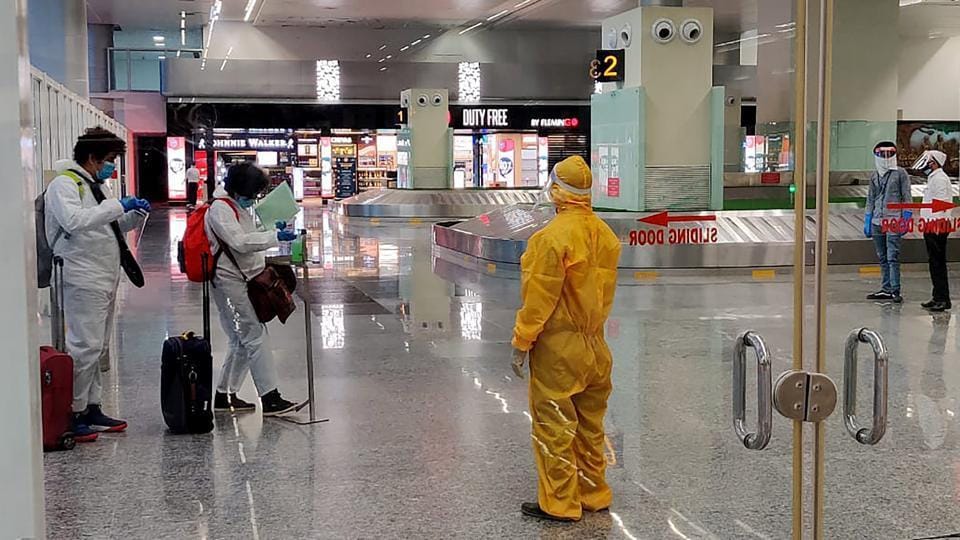
A pre-departure RT-PCR Covid test was mandatory for anyone arriving into the country and, following the outbreak of the Omicron variant, on-arrival testing was made mandatory for all flyers. Additionally, people from some “at-risk” regions, including all of Europe, would need to stay at the airport till their results were determined.
“The demarcation of countries ‘at-risk’ & other countries removed. Accordingly need for giving samples on port of arrival & waiting till the result is obtained from countries ‘at-risk’ is dispensed with,” tweeted Union health minister Mansukh Mandaviya.
The guidelines uploaded to the Union health ministry website showed that people will now need to either submit a negative report of an RT-PCR test taken not before 72 hours from departure or their vaccination certificate to the government’s Air Suvidha portal before they board their flight.
Also Read | Over 91% of Delhi's Covid victims from Jan 12 to Feb 9 had comorbid illness
The requirement of mandatory seven-day home quarantine after arrival has also been done away with; the passengers will now have to self-monitor their health for 14 days.
Travellers have been advised to immediately self-isolate and report to their nearest health facility or call the national helpline number (1075) or the state helpline number if they develop Covid symptoms during the monitoring period.
But those who have symptoms when they arrive in India during screening will be isolated and taken to a medical facility as per protocols.
Passengers will also be randomly tested (roughly 2% of the total passengers in a flight) after arrival. These passengers will be allowed to leave the airport after they submit test sample.
Positive cases will be treated based on the protocol for various severities and their sample will be sent for whole genome sequencing, the guidelines said.
Passengers arriving at international seaports or land ports will be subject to the same rules, although they will not have the Air Suvidha facility through which they can declare their test report or their vaccination status. “Such travellers shall submit the self-declaration form to the concerned authorities of Government of India at seaports/land ports on arrival,” read the guidelines.
As per WHO guidelines, children under five years of age are exempted from both pre- and post-arrival testing, and India follows the same protocol.
“However, if found symptomatic for COVID-19 on arrival or during the period of self-monitoring period, they shall undergo testing and treated as per laid down protocol,” the guidelines mention.
The Indian Association of Tour Operators (IATO) welcomed the change. “IATO thanks the government for revising guidelines and removing the clause of seven days quarantine for all nationals. Besides, we welcome the removal of the list of high-risk countries as that will be highly beneficial for tour operators as the list had countries that are key source markets”.
Rajiv Mehra, president, IATO, added: “We would further urge for early resumption of the normal schedule of international flight operations as per bilateral agreements which were in force before March 2020. Presently there are only limited air bubble flights that are operating to some selected countries and airfares are exorbitant. Once normal international flight operation is resumed, airfares will come down drastically, and this will boost the arrival of foreign tourists to India. “


