
 E-Paper



SC orders trial courts to suo motu end wait for final decree in partition suits
The Supreme Court on Monday directed trial courts to take up all matters pertaining to the partition which have not moved forward even after parties obtained a preliminary decree in their favour.


The Supreme Court on Monday directed trial courts to take up all matters pertaining to the partition which have not moved forward even after parties obtained a preliminary decree in their favour.
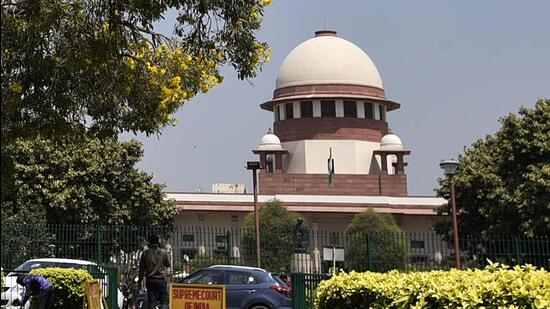
The court also noted that trial courts don’t have to start fresh proceedings to deliver the final decree.
“We are of the view that once a preliminary decree is passed by the trial court, the court should proceed with the case for drawing up the final decree suo moto (on its own),” a bench of justices S Abdul Nazeer and Vikram Nath said.
The top court’s remark came while hearing a partition suit of the 1990s, in which the Kerala high court had set aside a trial court’s preliminary decree for partition of a property in 2009.
The two-judge bench of the top court on Monday reversed the high court order and restored the trial court’s preliminary decree that the property be equally divided between the two parties to the suit.
As per Order XX Rule 18 of Code of Civil Procedure (CPC) that governs the procedure for deciding partition suits, trial courts first pass a preliminary decree declaring the rights or shares of the parties to the partition. But this is just a paper decree as parties cannot enjoy fruits of the same unless they initiate the proceedings and the trial court delivers the final decree.
The bench noted that there were many suits pending at the preliminary decree stage as courts either adjourn the case sine die or parties don’t approach them for a final decree.
Noting that this anomaly often led to protracted delay in deciding such suits, the bench said: “We direct the trial courts to list the matter for taking steps under Order XX Rule 18 of the CPC soon after passing of the preliminary decree for partition and separate possession of the property suo moto and without requiring initiation of any separate proceedings.”
The court also noted that in a few states, some cases were adjourned indefinitely after passing the preliminary decree while in others, a fresh final decree proceeding had to be drawn up by parties to the suit.
“This practice is to be discouraged as there is no point in declaring the rights of the parties in one proceeding and requiring initiation of separate proceedings for quantification and ascertainment of the relief. This will only delay the realisation of the fruits of the decree,” the top court said.
The court directed its order to be circulated to all trial courts by the respective high courts.


