
 E-Paper



Google Earth footage shows remote Chamoli location where 25 BRO labourers remain trapped after avalanche
The avalanche occurred near a highway in Mana village, adjoining Tibet, and less than five kilometres from the Badrinath temple.

 Prefer HTon Google


Frantic efforts were underway on Friday to rescue dozens of Border Roads Organisation (BRO) labours trapped at the high-altitude site in Uttarakhand's Chamoli where an avalanche occurred in the morning, reportedly triggered by a glacier burst.
The avalanche occurred near a highway in Mana village, adjoining Tibet, and less than five kilometres from the Badrinath temple. Follow Chamoli avalanche live updates
Mana is the last village on the India-Tibet border at a height of 3,200 metres.
The avalanche or snowslide struck a labour site of the federal BRO, where eight containers and one shed, with 57 workers inside, were buried under the snow, according to an Indian Army statement. Till the last update in this report, 32 workers were rescued, the state disaster department informed.
Google Earth visuals shared by news agency PTI showed the remote spot in Chamoli amid the lofty Himalayan mountains where the 25 BRO labourers were trapped after the avalanche.
Rescue op
At least 32 workers were rescued by 5 pm on Friday, Uttarakhand disaster department confirmed. There were no immediate reports of casualties.
"By 5 pm, 32 people had been rescued safely. The process of evacuating the remaining 25 people is in progress. Relief and rescue work is going on on a war footing to rescue people trapped in the avalanche 6 km ahead of Badrinath Dham in Chamoli district," news agency ANI quoted the Uttarakhand Disaster Management Department.
Chamoli's district administrator, Sandeep Tiwari, mentioned that rain and snowfall were restricting mobility and complicating helicopter operations.
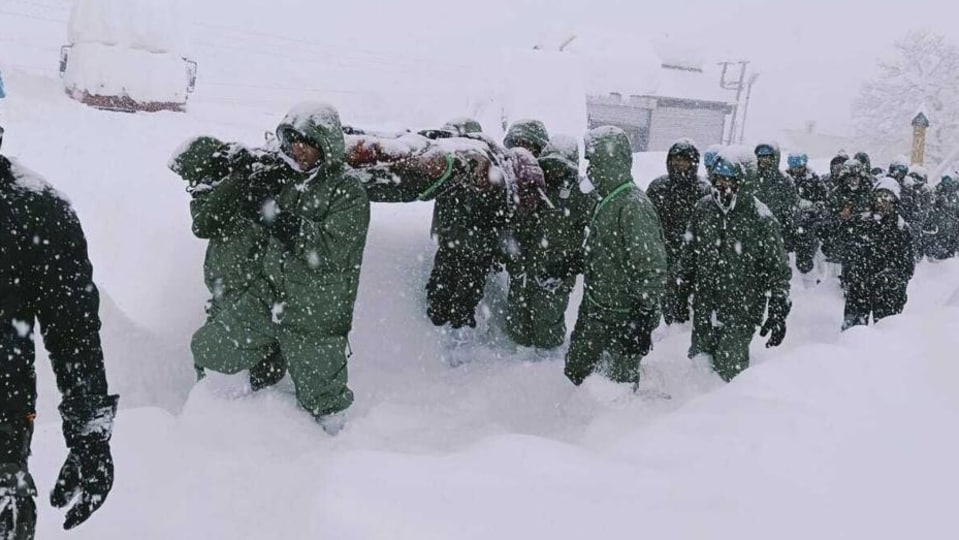
Images shared on microblogging platform X showed army personnel carrying a person on a stretcher through knee-deep snow, with more snow continuing to fall at the scene.
India Meteorological Department (IMD) has forecast "heavy to very heavy" snowfall, defined as at least 12 centimeters (5 inches), across the state through Friday, with conditions expected to significantly improve afterward.
Several teams from the National Disaster Response Force (NDRF) deployed for the operation were also facing delays in reaching the affected workers.
In February 2021, a glacier collapse in Uttarakhand killed at least 80 people and left over 200 missing. An avalanche in 2022 claimed 16 lives.


