
 E-Paper



Govt exhausted all means in nurse execution case: AG
AG told the court that India chose not to go public about its efforts to avoid worsening the situation


The Union government on Monday expressed its inability to intervene immediately to stop the impending execution of Kerala nurse Nimisha Priya, who is scheduled to be hanged in Yemen on July 16 for the alleged murder of a Yemeni national in 2017.
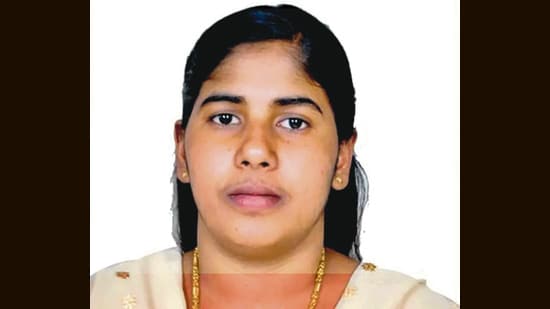
Submitting before the Supreme Court, attorney general R Venkataramani said that every possible diplomatic and private channel has been exhausted to seek a reprieve for the 38-year-old nurse from Palakkad, “nothing has worked so far,” and the situation may now lie beyond the Indian government’s control.
“There is a point till which the Government of India can go. We have reached that,” said the AG, appearing before a bench of justices Vikram Nath and Sandeep Mehta. The court is hearing a plea filed by Save Nimisha Priya International Action Council, a citizens’ group seeking urgent government intervention. The court has now posted the matter for July 18 to take stock of any further developments.
During the hearing, the AG told the court that India chose not to go public about its efforts to avoid worsening the situation, and that it had even reached out to an influential sheikh in Yemen to persuade authorities to put the execution on hold. “But it has not worked out. Nothing matters to the Yemeni government. We got an informal communication that execution would be put in abeyance, but we don’t know if it will work out,” he added.
“There’s nothing more the government can do. We are trying at the private level... but this may even prove counterproductive. These are highly confidential matters,” Venkataramani said.
The AG, who was also being briefed in real-time by a joint secretary from the ministry of external affairs present in court, informed the bench that a last-ditch request for the suspension of the execution was sent at 10:30 am on Monday, but there was no official response yet.
Under Shariat law, a person sentenced to death may be pardoned by the victim’s family if blood money – a form of financial compensation -- is accepted. The petitioner organisation told the court that Nimisha Priya’s supporters and family were in touch with the victim’s kin and have arranged a sizeable amount of blood money in an effort to secure a pardon.
However, Venkataramani stated that the victim’s family and the Yemenese authorities have refused to engage on this front, calling it a matter of “honour.” “They say it’s a question of honour and don’t accept (it). We don’t know if it changes with more money. But as of now, standstill,” he said.
The petitioner’s counsel argued that the lack of formal diplomatic relations with Yemen, whose capital Sanaa is under the control of Houthi rebels, has left good samaritans helpless. “We are even willing to pay higher blood money,” said the lawyer.
The court, acknowledging the sensitive nature of the case, expressed concern but maintained that its hands are tied. “Let the death sentence not happen,” pleaded the petitioner’s lawyer. But the bench retorted: “How can we pass that order with respect to a foreign nation? Who is going to follow it?”
The court agreed to adjourn the matter till July 18, directing all parties to inform it of any developments.
Nimisha Priya, 38, a nurse from Palakkad, Kerala, was convicted for the murder of her business associate Talal Abdo Mahdi, a Yemeni national, and sentenced to death by a trial court in Sanaa in 2020. The sentence was upheld by Yemen’s Supreme Judicial Council in November 2023. In 2024, the country’s president, Rashad al-Alimi, approved the execution order, which has been pending with the prosecutor since January. The only reprieve now lies in securing a pardon from Mahdi’s family -- an outcome that remains uncertain.
The murder allegedly took place after Nimisha Priya injected Mahdi with sedatives in an attempt to retrieve her passport, which he had withheld amid escalating personal and financial disputes. An overdose reportedly led to his death. Nimisha Priya had partnered with Mahdi to run a clinic in Yemen in 2015, but her family claims she faced sustained physical, mental and financial abuse at his hands, and the situation deteriorated to the point of violence.
Nimisha Priya moved to Yemen in 2008 to support her parents, who were daily wage labourers in Kerala, and worked in several hospitals before starting her own clinic. Following her conviction, her mother, Prema Kumari, a domestic worker from Kochi, travelled to Yemen and has been camping in Sanaa for the past year to pursue legal remedies and appeal to the victim’s family for clemency.
In December last year, Kumari approached the Delhi high court seeking exemption from the travel ban to the conflict-hit country to meet her daughter. Since her arrival in Sanaa, she has managed to meet Nimisha Priya in prison a few times. The ministry of external affairs stated last year that it would extend all possible support to Nimisha Priya and her family.


