
 E-Paper



Govt eyes health care plan revamp with focus on Ambedkar’s inputs
Ambedkar played a key role in pushing social-security legislation in 1948, paving the way for the Employees’ State Insurance Corporation in 1952.

 Prefer HTon Google


The Union government plans to restructure employees’ state insurance (ESI), a key social-security programme for low-wage workers, modelling it on the “vision” of its architect and one of the nation’s founding fathers, Bhimrao Ambedkar, a person with knowledge of the matter said.
Ambedkar, who was law minister in the first Cabinet of Jawaharlal Nehru and an economist by training, played a key role in pushing social-security legislation in 1948, paving the way for the Employees’ State Insurance Corporation (ESIC) in 1952.
ESIC, under the ESI Act, administers the only health care insurance scheme of its kind for lowest-rung floor workers in factories and other establishments.
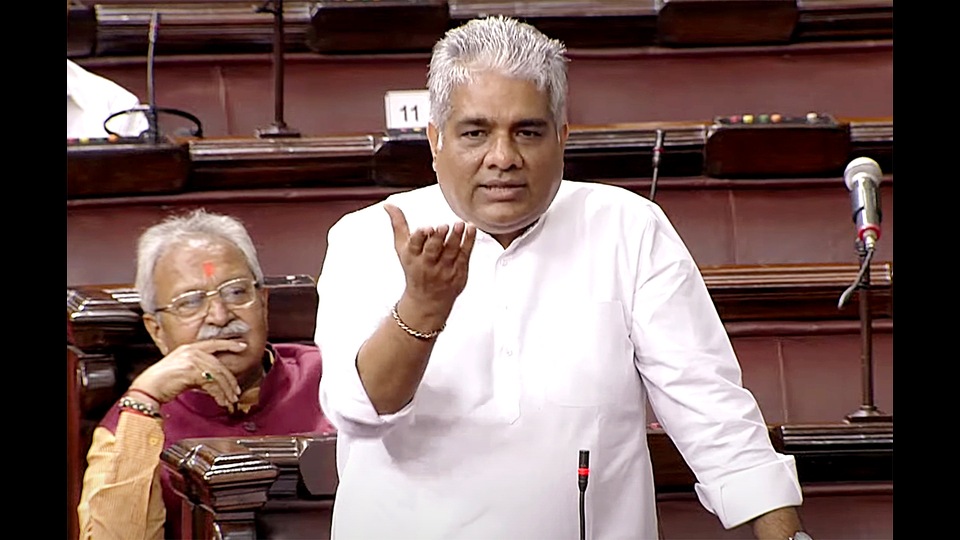
Labour minister Bhupender Yadav is overseeing an infrastructural expansion of ESIC based on the “specific vision” laid out by Ambedkar in his writings and notings on files as “underlined” by Prime Minister Narendra Modi, the person cited above added.
Also read: Border dispute: Pro-Kannada groups threaten stir alleging inaction by govt
The ESI law applies to factories or businesses with 10 or more people and employees with monthly salaries of up to ₹21,000 are eligible to be covered.
The overhauled and expanded ESI, part of the push to universalise social security, will be themed “Swasthya Se Samriddi”, or prosperity through health, which is the centrepiece of the plan.
As part of the revamp, ESIC’s board has approved linking of PM Jan Arogya Yojana, the Modi government’s flagship health insurance scheme, with ESI.
Plans are also afoot to set up new medical colleges under ESIC in 117 so-called aspirational districts in cooperation with states, the person said. These are areas with poor socio-economic indicators. ESIC currently runs seven postgraduate medical institutions.
The Centre last month held a conference with labour ministers of states to expedite the formalities needed to kick off four labour-reform laws, among other issues.
Labour falls under the Constitution’s concurrent list, which gives both the Centre and states jurisdiction over the subject. The Union labour ministry will share with states the original notes entered by Ambedkar in files, which spell out his vision of social security, so that they can draw upon it, the person said.
Ambedkar first pushed a social security legislation for workers around 1942-1943 when he was minister for labour in the viceroy’s executive council under the British colonial government.
In one of his notes, many of which are preserved and maintained by the National Archives, the architect of India’s Constitution made a case for universal social security.
His notes underscore that safety nets must cover both formal and informal workers, especially the poorest and most disadvantaged sections of society, based on equality, the person quoting from the notes said.
Lack of universal social security would create hindrance to “movement of both labour and capital”, hurting industrialization, Ambedkar noted in one instance. “These are the ideas behind achieving the Swasthya Se Samriddhi vision through an expansion of ESI. The larger objective is to make social security universal,” the person said.
Also read: Mumbai woman makes an appeal to Maha govt as MNS men who abused her get bail
After the Social Security Code, one of the four labour reforms of the Modi government, takes effect, workers in the unorganized sector will also become eligible for ESIC coverage.
ESIC recently cleared approvals for setting up 76 new hospitals with 8,480 beds. The labour ministry has targeted filling up 8500 vacancies in the ESIC network. “Digital innovations and private sector involvement shall be leveraged for the expansion,” a labour ministry presentation showed.
The revamp must also look at ESIC’s delivery, treatment quality and spending, experts said. One long-running problem is that the scheme’s “revenue to social spending ratio” had been high, resulting in huge surpluses from premiums. That means collections are consistently and significantly higher than its level of expenditure on social services, particularly healthcare.
While data on ESIC is limited, there seems to be a “very low utilisation rate when compared with the National Sample Survey Office (NSSO) morbidity surveys for the general population,” said Ravi Duggal, a public health expert.


