
 E-Paper



Govt issues Covid-19 response norms for slum clusters
The ministry has directed that a nodal officer (incident commander) of appropriate seniority be identified to prepare the response depending on the geographic extent of the settlements and its population.


The Union health ministry on Saturday released coronavirus disease (Covid-19) preparedness and response guidelines for slum clusters and unauthorised colonies, a development that comes amid increasing infections in Mumbai’s Dharavi – believed to be Asia’s largest slum which houses an estimated one million people.
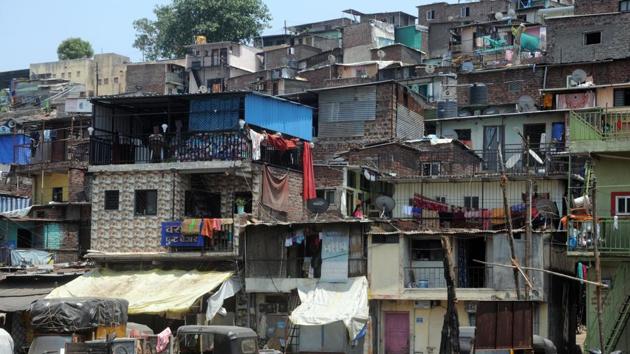
Experts have warned that cases could spiral up in slums and unauthorised colonies across the country as people live in close proximity in these areas, making social distancing tougher to follow and implement.
The health ministry’s guidelines focus on issues that need to be addressed by urban local bodies to prepare a response against the Covid-19 outbreak, which has infected at least 88,000 people in the country. At least 53 new cases were reported in Mumbai’s Dharavi on Saturday, taking the total number of cases in the area to 1,198.
“Informal settlements within cities have mushroomed due to migration from villages, and have inadequate housing and poor living conditions… These localities are often overcrowded, with many people crammed into very small living spaces… These areas are characterized by poor structural quality of housing, inadequate access to safe water, poor sanitation and insecure residential status… In the context of COVID (or any other respiratory infectious disease for that matter) implementing strategic interventions such as surveillance, physical distancing, isolation, quarantine and communicating the risk to the dwellers could be challenging,” the health ministry document said.
The ministry has directed that a nodal officer (incident commander) of appropriate seniority be identified to prepare the response depending on the geographic extent of the settlements and its population. The person, who will directly report to the municipal commissioner, will identify its planning, operation, logistics and finance teams to implement the preparedness measures, the Centre said.
According to the guidelines, the effort against Covid-19 has to be a coordinated among various departments, including representatives from health, women and child development, housing and urban affairs, public health engineering wing, Swachh Bharat Mission, elected representatives, prominent NGOs already serving the area and community leaders while being spearheaded by the nodal officer.
These experts will have to draft other smaller details according to the local requirements of an area.
The health ministry’s guidelines directed the local bodies to put in place cluster containment strategies that will include active and passive surveillance. They also stress compliance with regard to social distancing, use of face cover, observing hand hygiene and cough etiquette, hospital preparedness and treatment, community engagement, risk management, capacity building locally, etc.
There’s special emphasis on maintaining social distancing. “While sleeping, the distancing can be achieved to an extent by sleeping in opposite direction in a manner that head end of one person faces the leg of the other. Social distancing should be practiced particularly in community water points, public toilets, ration distribution points, health centers, etc. Social distancing is to be promoted at all formal and informal gatherings,” the guidelines said.
A central government official, who asked not to be named, said: “The onus lies on the local civic bodies to manage the challenges that these areas pose. We cannot not focus proactively on these areas as these are hotbeds for spread of any infectious diseases, and not just Covid-19. The guidelines have laid out dos and don’ts in detail that the local administration must follow to ensure the risk of infection spread is minimised if a case is reported there. It has to be a two-pronged preparedness strategy: prevention and control.”
According to the 2011 Census, there are 2,613 towns and cities with such settlements, with 65.4 million people residing in 13.9 million households.
Experts say it is the need of the hour to draft separate containment strategy for such areas, keeping in mind the urban settings. “No two urban settlements are the same; so there is a need to draft a micro plan for prevention and containment keeping in mind the local conditions of the area. In Delhi, if you see, there are several types of residential colonies and each would require a specific containment plan, especially those that are densely populated,” said Dr Jugal Kishore, community medicine faculty, Safdarjung Hospital.


