E-Paper



Govt may cut fuel taxes to help state-run firms
Currently, central excise duties on petrol and diesel are ₹27.90 per litre and ₹21.80 a litre, respectively. On the eve of Diwali last year, the Union government reduced central levies on petrol by ₹5 a litre and diesel by ₹10.

 Prefer HTon Google


India -- the world’s third-largest consumer of fossil fuel -- may slash taxes on petrol and diesel to save state-run energy firms from bleeding as international oil prices soared an eight-year high amid Russian military operations against Ukraine, and may prepare an incentive package to attract private investments in augmenting domestic production of oil and gas, three people aware of the matter said.
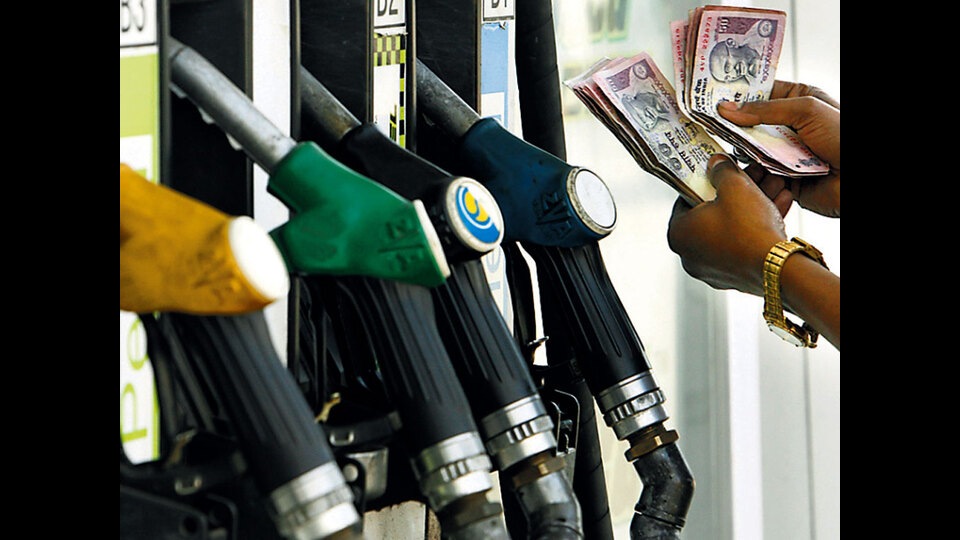
The government, which is committed to ensuring energy supplies to its people at an affordable rate, is keeping a vigil on the geopolitical developments and exploring all options, including a reduction in central excise on fuels if needed, they added, requesting anonymity.
So far, the common man is unaffected as state-owned oil marketing companies have not raised petrol and diesel prices since November 4 (on account of the ongoing assembly election cycle, which will end on March 7) even as they are now losing about ₹8-10 per litre on the sale of the two fuels, one of them said. “Enough cushion is available,” he added.
Currently, central excise duties on petrol and diesel are ₹27.90 per litre and ₹21.80 a litre, respectively. On the eve of Diwali last year, the Union government reduced central levies on petrol by ₹5 a litre and diesel by ₹10.
“The practice of daily changes in petrol and diesel rates have been suspended from November 4 mainly because of assembly elections in five states, including Uttar Pradesh. It was widely expected that OMCs would start readjusting retail prices after March 10 when these elections would have been over. But, due to the Ukraine crisis, international oil prices have seen an unprecedented jump leaving these companies bleeding. Hence, the government needs to provide them with some relief,” the second person said.
It is expected that crude oil prices may rise even further, he added. Benchmark Brent crude, which saw a northward movement from the beginning of the current calendar year, spiked to a 52-week high at $105.79 per barrel on the Thursday session, which is about 9.2% higher compared to the Wednesday session.
A third person said that while ensuring uninterrupted energy supply at affordable rates is the government’s immediate task, it has been deliberating a range of policy reforms to augment domestic oil and gas production to reduce overdependence on imports. India imports about 85% of the crude it processes.
According to him, the process of interdepartmental consultations are on to bring some policy reforms such as uniformity in taxation, allowing market-determined gas pricing for all kinds of natural gas, and creation of a special purpose vehicle (SPV) with joint funding from state-run energy firms to conduct the initial exploration, allowing global firms to join after a discovery is made.
“Lack of uniformity in taxation of domestic and foreign firms is a major disincentive. While total tax incidence for domestic companies is 25.17% under the simplified income-tax tax regime, it works out to 43.68% for foreign energy firms,” he said.
Two oil sector experts said on condition of anonymity that India’s an exploration and production regime needs bold decisions devoid of fears from agencies such as Comptroller and Auditor General of India (CAG) and Central Bureau of Investigation (CBI). “Both, bureaucrats and politicians are unwilling to touch age-old issues fearing agencies,” said one.
“The need of the hour is to create level-playing fields for both public and private sectors and not giving freebies such as the proposed SPV, which will again distort the regime and make public sector companies sick,” he said.
Instead, the government should incentivise exploration of oil and gas, said RS Sharma, former chairman of Oil and Natural Gas Corporation (ONGC). “Exploration is not a revenue-generating activity; hence it should be exempt from all taxes.”
A spokesperson of the Association of Oil & Gas Operators (AOGO) said that the government has correctly identified issues, the challenge shall be to resolve them. “Despite knowing what is causing low production/low participation – legacy issues are not being solved,” he added.