
 E-Paper



Govt may relax social security rules for gig workers
The Union government is studying a raft of suggestions from the public on draft rules notified recently to operationalise the Social Security Code 2020, which may undergo changes, including those governing benefits for gig workers

 Prefer HTon Google


The Union government is studying a raft of suggestions from the public on draft rules notified recently to operationalise the Social Security Code 2020, which may undergo changes, including those governing benefits for gig workers, a senior official has said.
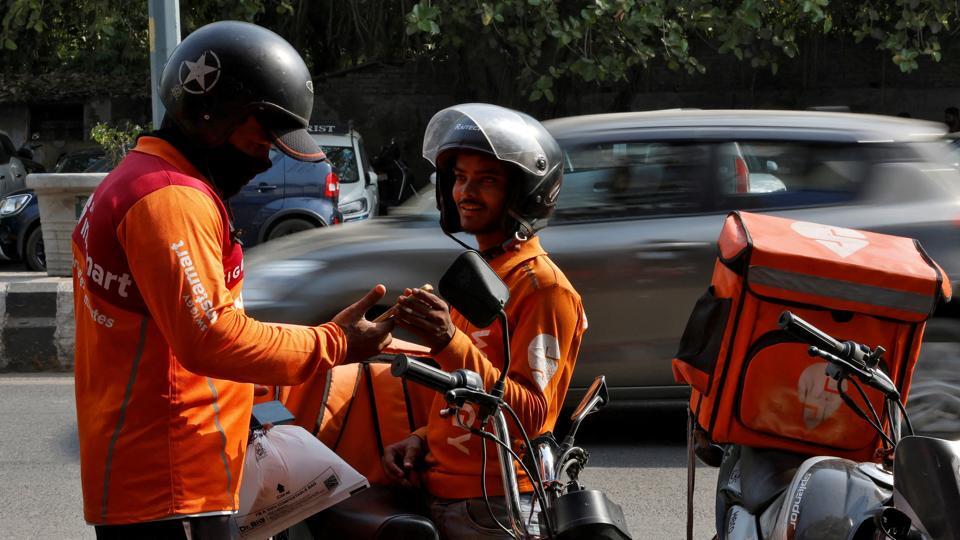
The labour ministry will ensure that no gig worker is left out of social-security allowances due to the current criteria laid down in the draft rules, the official said. Under the current norms, platform workers will need to work for a minimum of 90 days to become eligible for allowances such as health and accident insurance benefits. For those working in multiple platforms, the threshold is 120 days.
Workers’ unions have said that the cut-off doesn’t match actual work patterns and could deprive many gig partners who are unable to meet the criteria. Unions have demanded that the threshold be reduced to 60 days.
This week, labour minister Mansukh Mandaviya asked rapid-delivery platforms not to promise 10-minute delivery as a standard practice to ease work pressure on delivery partners.
“The government will ensure that all gig workers are covered. We may change the 90-day minimum working period threshold if it is necessary. All suggestions are being examined,” the official with direct knowledge of the matter said.
The Union government on November 21 announced the implementation of four labour codes passed by Parliament in 2019-20 meant to replace a welter of complex, British-era legislation.
The Code on Social Security, one of the laws, provides for social security benefits to gig workers for the first time. India’s gig economy, especially rapid-delivery platforms, is proving to be a vital provider of employment.
Workers’ groups, who say they face poor work conditions and wages, called for a flash strike on New Year’s Eve, a busy time for home delivery of everything, from groceries to gadgets.
A prominent gig workers’ union said the cut-offs for receiving social benefits in the draft rules don’t match work routines of most delivery platforms. This could mean very little benefit, it said. “Most gig workers would miss the threshold for social security payouts,” said Shaik Salauddin, founder president of the Telangana Gig and Platform Workers’ Union.
Salauddin referred to a tweet by Deepinder Goyal, the founder of Eternal, which owns quick commerce platforms such as Zomato and Blinkit, in which he said: “In 2025, the average delivery partner on Zomato worked 38 days in the year and seven hours per working day, reflecting true gig style participation rather than fixed schedules.”
Goyal’s tweet also said that “demanding full-time employee benefits like PF (provident fund), or guaranteed salaries for gig roles doesn’t align with what the model is built for”.
Raminder Uppal, a labour activist who advises gig workers’ unions, said the draft rules don’t specify how aggregator firms will calculate their contributions towards a social security fund when gig workers shift between platforms. “The rules are also ambiguous whether contributions will be the same for all kinds of platforms and what the provisional contributions will be for the current and past financial year,” he said.
Section 114 of the Code on Social Security, 2020 empowers the Union Government to frame welfare schemes for gig and platform workers, covering benefits like life and disability insurance, health, maternity and old-age support, funded by aggregators, the government or other sources.
Aggregators shall be required to “share the details of gig workers or platform workers who are engaged with such aggregators on the designated Portal of the Central Government for generation of a Universal Account Number”, which will be used in administering social security.
Contribution collected from aggregators under “section 114 shall be maintained as part of the Social Security Fund in a separate account meant for gig workers or platform workers as specified in sub-section (2) of section 141”, the draft states.


