E-Paper



GST Council rejigs rates, defers call on insurance
The GST council deferred several contentious issues such as tax rate rationalisation, GST on insurance premia and the fate of compensation cess post-March 2026.

 Prefer HTon Google


The Goods and Services Tax Council (GST) in its 55th meeting on Saturday took a slew of decisions to protect the poor, including slashing the tax rate on fortified rice kernels, exempting GST on gene therapy, providing relief to farmers selling black pepper and resins. It, however, deferred several contentious issues such as tax rate rationalisation, GST on insurance premia and the fate of compensation cess post-March 2026.
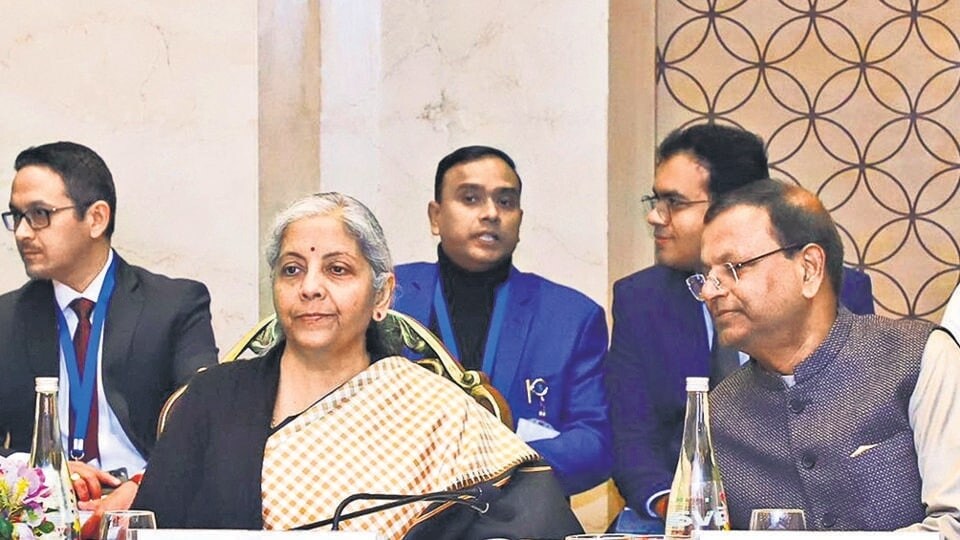
Informing about the deliberations and decisions of the one-day GST Council meeting held in Jaisalmer, Union finance minister Nirmala Sitharaman said the tax rate on fortified rice kernels has been reduced to 5% as it is supplied to the poor under the public distribution system (PDS). Similarly, gene therapy is now “totally” exempted from GST as it is one of key life-saving procedures, she said.
Tax concession has also been given to inputs on food preparations “intended for free distribution” to the economically weaker section under the government programme subject to existing conditions, she said. GST is exempted on black pepper (fresh or dried) and resins if supplied by an agriculturist. But sale and purchase of these commodities by merchants would be taxed, she said.
Also read | GST council explains difference in tax rates between salted and caramel popcorn
Aggregators undertaking less than ₹2,000 payments are eligible for exemption, but “this exemption does not cover payment gateways and other fintech services, which do not involve settlement of funds,” Sitharaman said. She also clarified that no GST is payable on penal charges levied and collected by banks and non-banking finance companies (NBFCs) from borrowers for non-compliance with loan terms. “This will be very important for small businesses,” she added.
The council, however, deferred some key matters. The determination of the fate of compensation cess may linger for some more time as the Group of Ministers (GoM) on the matter sought an extension without any specific deadline. In September 2024, the GST Council formed the GoM to deal with the issue arising after its legal tenure would end after March 31, 2026. The compensation cess was brought in during the difficult time of Covid-19 when GST collections fell. The compensation cess is likely to complete its purpose of repaying debt along with interest two months in advance, which is January 2026.
The other two crucial GoMs – the one on GST rate rationalisation and the other on insurance premia -- were also given extension. The GoM on rate rationalisation was first constituted on September 24, 2021 as per the decision of the 45th GST council meeting in Lucknow in which other objectives included simplification of tax structure and correcting duty inversions. At first its convener was former Karnataka CM Basavaraj S Bommai. Later in November 2023, the convenership went to UP finance minister Suresh Kumar Khanna. After that Bihar deputy CM Samrat Chaudhary became its convener on February 27, 2024. The GST regime currently has four main tax rates – 5%, 12%, 18% and 28%.
The GoM on insurance was constituted in September 2024 to holistically look into the issues pertaining to GST on life insurance and health insurance. The GoM was asked to suggest tax rates on health (or medical) insurance, including individual, group, family floater and other medical insurance for various categories like senior citizens, middle class, and persons with mental illness. The GoM was constituted after Union minister Nitin Gadkari wrote to the finance minister, requesting to exempt GST on life and medical insurance. This GoM is also headed by Chaudhary.
MS Mani, Partner at Deloitte India, said, “While there is now an inevitable delay in the decision making for health and term insurance, insurance companies, brokers and consumers would expect that the final decision in the next meeting takes into account specific situations such as group policies with varying insurance coverage levels for employees, family floater health cover where some members may be senior citizens, etc. It is also necessary to have reasonable limits for the possible lower rates, considering the significant increases in health care costs.”