
 E-Paper



Gyanvapi case: SC to wait on Varanasi court decision on suit by Hindu women
A three-judge bench headed by Justice DY Chandrachud took up a fresh plea by the Anjuman Intezemia Masjid Committee seeking its permission to worship the Shivling.

 Prefer HTon Google


The Supreme Court on Thursday said it will wait on the Varanasi district court's decision on an application filed by the Anjuman Intezemia Masjid Committee in the Gyanvapi mosque in Varanasi case questioning the maintainability of the suit filed by Hindu plaintiffs and adjourned the hearing to the first week of October. The court was hearing a plea challenging the survey of the Gyanvapi-Shringar Gauri complex in Varanasi where a 'Shivling' is stated to have been found.
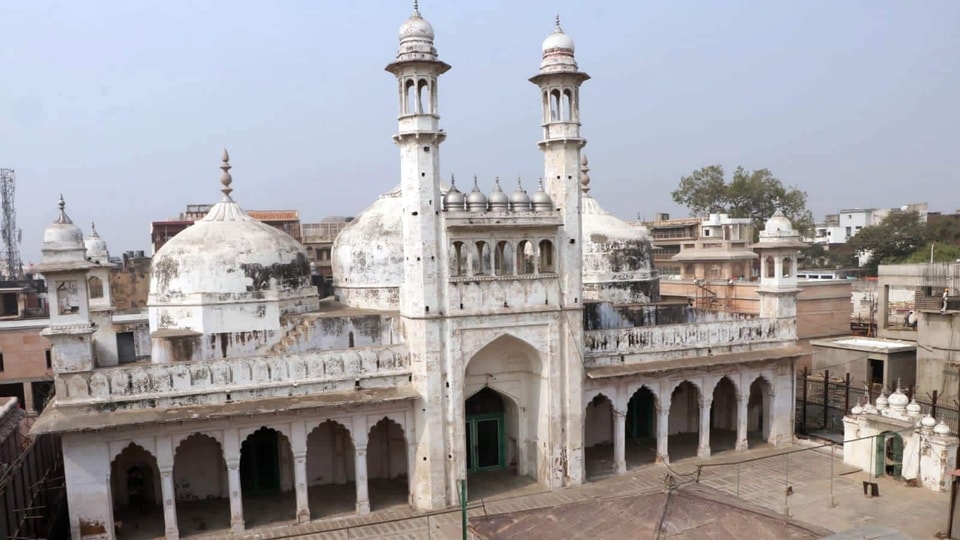
The district court in Varanasi had fixed the hearing into the Gyanvapi mosque-Shringar Gauri temple case for Thursday as it heard one of the plaintiffs on Tuesday.
The top court also declined to entertain two fresh petitions seeking the right to worship the 'Shivling' said to be found at the disputed Gyanvapi site, which is adjacent to the Kashi Vishwanath Temple in Varanasi and its carbon dating.
A three-judge bench headed by Justice DY Chandrachud took up a fresh plea by the Anjuman Intezemia Masjid Committee, which manages the Gyanvapi mosque, seeking its permission to worship the Shivling.
On May 17, the top court had directed the district magistrate of Varanasi to ensure the protection of the area inside the Gyanvapi-Shringar Gauri complex where the 'Shivling' was said to have been found and allowed Muslims to offer 'namaz' and perform religious observances.
On Tuesday, lawyer Man Bahadur Singh had represented litigant Rakhi Singh in the Varanasi district court and claimed that the Muslim side was misleading and confusing the court on the Places of Worship Act and the Waqf Act.
He said in the next hearing, their argument will be completed after which the Anjuman Intezamia will present its arguments.
Rakhi Singh and others had filed a petition seeking permission for daily worship of Hindu deities whose idols are located on an outer wall of the mosque but the Muslim side had urged the court to dismiss the case.
Her lawyer Shivam Gaur contested the stand of the Muslim side that the case was not maintainable, saying "it is completely wrong".
"The Places of Worship Act, Waqf Act and Kashi Vishwanath Act, which the Muslim side has repeatedly cited, are not applicable in my case," the lawyer said.
Gaur had in his argument before the court earlier said the Hindu side had been worshipping Maa Shringar Gauri till 1993. Later, the government put up barricades and banned the worship of the deity by Hindus.
He had said his case was limited to the issue of regular worship of the deity.
After Rakhi Singh and others had filed the petition, a lower court later ordered a videography survey of the complex. The survey work was completed on May 16 and the report was presented in the court on May 19.
The Hindu side had claimed in the court that a Shivling was found during the videography survey of the Gyanvapi mosque complex but the Muslim side had claimed that it was part of a fountain mechanism.
On the Supreme Court's order, the matter is now being heard by the district court.


