
 E-Paper



Haridwar hate speech: Supreme Court directs Uttarakhand to submit status report
Although the notice was served by the court on January 12, the Uttarakhand government had sought time to file a response.

 Prefer HTon Google


The Supreme Court on Wednesday directed the Uttarakhand government to submit a status report by next week on the progress of investigation into alleged hate speeches delivered at a religious gathering in Haridwar in December last year.
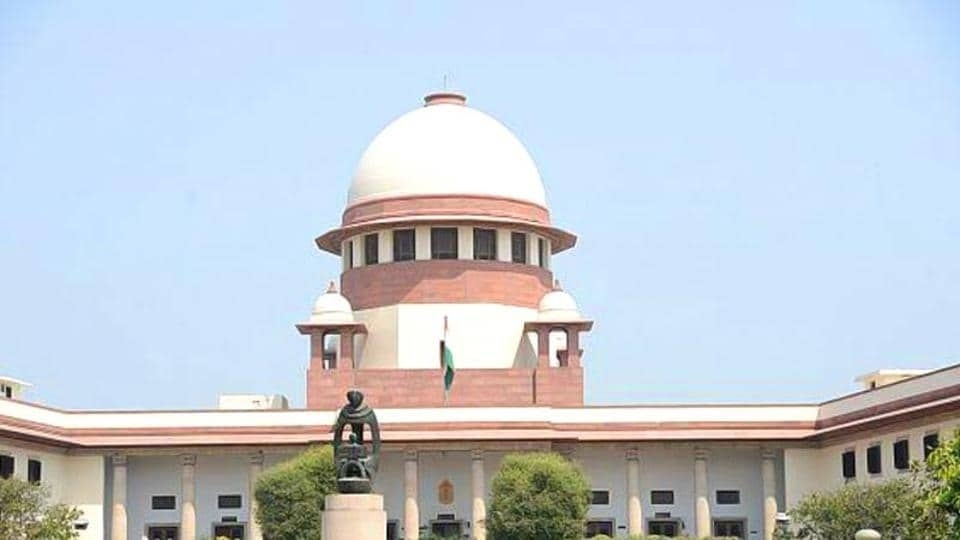
A bench of justices AM Khanwilkar and AS Oka also issued a notice to the Himachal Pradesh government after the petitioners pointed out that a similar event is scheduled to be held from April 17 to 19 in Una district.
In their petition before the top court, former Patna high court judge Anjana Prakash and journalist Qurban Ali sought action against those who made the alleged speeches last year in Haridwar and a further direction to prevent such events in the future.
Although the notice was served by the court on January 12, the Uttarakhand government had sought time to file a response.
“Today is the first returnable date. We are for the state. Investigation in three out of four first information reports (FIRs) filed in connection with this case is over, the charge sheets have been filed. There was some communication gap due to which we could not file our response. We are seeking some time,” state’s deputy advocate general Jatinder Kumar Sethi said.
To this, the bench said: “List the matter next Friday (April 22). Meanwhile, the state of Uttarakhand shall file a status report by the next date.”
Appearing for the petitioners, advocate Kapil Sibal told the court that a similar event is scheduled to take place in Himachal’s Una district and that they have filed an application for impleading the state in the matter.
“The real problem is that the event is on Sunday and see what is happening. I don’t even want to read the kind of things that were said in public,” Sibal said.
While issuing a notice to the Himachal government, the bench allowed the petitioners to inform the superintendent of police and district magistrate of Una about the event.
Earlier this week, the petitioners had moved a representation to the Una district magistrate, informing about the pending proceedings before the top court.
The fresh application claimed that representatives from more than a 100 Hindu organisations and religious leaders, including seer Yati Narsinghanand , are expected to take part in the upcoming event in Una. Narsinghanand , the sect chief of the influential Juna Akhada, is one of the five accused named in the FIR in connection with the December event in Haridwar. He was arrested on January 15 and is currently out on bail.
The three-day Dharma Sansad held from December 17-19 in Haridwar had caused a furore on social media, as the participating religious leaders called for violence against minorities.
A special investigation team (SIT) formed by Uttarakhand Police is probing the matter. Besides Narsinghanand, Jitendra Narayan Tyagi, former chief of Uttar Pradesh Shia Waqf board who was earlier known as Waseem Rizvi, was arrested in the case.
A similar event was also organised by the Hindu Yuva Vahini in Delhi on December 19.
In their petition, Prakash and Ali said that pursuant to the notice issued by the top court on January 12, they had approached authorities in Allahabad where a similar event was planned on January 29.
“Despite the representations made by the petitioners, a similar event styled as Dharam Sansad was held at Allahabad on January 29, 2022, during which calls were made for Hindus to take up arms and prepare for armed resistance against Muslims,” they said.
A Hindu Mahapanchayat in Delhi on April 3 witnessed similar hate speeches as well as an assault on journalists who were covering the event, they added.
“Intervention of this Court is necessary to stem this growing tide of communalism, particularly to put into place mechanisms for timely preventive action to be taken against persons who have openly declared their intention to organize public events and wantonly give provocative speeches inciting violence, promoting enmity between groups on the grounds of religion, making speeches prejudicial to national integration, inducing members of the public to commit offences against public tranquility, which are punishable offences under sections 153, 153A, 153B and 505 of the Indian Penal Code,” the application said.


