
 E-Paper



Haryana municipal elections tomorrow: All you need to know
The seats of the mayor and members of all the wards municipal corporations (MCs) of Ambala, Panchkula and Sonepat, president and members of the municipal council of Rewari, and municipal committees of Sampla (Rohtak), Dharuhera (Rewari) and Uklana (Hisar) will go to the polls in these elections.


The stage is set for a direct fight between the Bharatiya Janata Party (BJP)-Jannayak Janta Party (JJP) combine and the Congress in the municipal elections in Haryana, which will be held on Sunday, December 27. This will be the first elections which will be held in Haryana after the BJP-JJP alliance came to power in the state in 2019 making Manohar Lal Khattar the chief minister of the state for the second time. JJP president Dushyant Chautala was sworn in as the deputy chief minister.
Here’s all you need to know about the Haryana municipal elections:
1. The seats of the mayor and members of all the wards municipal corporations (MCs) of Ambala, Panchkula and Sonepat, president and members of the municipal council of Rewari, and municipal committees of Sampla (Rohtak), Dharuhera (Rewari) and Uklana (Hisar) will go to the polls in these elections. All three MCs have 20 wards each, while the Rewari council has 31 wards, and committees of Sampla, Dharuhera and Uklana have 15, 17 and 13 wards each, respectively.
2. Polling will be conducted from 8am to 5.30pm with strict Covid-19 guidelines in place. Mandatory sanitisation of the polling station will be done before the polling and every person involved in the election activity, as well as the voters, will have to wear face masks.
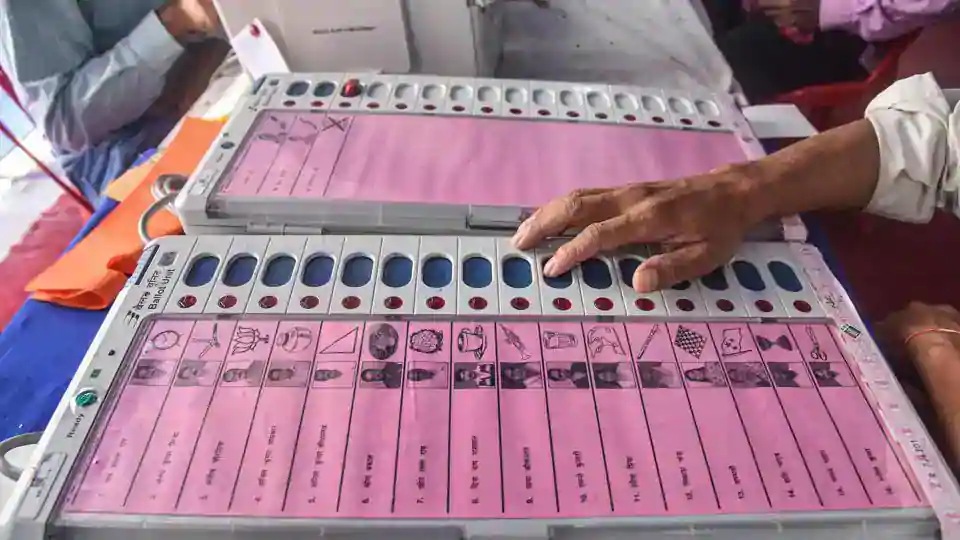
3. Everyone will be scanned thermally at the entry point of polling stations and hand gloves will be provided to the voter, for signing on the voter register and pressing the button of the electronic voting machine (EVM).
4. Last one hour of the polling time has been fixed for Covid-19 patients and those having symptoms of the coronavirus disease.
5. The election for municipalities will be conducted through EVMs while ballot papers will be used for mayor and president elections. None of the above (NOTA) option will also be used in these elections.
6. The election expenditure limit for mayors has been increased from Rs 20 lakh to Rs 22 lakh while the election expenditure limit for members of corporations has been increased from Rs 5 lakh to Rs 5.50 lakh. For the position of the president of municipal council and committees, the expenditure has been fixed at Rs 15 lakh and Rs 10 lakh respectively.
7. Adequate police force will be deployed to maintain law and order at the polling stations and in sensitive and hypersensitive areas.
8. Om Prakash Chautala’s Indian National Lok Dal (INLD) has boycotted these elections in protest against the “atrocities” allegedly committed on farmers by the centre and the state’s BJP-JJP government.
9. The ruling alliance is fighting these elections on the plank of development made in the state while the Congress has targeted the coalition on a range of issues associated with farmers, employees and law and order.
10. In the 2019 assembly elections, the BJP emerged as the single largest party and formed the government in a post-poll alliance with the JJP and seven Independent MLAs.
11. Counting of votes will be done on December 30.
(With agency inputs)


