
 E-Paper



Has India gone too far in curbing food exports?
The primary economic factor of high food inflation necessitated the government’s anti-inflation measures, mostly in the form of export curbs

 Prefer HTon Google


India has curtailed or banned all exports of cereals and other commodities, such as onion, as it battles persistent high food prices, initially triggered by Russia’s invasion of Ukraine and, then by fears of lower output due to an unpredictable monsoon.
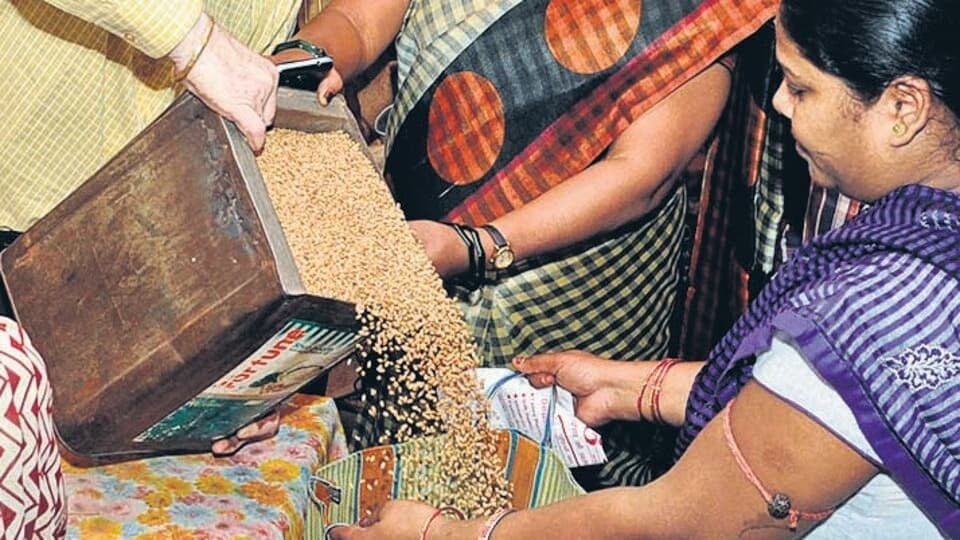
From halting exports to imposing export duties on grains and lentils, the Union government has deployed a range of steps to cool food prices, using virtually all measures from its inflation-control playbook.
On August 28, the government took the extreme measure of restricting overseas shipments of basmati rice, a prized, high-value export item in global markets, from the Middle East to the US.
Exports of the aromatic basmati variety are seldom curbed because they fetch precious foreign exchange and only about 10% of the produce is consumed domestically, mostly by high-income households.
The impacts of the ban on overseas sale of white rice and a minimum export price on basmati of $1200 per tonne by the world’s largest export have ricocheted around the world, sending global prices to a 12-year high, as measured by the Food and Agriculture Organisation’s (FAO) rice price index.
Minimum export prices pose a tariff barrier to trade, and in the case of basmati rice, the measure will make the grain more expensive for foreign buyers, thereby thwarting exports. The fresh curb on basmati export is likely to accelerate global prices further.
Why is inflation such a worry?
Food inflation in July rose a sharp 11%, leading the overall consumer inflation rate to accelerate to a 15-month high of 7.44%. Retail prices have risen above the Reserve Bank of India’s tolerable limit of 6%.
Food prices have hammered household budgets. Cereal inflation has stayed in double digits for seven straight months. Tomato prices saw a massive 201.54% spike in July. Ginger prices shot up 177%, while garlic rates soared by 70%. Green chillies increased by 50%.
Common greens, such as okra, brinjal, pumpkin beans, and cauliflower were also on the boil. Onion prices rose 11.7%. Only potato and cabbage prices fell by 13.3% and 9% respectively.
“Both economic and political factors have necessitated the Modi government’s anti-inflation measures, mostly in the form of export curbs,” said Abhishek Agrawal, an economist with Comtrade, a trading firm.
High inflation poses a risk to the economy and it may prompt the RBI to further hike interest rates, which could slow down growth. Moreover, the ruling National Democratic Alliance faces a national election next year, in which Prime Minister Narendra Modi will seek a rare third term. That aside, his Bharatiya Janata Party will face a string of state polls in Telangana, Rajasthan, Madhya Pradesh, Chhattisgarh and Mizoram.
A global commodity price spiral, emerging geopolitical challenges and increasing climate-changed induced adverse weather have resulted in stubbornly high food prices in Asia’s third-largest economy.
India’s rice-export ban on July 20 comes three days after Russia bombed Ukrainian grain silos and pulled out of the Black Sea Grain Initiative, under which Ukraine was able to ship out more than 30 million tonnes of grain and edible oils around the world over the past 11 months.
Ukraine is an important supplier of all types of grain. A government official, who asked not to be named, said with Ukraine’s food exports coming under Russian fire, the “entire world would have turned to India for rice, which would have definitely caused a domestic shortage”.
Unpredictable climate
A key concern is a strengthening El Niño this year, whose effects ripple around the globe, from floods in Latin America to drought in India and Pakistan. A delayed start to the monsoon, which waters nearly half of India’s net-sown area, in June, followed by heavy rain and flooding in July roiled crops. In August so far, the rain-bearing system has turned 9% deficient, stoking fears of lowering crop yields.
Curbs too harsh?
Some economists have slammed the host of restrictions imposed on food trade, arguing the government ought to instead lower import duties on wheat to cool cereal prices. Moreover, the ban on cereal exports has hit farm incomes. Prices of basmati rice, for instance, have fallen by ₹300 in the domestic market soon after export curbs were imposed.
According to agriculture economist Ashok Gulati, India’s curbs on exports would trigger a global food crisis while not helping much to lower prices at home because output has been low. He prescribes lower import duties to boost domestic availability, thereby helping cool prices.
In fact, the range of restrictions on food trade has been unprecedented. Here’s how the government has curbed shipments:
* On May 13, 2022, the government banned wheat exports.
* On May 24, 2022, the government issued an order to halt sugar export after millers exported 6.1 million tonne.
* On September 8, 2022, export of broken rice was banned. Moreover, a 20% duty was levied on export of non-basmati varieties.
*On July 20, 2023, India banned all non-basmati rice.
*On August 25, 2023, the government imposed a 20% export duty on parboiled non-basmati rice.
* On June 2, 2023, the government imposed limits on how much stocks of pulses traders could hold at any given time.
* On August 19, 2023, onion exports were curtailed with a 40% duty.
* On August 26, it set a minimum export price of $1,200 per tonne for basmati rice.
Yet, the Centre is considering more stringent steps to control soaring food prices, Union food secretary Sanjeev Chopra told HT early this month.
Officials maintain there is no need to import grains as there are sufficient domestic stocks, pointing to possible hoarding as a reason for high prices of basic grains. “The government has umpteen options (to control prices) and all options are open,” Chopra said.
A high-level inter-ministerial committee on prices mandated to take key decisions, such as curbing or banning exports, is now meeting once a week to review inflation, from fortnightly meetings earlier, he said. The panel comprises the secretaries of food, agriculture, consumer affairs, commerce and home departments.
All told, high food prices could last till September and “all eyes are on the upcoming summer harvests, which should ease food prices”, said Anshul Singh, the proprietor of Santoshi Impex, a food trading firm.


