Earlier this month, the medical journal The BMJ, in a special collection of articles, highlighted an often overlooked yet vital subject: the involvement of patients and their caregivers in healthcare delivery. While many patients and their families are eager to share their experiences during treatment, the question remains—who truly has the time or willingness to listen? Why does this matter so much?
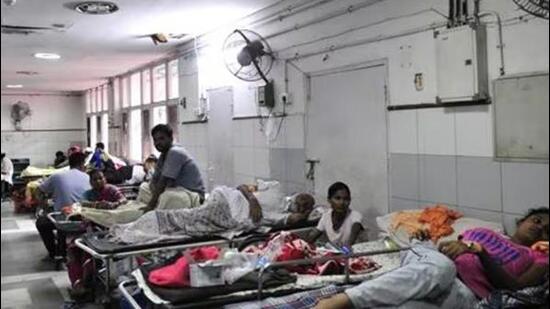
While many patients and their families are eager to share their experiences during treatment, the question remains—who truly has the time or willingness to listen? Why does this matter so much? (Representative photo)
The article emphasised that it was time to see lived experience—knowledge gained by being a patient, caregiver, or relative—as essential expertise, to ensure that healthcare is relevant, responsive, effective, resilient, equitable, and fully inclusive.
It showcased the value, competency, and capability of people with lived experiences in improving healthcare and health globally—and called on health leaders at all levels to make participatory healthcare “business as usual.”
“It is indisputable that people should have a say in the healthcare decisions that affect them,” said Sophia Walker, patient editor at The BMJ, and colleagues, in an editorial to launch the collection.
The article underlined examples to celebrate, including the UK MHRA’s strategy to involve patients “in every step of the regulatory journey” and a new law in Brazil mandating the inclusion of people with lived experience in decision-making about drugs for the public health system.
In 2023, the World Health Organisation (WHO) also issued a framework for “meaningful engagement of people with lived experience of noncommunicable diseases and mental health and neurological conditions” to improve health outcomes in the long run.
Meaningful engagement is the respectful, dignified, and equitable inclusion of individuals with lived experience in a range of processes and activities within an enabling environment where power is transferred to people; valuing lived experience as a form of expertise and applying it to improve health outcomes, the UN health body in the guide said.
Further, individuals and communities with first-hand experience of living with or being affected by noncommunicable diseases (NCDs), and mental health and neurological conditions, hold the key to designing effective, inclusive, equitable health interventions that leave no one behind, they said. “Their inclusion in decision-making processes through principles of respect, value and dignity is essential to achieving health for all.”
Last year’s World Health Assembly also passed a resolution that commits governments to empower and fund people, communities, and civil society to participate in decision-making processes at all levels of the health system, and governments must show progress every two years.
However, The BMJ article noted that the key to achieving this is by dismantling the cultural barriers that deny lived experience the same respect as technical knowledge. “It is essential to re-imagine—or at least be open to—a new definition of what it means to be an expert and what it means to hold authority,” the authors said in the article.
“A truly participatory approach to decision making needs the inclusion of everyone—especially hardly reached populations who have historically been excluded. This is critical to identify biases and gaps—which undermine outcomes—in healthcare at the population level,” the authors said.
Rhythma Kaul works as an assistant editor at Hindustan Times. She covers health and related topics, including ministry of health and family welfare, government of India.
Follow India news real-time updates and the latest news covered on Hindustan Times, featuring today's critical updates on Sonam Wangchuk LIVE and more across India.
Home/India News/Health Talk: Is It Time To See Lived Experience In Healthcare As Expertise?

 E-Paper