
 E-Paper



Himachal polyandry: 1 bride, 2 grooms, but how do intimate relations play out in this marriage?
In his research, YS Parmar explains that in fraternal polyandry, the wife has the autonomy to decide how time is distributed among the husbands.

 Prefer HTon Google


The ancient tradition of polyandry, where a woman marries multiple men, preferably brothers, still exists in parts of Himachal Pradesh. Primarily practised to avoid property division among brothers, the Hatti tribe in the state continues ‘Jodidara’ to this day.
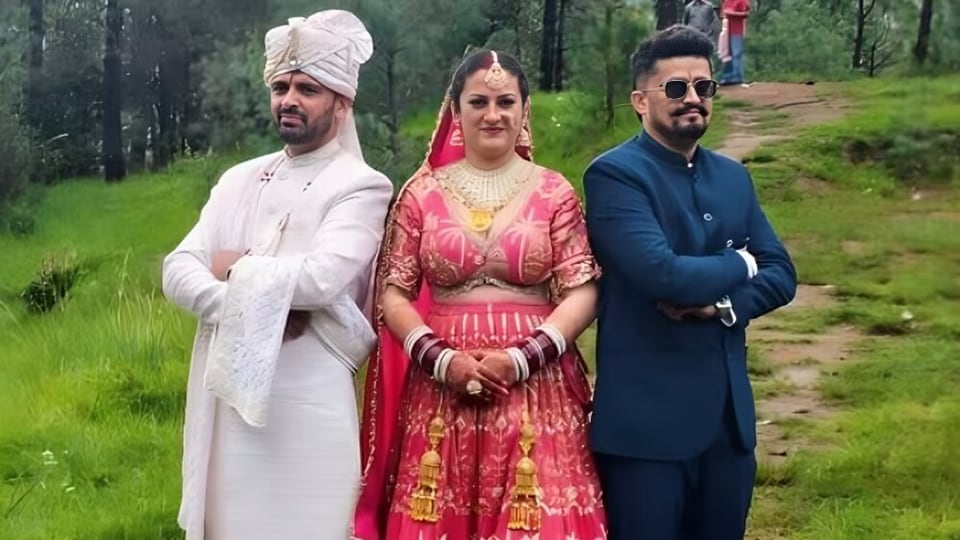
The spotlight recently returned to this tradition earlier this month, after two brothers from Shillai village of Sirmaur district married the same woman in accordance with tribal customs.
Sunita Chauhan, who recently married brothers Pradeep and Kapil Negi, said they are proud of the tradition, that the marriage was a joint decision, and that they were under no pressure.
The tradition of “Jodidara” is recognised under Himachal Pradesh’s revenue laws and finds space under sections 494 and 495 of the Indian Penal Code (IPC), which deal with marital relationships.
However, for the unsuspecting, the mere mention of sharing a wife brings up a sea of queries. Fortunately, former chief minister YS Parmar wrote his PhD thesis on the same century-old tradition.
Also Read | 1 wife, 2 brothers as husbands in this Himachal wedding: What’s the rare tradition and why is it practised?
His thesis titled – Polyandry in Himalayas: Socio-economic background of Himalayan Polyandry at Lucknow University – extensively studied the practice.
How time is shared among husbands
In his research, Parmar explains that in fraternal polyandry, the wife has the autonomy to decide how time is distributed among the husbands. According to Live Hindustan, which cited Parmar, the wife must provide equal love and time to all brothers to prevent jealousy.
On page 91 of his book, Parmar describes how sometimes a cap or shoe is placed outside the room to indicate that the wife is with a particular husband, though this assumes the household has more than one room, which is not always the case in poorer families.
Also Read | Woman marries 2 brothers in Himachal to keep alive rare tradition: 'Proud of our history'
"In most cases, the wife sleeps with all her husbands in the same room... she decides, according to her own wish, which husband to be with that night. However, she performs her duties with each brother in turn. Typically, equal time is given to all husbands. Complaints rarely arise," Parmar notes in his book, as reported by Live Hindustan.
Beyond intimacy, the wife typically manages the household, including the kitchen, cattle fodder, and farm work.
If the workload is too much, she may request that another woman join the household, who then becomes wife to all brothers as well.
Economic, cultural, and emotional reasons behind ‘Jodidara’
Members of the Hatti tribe assert that polyandry helps maintain family unity and protect small landholdings.
"Keeping small landholdings intact and less expense on weddings were the economics behind the tradition," said OP Sharma, former chairman of the Dr. YS Parmar Chair at Himachal Pradesh University. He added that Parmar did not encourage the practice due to concerns over women’s rights.
However, some people campare it to the modern ‘live-in relations’, a law student cited by PTI, said, “If live-in relations are accepted, then why is there an issue with age-old traditions? There are 15-20 families in my village Koti (Sirmaur district) where a woman is married to more than one man and we want the tradition to continue.”
"Relations stay healthy in the family and land stays intact in joint marriage," said Balma Devi. Another community member, Sant Ram, added: “Polyandry is an old tradition in which brotherhood remains and expenses are handled adequately. We four brothers are married to two women.”
Himachal's Hatti tribes
The Hatti tribe, a close-knit community on the Himachal-Uttarakhand border, was granted Scheduled Tribe status three years ago. Community leaders believe their recognition stems in part from adherence to traditional practices like polyandry.
"We have got tribal status due to such old traditional practices which also find mention in revenue records. Polyandry is prevalent in about 150 villages in the Trans Giri area of Sirmaur district," said Ramesh Singta, spokesperson of Hatti Vikas Manch, reported PTI.
Though such marriages are now increasingly conducted quietly, they are still accepted by many in the community, village elders say.


