
 E-Paper



Home-made masks effective, says study
Wearing masks in public places is mandatory in India, which follows World Health Organization (WHO) guidelines. WHO recommends a three-layer fabric or non-medical mask in public to prevent the spread of the coronavirus disease.


Homemade quilted cotton masks are likely more effective than those made from handkerchiefs or even commercially available cone masks to contain the spread of Covid-19, according to a study published in the American Institute of Physics journal.
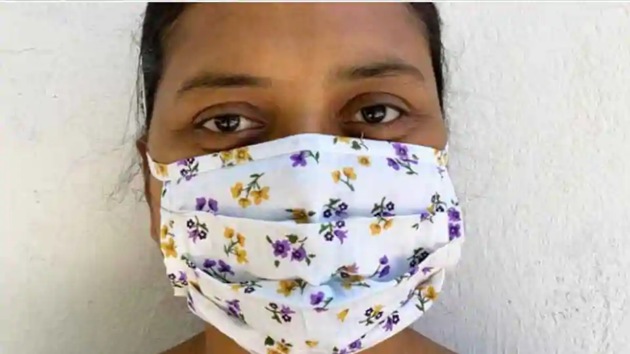
“The reason is the weaving pattern and the string thickness,” the study’s lead author, Dr Siddhartha Verma, associate professor (ocean and mechanical engineering), Florida Atlantic University, told HT in an email.
“The quilting cotton (most effective) we used had a tight-weave with thicker threads, in addition to having two layers stitched together, all of which impeded droplets significantly. One quick test that some people have suggested is to hold up the fabric to a light, and see how well it blocks the light,” Verma added.
The study, which is peer-reviewed and published on June 30, involved simulating a cough through a manikin. For the experiment, Verma and his team covered the manikin’s mouth with four commonly used non-medical grade masks: a folded handkerchief, a stitched quilted cotton mask, a bandana and a cone mask (which is a non-medical grade mask available over the counter).
Researchers followed instructions from the US government to make quilted cotton masks. The guidelines are similar to those recommended by the Indian government.
Wearing masks in public places is mandatory in India, which follows World Health Organization (WHO) guidelines. WHO recommends a three-layer fabric or non-medical mask in public to prevent the spread of the coronavirus disease.
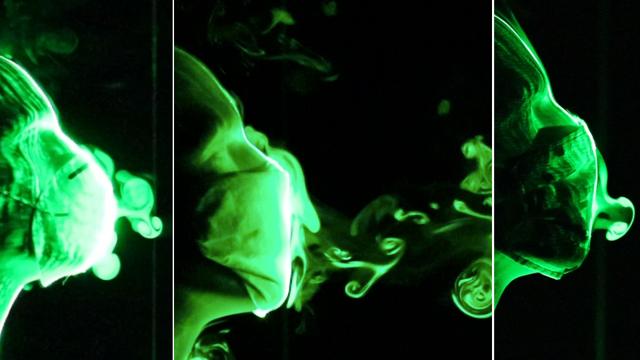
Researchers illuminated cough droplets using a green laser and measured how far they travelled. Without the mask, a typical cough will have droplets that travel almost 12 feet, which is almost double the six-feet social distance recommended by the Centers for Disease Control (CDC) of the US. However, a majority of the droplets fall to the ground by this distance. With masks, the distance droplets travel is greatly reduced, but it is the stitched quilted mask that reduces forward movement the most — to just 2.5 inches.
“The basic recommendation is in agreement with our experiments. The important thing to keep in mind is that whenever possible, it is better to use good quality fabric that is tightly woven, and mask designs that fit well and comfortably on the face,” Verma said.
Reviewing the study, Ashwini Agrawal, head of department of textile and fibre engineering at IIT-Delhi, stressed the importance of breathability and filtration efficiency.
“When we speak of cloth masks — whether they are quilted, non-quilted or multiple layers — their efficiency can vary between 20% and 50%,” Agrawal said. “Anything that is a little thick will be uncomfortable to wear. The next thing to look for is breathability, which the study is silent on. Something would be comfortable to wear if the breathability is good. When you cover your face, the moisture starts to build up and reduce breathability that would happen in hot and humid weather. I would recommend a person to wear a mask with high filtration and fitting well around the nose, which the study shows is a major leakage area.”


