
 E-Paper



House panel on Covid-19 suggests Epidemic Act’s review
The panel has also pushed for a comprehensive public health act, with suitable legal provisions, to ensure checks and balances over private hospitals to keep them from selling hospital beds; and black marketing of medicines.


The Parliamentary panel on Home Affairs, in its deliberations on the coronavirus disease (Covid-19) pandemic in the country, said there is need to revisit the provisions of the Epidemic Act, 1897; advised prudence in the approval of vaccines; and admitted that micro, small and medium enterprises (MSMEs) have been among the businesses hit the hardest by the pandemic and the lockdown.
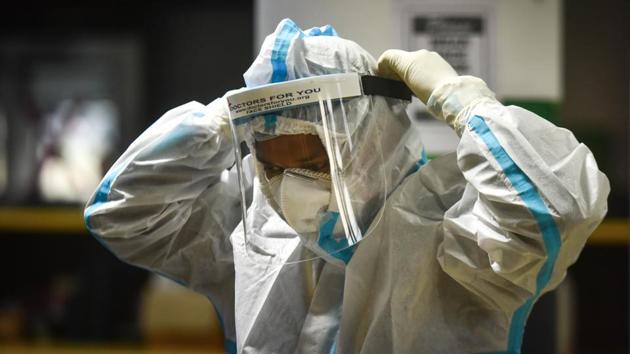
“The Committee observes that the provisions of the Epidemic Diseases Act, 1897, have helped in managing Covid-19, but this Act is outdated as it was framed in the colonial-era, well before the Spanish flu of 1918,” the panel has said in its report, contents of which have been reviewed by Hindustan Times. “Therefore… the Act should be revisited, updated and amended so that it is fully equipped to respond to the challenges posed by the unanticipated onset of a pandemic or epidemic in the future.” The panel does note that the Act is already under review by the Ministry of Home Affairs.
Also Read: 10 million Covid+, but India on recovery road
The panel is one of two Parliamentary committees that will submit a report on the Covid-19 crisis. It has also pushed for a comprehensive public health act, with suitable legal provisions, to ensure checks and balances over private hospitals to keep them from selling hospital beds; and black marketing of medicines.
The Centre implemented the Epidemic Diseases (Amendment) Ordinance 2020 to allow the Epidemic Diseases Act, 1897 in order to provide protection to health care service personnel, their living premises as well as their workplaces against any violence during the course of a pandemic. The move came in the wake of attacks on health care personnel after the onset of the pandemic.
“There are parts of the Epidemic Act that can suppress civil liberty and lead to invasion of a person’s privacy,” said Dr Sumit Ray, Head of Department (Critical Care Medicine), at Holy Family Hospital in Delhi. “So far, as profiteering should be limited, that’s a good thing. But how its implemented will need to be seen. There is also the concern that the government may not be held accountable for actions done under the guise of this Act.”
Also Read: The spread of India’s 10 million Covid-19 cases
The panel also weighed in on the large-scale exodus of migrant workers to their homes in the hinterland after the businesses they were employed in downed shutters during the lockdown. It has recommended a revision of the Inter-State Migrant Workmen (Regulation of Employment and Conditions of Services) Act to address the deficiencies and lapses that came to the fore during the exodus. It has also advised the creation of a migrant workers database to enable the extension of relief measures and delivery of rations to such workers.
The panel has also noted that the unprecedented lockdown led to a “severe social and economic fallout.” In its report, which will be tabled in the next session of Parliament, it states that the MSME sector has been one of the worst affected. The sector, according to the report, did not have access to “low-cost institutional finance” leading to a lack of cashflow, demand, manpower, technology-based production activity and reduced working capital which resulted in stress on employment.
“Stressed sectors are in dire need of working capital to to sustain the impact of Covid-19,” states the report. “The Committee further observes that MSMEs may also seek new avenues and possibilities for expansion by customising products with quality and innovations that will help them in meeting the evolving customer needs and by placing them as a part of the solution that is needed in the new normal.”
Some of this credit-access issue has been addressed in the Atmanirbhar Bharat package announced by the government in May. The finance ministry on 13 September said banks had sanctioned loans worth over ₹1.63 lakh crore to more than 42 lakh business units under the ₹3-lakh crore Emergency Credit Line Guarantee Scheme (ECLGS) for the MSME sector that was hit by the Covid-19 pandemic and ensuing lockdowns. The scheme is the biggest fiscal component of the ₹20-lakh crore Aatmanirbhar Bharat Abhiyan package.
The Committee has also noted that a number of schemes introduced by the government for farmers and non-farm MSMEs, such as the Pradhan Mantri Garib Kalyan Package, Pradhan Mantri Garib Kalyan Yojana and monetary and liquidity measures taken by RBI, need better ground-level implementation.
The panel stressed that the emergency authorization of any vaccine should be done in the rarest of rare cases, as no emergency use authorization has been given in the past by the Central Drugs Standard Control Organization (CDSCO). “…While undertaking vaccine trails, all necessary and mandatory requirements must be duly fulfilled and all phases must be completed. Trials on small animals, human trials should mandatorily undertaken on a sufficient sample size… Therefore, if at all emergency authorization is given, it should be given by the government after proper consideration and caution, and this provision should be used in the rarest of rare cases.”
The use of Ayurveda has also been recommended for a “holistic approach” to treat Covid-19 patients in the absence of a vaccine.
“The Committee is of the view that in the absence of a certified vaccine/medicines, the Ministry of AYUSH has huge potential in preventing and providing curative healthcare during this pandemic,” the report states. “For boosting the immunity of patients and common people, kadha/herbs/spices as part of their diet and Yoga may be suggested and promoted by the Health Ministry, AYUSH and AIIMS.”
The panel has suggested the creation of a separate wing under the National Disaster Management Authority that will specialise in handling/managing pandemics like Covid-19, with stakeholders from the government, corporates, NGOs and others.


