E-Paper



House panel seeks PMKVY evaluation, cites high drop out, poor fund utilisation
The panel flagged concerns over the underutilisation of funds and noted the skill development and entrepreneurship ministry’s allocation has risen

 Prefer HTon Google


A parliamentary panel has raised concerns that candidates trained under the fourth edition of the Pradhan Mantri Kaushal Vikas Yojana (PMKVY) are failing to meet prescribed competency standards, doubting their employability and the effectiveness of training under the flagship skill development and entrepreneurship ministry scheme.
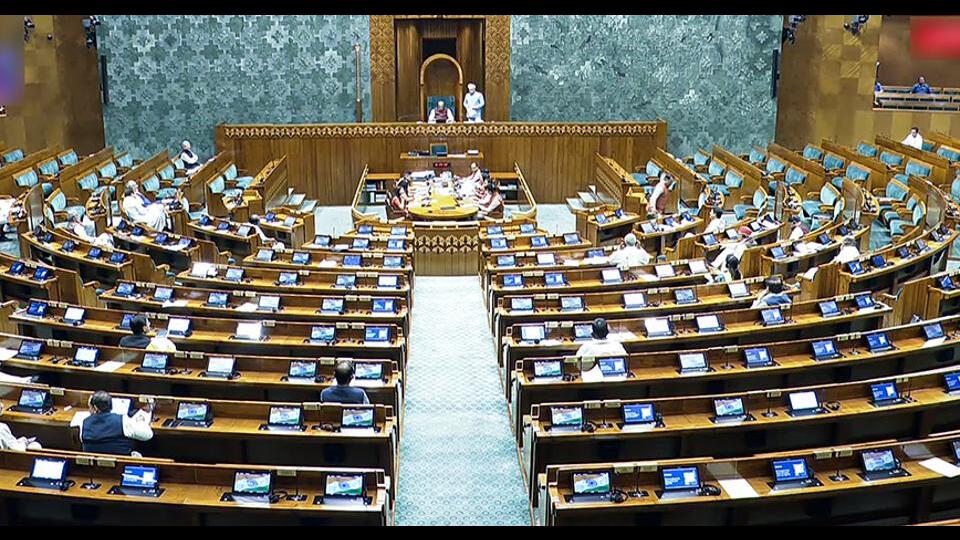
In its report on the ministry’s demand for grants presented in Parliament on Tuesday, the panel recommended an independent evaluation of the programme to assess whether high drop out rates and failures in assessment point to deeper systemic issues, including poor quality of training, gaps in implementation, or inadequate focus on employment outcomes.
The ministry launched the first edition of PMKVY in 2015, followed by PMKVY 2.0 in 2016-20, PMKVY 3.0 in 2020-21, and the ongoing PMKVY 4.0 in 2022-23.
The ministry informed Bharatiya Janata Party lawmaker Basavaraj Bommai-led 31-member Parliament standing committee on labour, textiles and skill development that over 635,000 candidates dropped out of 3.34 million candidates before their assessment in the PMKVY fourth edition.
“...unless corrective measures are taken, the very purpose of the scheme would be defeated. The Committee, therefore, recommended an independent evaluation of the efficacy of the training imparted under the scheme. The committee emphasises that it should be conducted without delay to know whether drop outs under the training programme and failure in assessment indicate systemic failure, poor quality of training imparted, or lack of focus on employment outcomes,” the panel said in its report
The panel flagged concerns over the underutilisation of funds and noted the ministry’s allocation has risen to ₹6,017 crore for 2026–27, a 62% increase over the previous year, but actual utilisation remains weak. In 2025–26, against a revised estimate of ₹3,706 crore, only about ₹1,700 crore (around 46%) was spent until February 2026.
The panel cited “delayed approvals”, “slow pace of implementation”, and weak coordination with states and industry. It said the Skill India Programme, an umbrella initiative aimed at expanding institutional training and strengthening the skilling ecosystem, and PM-SETU (Pradhan Mantri Skill, Employment and Entrepreneurship University initiative), which seeks to create a network of skill universities, suffered due to late clearances, leading to “restricted expenditure” and a “bunching of spending in the last quarter”.
The committee noted “negligible expenditure” under PM-SETU in 2025–26, as states failed to finalise Strategic Investment Plans and industry partners were not on boarded in time. It said there was “poor response from states” to the Strengthening of Infrastructure for Institutional Training scheme, which focuses on setting up and upgrading Industrial Training Institutes, resulting in lower utilisation of funds.
The panel said projects were dropped due to “lack of response from implementing agencies” under the Skill Acquisition and Knowledge Awareness for Livelihood Promotion, a World Bank-supported programme aimed at strengthening institutional capacity and governance in skilling.
The panel said these trends reflect “deficiencies in planning and execution” and underline the need for stronger institutional mechanisms to ensure a timely roll out and effective implementation of schemes.
The panel has recommended a National Level Skill Board with the participation of states for the effective implementation of the schemes. It added that the ministry should just focus on a few flagship skilling schemes and let states handle the others, as there has been only “limited success.”