
 E-Paper



House session extended; BJP opposes resolutions
Karnataka budget session extended to Feb 26 due to CM Siddaramaiah's ill health. BJP protests resolutions against Union govt. Tax devolution debated.

 Prefer HTon Google


Bengaluru: The Karnataka budget session, earlier scheduled to conclude on Friday, has been extended till February 26 owing to chief minister Siddaramaiah’s ill health. Speaker of the Karnataka Legislative Assembly UT Khader announced the extension saying that the CM will provide his budget reply on the extended day.
Siddaramaiah, who is suffering from a throat infection, will address the budget on Monday. The government will also table additional bills on the last day, said the chief minister’s office.
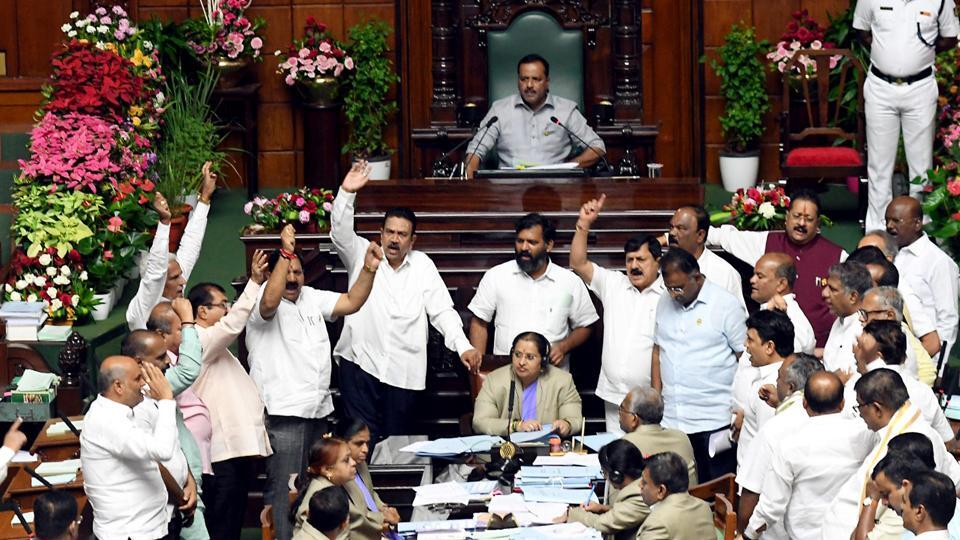
Meanwhile, on Friday, the opposition Bharatiya Janata Party (BJP) staged a protest against the Congress government for passing resolutions against the Union government. This led to several minutes of adjournment, said the leaders.
BJP leaders, including leader of opposition R Ashoka and deputy opposition leader Aravind Bellad, criticised the government for passing resolutions without following due procedures. The resolutions addressed tax devolution and farmers’ demands for a minimum support price (MSP).
The opposition also demanded the extension of the budget session till February 27, owing to the Rajya Sabha elections the same day.
Former chief minister Basavaraj Bommai highlighted increased tax devolution during Narendra Modi’s tenure. Congress MLAs accused Bommai of misleading the House.
Minister for law and parliamentary affairs HK Patil defended the government’s resolution, emphasising its importance for Karnataka’s interests.
BJP also presented a counter resolution to the government’s devolution of tax sharing by union government resolution.
“For the past 75 years, the Congress party has predominantly governed India as a democratic nation. However, it failed to increase state revenue share significantly, which remained at only 20% for many years. When requested to raise it to 30-40%, the Congress-led UPA government rejected it, citing concerns over hindering state development. They highlighted the issue merely for political reasons, focusing on power dynamics. Under the leadership of Prime Minister Narendra Modi, the newly elected government swiftly increased the demand for states’ revenue share from 32% to 42%, following the Cooperative Federalism policy,” said R Ashoka in the Assembly.
“The NDA government, unlike its predecessors, ensured the allocation of funds to states as recommended by Finance Commissions. The allegation of discriminating against non-Congress states for not providing sufficient funds is entirely baseless. During the 15th Finance Commission’s initiation, Congress-led state governments failed to effectively represent their fiscal situation to the commission. Moreover, during the final decisive meeting of the commission, five Congress ministers remained silent without opposing any decisions, leading to a delay in fund allocation for two years. If there’s any deviation from the standards, the current Congress government should be held responsible,” he further said.
“Despite the absence of economic growth, the central government compensated states with ₹1,06,258 crore. While this arrangement concluded in 2022, states are attempting to include 2023-24, which is misleading. The central government followed the mechanism of directly crediting funds for various central schemes into beneficiaries’ bank accounts. Any loss attributed to not accounting for this directly disbursed assistance is a political manoeuvre by state governments.” added R Ashoka.
“The GST compensation of ₹1,06,258 crore to Karnataka is routed through surcharge and cess. The plea for more allocation is politically motivated and lacks factual basis. To ensure fair development and taxation in Karnataka, it’s imperative to criticize the fallacies and political motivations behind decisions, debates, and resolutions. We condemn the state government’s attempt to overlook the economic reality and its complete failure in revenue collection, allocation, and economic growth,” he stated.


