
 E-Paper



How are brands building a new India?
As the face of the real estate industry changes, brands are altering the value proposition for consumers, offering them more than just standalone buildings. In the 15th episode of HT Brand Studio Live, Season 2, six brand leaders shared their views on the same.


From energy to real estate, the infrastructure industry is constantly reinventing itself. Be it the product offerings or the consumer preferences, the underlying traits that had defined this industry for so long have changed.
Take the example of the energy sector. Saurabh Kumar, Managing Director, Energy Efficiency Services Limited, said, “Some people like to call it energy transmission, I would like to call it energy transformation. The customer was never the focus of the power centre, but things are changing dramatically.”
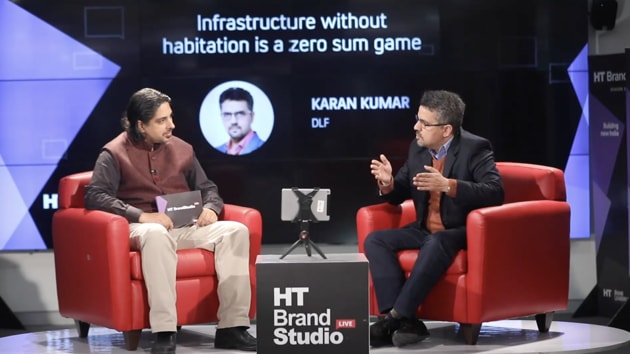
Kumar was speaking at the 15th edition of HT Brand Studio Live. It is a series that gets the brains behind India’s top brands to decode marketing innovations and more. It is anchored by Rameet Arora, Chief Operating Officer, HT Digital Streams, and co-hosted by HT Brand Studio and DMAasia.
While older templates get re-imagined, the need for change is imperative. Core to these changes is data-driven infrastructure. NSN Murty, Partner & Leader, Smart Cities, PwC India, said, “In the last five-six years, consumers have gone from being price sensitive to quality conscious. Consumers want that service and if it is given, they will pay an extra amount of money. Smart cities are completely focused on how the quality of service delivery improves at the last mile.”
With rampant urbanisation and digitisation, consumer needs are also constantly shifting. The demands are diverse, but the creation of such demands and their fulfilment depend on social infrastructure more than anything else, as explained by Karan Kumar, Senior Vice President & Chief Marketing Officer, DLF.
He said: “Infrastructure needs to be looked at from various levels, other than physical infrastructure. Building a new India is all about getting your habitation story in place. Infrastructure leads to habitation, which again leads to community building, which automatically provides the requirement for multiple services to be provided to these communities. It’s a very large and connected puzzle.”
Ashish Bhutani, CEO, Bhutani Group, also spoke about blending infrastructure and experiences. He said, “Brands should focus on building landmarks instead of just brick-and-mortar buildings. Infrastructure should have some marquee attractions, so that an individual can work and spend time with his family at the same place.”
Brands should also strive to cater to the needs of millennial consumers. Rajan Suri, Business Head - Retail Assets, PNB Housing Finance Limited, said, “Companies should actively invest in the digital space, as consumers are most active there. They need everything at the touch of a button. Consumers, especially Gen Z, believe in personalised offerings.”
Highlighting how even B2B marketing in real estate has evolved, Ramesh Iyengar, Chairman & Managing Director, Select Direct Marketing Communications, said, “The end consumer is so aware, so well-travelled and so exposed that they are demanding good-quality products. We can even see manufacturers are jumping across verticals.”


