
 E-Paper



Air India plane crash could be India’s costliest aviation insurance payout: How airline coverage works
Physical aircraft losses are estimated between $80 million and $250 million, depending on multiple valuation factors.

 Prefer HTon Google


The tragic crash of an Air India Boeing 787-8 Dreamliner on Thursday, which claimed the lives of 241 people, could end up being the largest aviation insurance payout in Indian history.
Industry experts estimate the total liability could range between $211 million and $280 million (around ₹2,400 crore), reported news agency PTI.
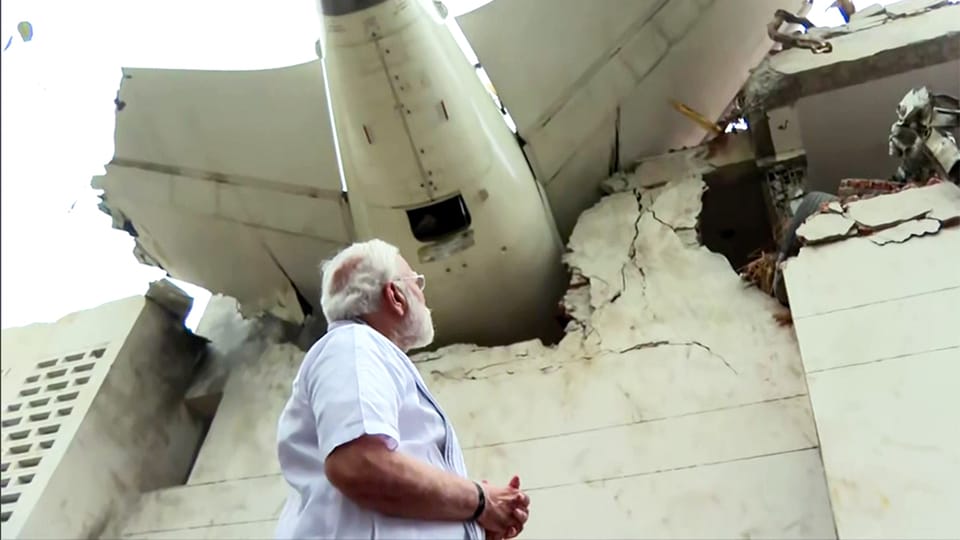
The aircraft, bound for London’s Gatwick Airport, took off from Ahmedabad’s Sardar Vallabhbhai Patel International Airport at 1:38 PM. Just 33 seconds into the flight, it crashed into a residential area. Of the 230 passengers and 12 crew members, only one British-Indian passenger, Vishwash Kumar Ramesh, survived the fatal incident.
The flight included 169 Indian nationals, 53 British nationals, seven Portuguese citizens, and one Canadian passenger. The wide demographic range will be key in determining compensation under international aviation laws.
Estimated loss to Air India
Physical aircraft losses are estimated between $80 million and $250 million, depending on valuation factors like age, condition, and configuration, according to a report in Mint.
Since the aircraft crashed into a residential apartment, there is third-party property damage liability on the operator. There might also be loss of lives in that residential apartment where the aircraft crashed,” Mint quoted Hitesh Girotra, Vice President at Prudent Insurance Brokers, as saying.
While the airline has announced interim compensation of ₹1 crore for the deceased, final compensation for passengers will be determined under the Montreal Convention of 1999. According to this, the compensation per deceased passenger could be up to 1,28,821 Special Drawing Rights (SDRs), or about $171,000 (roughly ₹1.47 crore).
The total loss to Air India, factoring in all categories of claims, is estimated between $211 million and $280 million.
However, it is too soon to determine the total liability that the airline may face due to the widespread devastation caused by this crash.
Who pays the airlines insurance?
Like most global airlines, Air India does not rely on a single Indian insurer for coverage. Instead, coverage is spread across global insurance markets through a network of reinsurers.
“No single insurer bears the entire risk—coverage is widely distributed among global reinsurers, with shares as small as 1.5% to 2% and a lead reinsurer typically taking 10-15%,” said Narendra Bharindwal, president of the Insurance Brokers Association of India.
“Aviation insurance programs for major airlines such as Air India are arranged on a fleet basis and reinsured across international markets like London and New York,” he added.
This model ensures that the financial impact of catastrophic incidents is absorbed across a broad global base.
Mint reported that since Air India was acquired by the Tata Group, the responsibility of insurance procurement has shifted from government tenders to private mechanisms.
Earlier, public-sector insurers competed in annual tenders. Now, the Tata Group has the autonomy to appoint insurers and reinsurers based on its assessment of risk and cost.


