E-Paper



'How dare a magistrate do that?': CJI fumes over CJP stir notice to Noida student
The Noida student who received the notice had allegedly attended the Cockroach Janta Party (CJP)-led student protest at Delhi's Jantar Mantar.

 Prefer HTon Google


The Supreme Court on Wednesday came down heavily on the Gautam Budh Nagar administration for issuing a preventive notice to a 20-year-old law student for allegedly spreading “anti-government propaganda” and inciting fellow students to join protests at Delhi’s Jantar Mantar, saying no executive magistrate could have issued such an order in the face of its categorical direction protecting students who participated in the demonstrations.
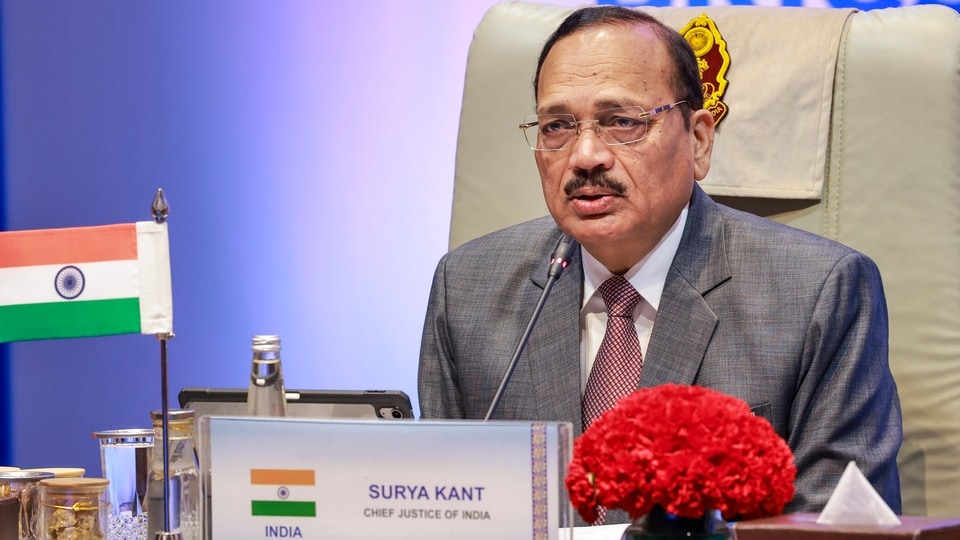
Chief Justice of India Surya Kant said that the court would seek an explanation from the Gautam Budh Nagar district and executive magistrates after senior advocate Bishwajit Bhattacharyya brought the September 4 notice issued to Gautam Buddha University student Akshat Tripathi to the bench’s attention.
“How could a Magistrate dare to issue notice? We made clear no coercive action against any student! No Magistrate could violate that order,” said the CJI.
The CJI agreed with Bhattacharyya that the issuance of the notice, even though it was withdrawn the following day, was prima facie in breach of the Supreme Court’s September 1 order. “There’s no question of taking action against any youth in view of our categorical and clear order. Nobody dare violate our orders,” said the CJI.
SC order on action against students
The CJI was referring to the court’s September 1 order by which it invoked its extraordinary powers under Article 142 of the Constitution to bring to an end criminal proceedings arising from the protests led by the Cockroach Janta Party (CJP) in July. The court ordered that FIRs registered between July 20 and 25 across states and Union territories in connection with the protests would not be pursued or investigated and would be treated as closed for all purposes.
That bench, also comprising Justices Joymalya Bagchi and K V Mohanа, had also directed that no fresh FIR be registered in relation to the same incidents and made it clear that mere participation in the protests could not be treated as an offence under penal laws. The order followed applications by the Centre through Delhi Police and the governments of Maharashtra, Assam, Bihar and West Bengal seeking quashing of criminal cases arising from the demonstrations.
The Centre had told the court that the government was committed to honouring assurances given after a July 25 meeting with representatives of the protesting group, including withdrawal of FIRs registered between July 20 and 25, no fresh criminal cases over those incidents and compensation to families of NEET aspirants and other students who died by suicide.
The court, however, had left open for separate consideration the case of 2,837 people whom Delhi Police claimed had criminal antecedents and were prima facie present at the protest site. The police had sought permission to register a single FIR to ascertain their individual roles, if any, in incidents involving bodily harm or destruction of public property.
‘Experiment with students of India’
Bhattacharyya told the court that despite the September 1 order, Tripathi, a second-year student of Gautam Buddha University, had been issued a notice by an executive magistrate on the basis of a police report. He described the episode as an “experiment with students of India” and urged the court to intervene to prevent such incidents from recurring.
“We are surprised how can an executive magistrate or a district magistrate issue a notice when our September 1 order was clear that no action can be taken against our youth for participating in the protest,” remarked the CJI.
Also Read: Row over notice to Gautam Buddha University student for alleged role in CJP protest
The notice, issued on September 4 and withdrawn the next day, accused Tripathi of spreading anti-government information and encouraging students to join the CJP protest at Jantar Mantar. It asked him to show cause why he should not be directed to furnish a personal bond of ₹5 lakh and two sureties of an equal amount to maintain peace for six months.
The proceedings were initiated under preventive provisions of the Bharatiya Nagarik Suraksha Sanhita (BNSS), after police alleged that Tripathi’s activities had created tension on the GBU campus and raised the possibility of a confrontation disturbing public order.
The police subsequently cancelled the notice after an inquiry found that the information on which it was based was false. It also emerged that Tripathi had left the university campus for his semester break and was in his hometown when the notice was issued.
Tripathi had said he had left the GBU campus on May 25 for a three-month semester break and was in Prayagraj during the period in question. He acknowledged attending the CJP protest at Jantar Mantar on July 20 but questioned the basis for alleging that he had incited students on the university campus when he was not there.
The Supreme Court’s strong reaction came days after the Allahabad High Court castigated the Gautam Budh Nagar administration over its handling of another young student activist, Akriti Chaudhary.
In a judgment quashing Chaudhary’s preventive detention under the National Security Act, a bench of justices Atul Sreedharan and Achal Sachdeva had directed that ₹5 lakh be recovered from the salary of Gautam Budh Nagar District Magistrate Medha Roopam as compensation to Chaudhary. The court also directed that its displeasure with the DM and the police be recorded in their service records.
The high court had reproached the administration of “bureaucratic overreach” and found that a notice issued to Chaudhary under Section 130 of the BNSS, ostensibly before her arrest, had in fact been prepared after she was taken into custody. It said the procedure was “ex post facto the arrest and nothing more than a sham”.
After examining the police records, including General Diary entries and WhatsApp chats and videos relied upon by the state, the court found no material showing that Chaudhary had incited people to riot, commit arson or destroy public or private property. It held that her detention under the NSA could not be sustained merely on surmises, biases, conjectures or opinions.
The high court also issued a wider warning to the bureaucracy, saying IAS and IPS officers owed their loyalty to the Constitution and not to the political executive. Officers who forgot this, it said, risked reducing Uttar Pradesh to “an Orwellian Dystopia”.
Against this backdrop, the Supreme Court on Wednesday directed Bhattacharyya to place all relevant facts and material on record. “You say that the notice has now been withdrawn. Have you been informed of this? Is there a communication?” asked the CJI.
When told that the withdrawal had only been reported in the press, the CJI said: “We agree with you. How can an executive officer issue a notice after our order, which was unequivocal and any layman can understand its import…You put all facts and materials on record, and we will seek explanation from the Gautam Budh Nagar magistrate,” the CJI said.
Deep Dive

This is a developing story. Check back for updates.