
 E-Paper



How India prepares the Union Budget: Inside the official process ahead of 2026 reveal
Finance Minister Nirmala Sitharaman will present the Union Budget for 2026-27 on February 1, her ninth consecutive budget.

 Prefer HTon Google


India's finance minister Nirmala Sitharaman will to present the Union Budget for 2026-27 in Parliament on February 1, marking her ninth consecutive budget, at a time when India’s economy is expected to grow at 7.6 per cent in the current financial year despite persistent geopolitical headwinds.
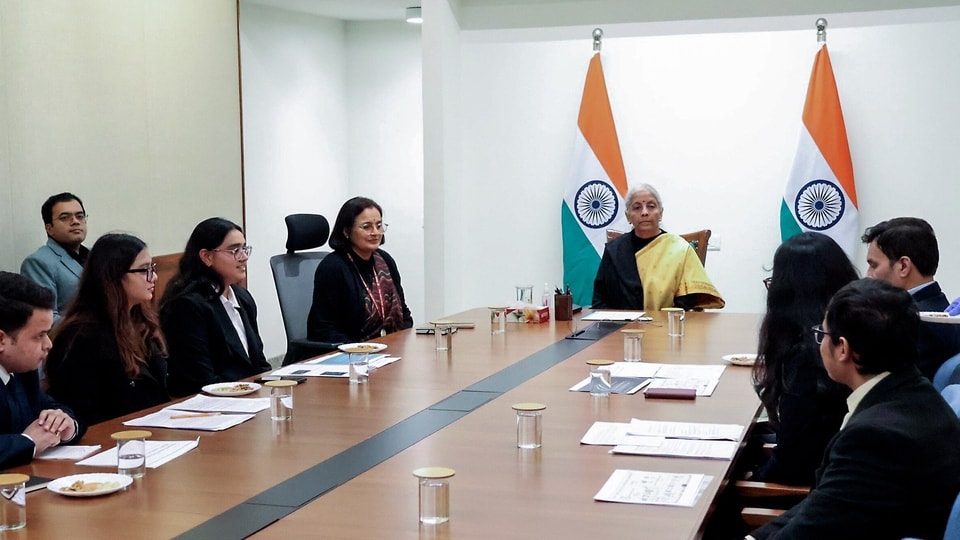
Here is a detailed look into how the budget is officially prepared:
The preparation of India’s budget is a months-long, highly confidential exercise involving multiple ministries, senior bureaucrats, and ministers, culminating in the presentation of the Annual Financial Statement in Parliament.
ALSO READ | Parliament Budget session to begin today; Opposition to raise MGNREGA, SIR issues
Consultations first: The process formally begins several months before Budget Day, when the finance ministry initiates consultations with key stakeholders, including central ministries, state governments, industry bodies, economists, and representatives from agriculture, MSMEs, and social sectors.
Ministries' inputs: Each Union ministry then submits detailed estimates of requirements and projections to the departments of expenditure and revenue under the finance Ministry, a standard process followed annually.
These demands are scrutinised by the finance ministry, which weighs competing priorities such as infrastructure spending, welfare schemes, defence, and subsidies, while keeping macroeconomic indicators like GDP growth, inflation, and fiscal deficit in view, news agency PTI reported.
ALSO READ | Union Budget 2026: Key expectations — from income tax to GST-style customs overhaul
Parallel to expenditure planning, the Department of Revenue prepares taxation proposals, including changes to income tax, corporate tax, customs duties, and GST-related measures, based on revenue needs and economic conditions.
Series of meetings: The finance minister chairs a series of internal meetings with senior officials, including the finance secretary, revenue secretary, economic Affairs Secretary, and the Chief Economic Adviser, to align with the government’s broader agenda, the PTI report said.
As part of the constitutional process, the Budget is framed in accordance with Article 112 of the Constitution, which mandates the presentation of the Annual Financial Statement to Parliament.
Assessment before budget: The Economic Survey, prepared by the department of economic affairs under the supervision of the Chief Economic Adviser, is finalised separately and tabled a day before the Budget to provide an assessment of the economy.
Halwa ceremony: The final phase of preparation is marked by the traditional ‘halwa ceremony’, which Nirmala Sitharaman participated in on Tuesday, signalling the completion of budget drafting for 2026-27, the report added. The ceremony was held in the basement of North Block on Raisina Hill, as the new ministry offices at Kartavya Bhawan-1 do not house a printing press. The halwa ceremony is a customary ritual in which a traditional Indian dessert is prepared and served to Finance Ministry officials and staff involved in Budget preparation.
Lock-in: Following the ceremony, officials involved in drafting and finalising budget documents enter a mandatory ‘lock-in’ period, during which they remain physically isolated to maintain confidentiality. During the lock-in, officials stay in the North Block basement and are cut off from all external communication until the minister completes the speech in the Lok Sabha.
Historically, the lock-in period lasted up to two weeks because of the time required to print hundreds of copies of Budget documents, but it has been reduced to about five days since the transition to digital distribution.
Where's it printed?
All budget-related documents were traditionally printed at a dedicated press within North Block, a practice that began in 1980 after earlier printing locations, including Rashtrapati Bhavan and a Minto Road press, were abandoned due to document leaks, PTI noted.
While the Narendra Modi government has discontinued several colonial-era Budget traditions, such as presenting the Budget at 5 pm and keeping the Rail Budget separate, the halwa ceremony has been retained.
Time and date
The Union Budget is now presented at 11 am on February 1, a change introduced in 2017 to ensure parliamentary approval before the new financial year begins on April 1. The Budget Session of Parliament began on January 28 and will continue until April 2, with a break between phases, parliamentary affairs minister Kiren Rijiju said, as per ANI.
ALSO READ | Union budget 2026: How income tax slabs changed over the years
President Droupadi Murmu addressed a joint sitting of Parliament at the start of the session, which is followed by a debate on the motion of thanks, during which members can discuss the government’s policy direction. The budget presenttion on February 1 will be followed by detailed discussions, demands for grants, and voting in both Houses of Parliament, according to ANI.
What happens once budget is presented
The budget documents, including the Annual Financial Statement, Finance Bill, and Demands for Grants, will be made available digitally through the Union Budget Mobile App and the official website. Like the previous six Budgets, the 2026-27 Budget will be entirely paperless, with documents accessible in English and Hindi on Android and iOS platforms.
(With inputs from ANI and PTI)


