E-Paper



MiG-21 relevant even in today's air combat, says Group Captain Chetan Sharma
Sharma talked about what makes MiG-21 special, its capabilities, the safety record, how the IAF maintained it for so long and the glorious run of the workhorse

 Prefer HTon Google


As the fabled MiG-21 prepares to fly into the sunset next year after more than six decades of service, Group Captain Chetan Sharma, one of the last two commanding officers of a MiG-21 squadron, described the fighter as one of the world’s most agile aircraft that can still hold its own in combat.
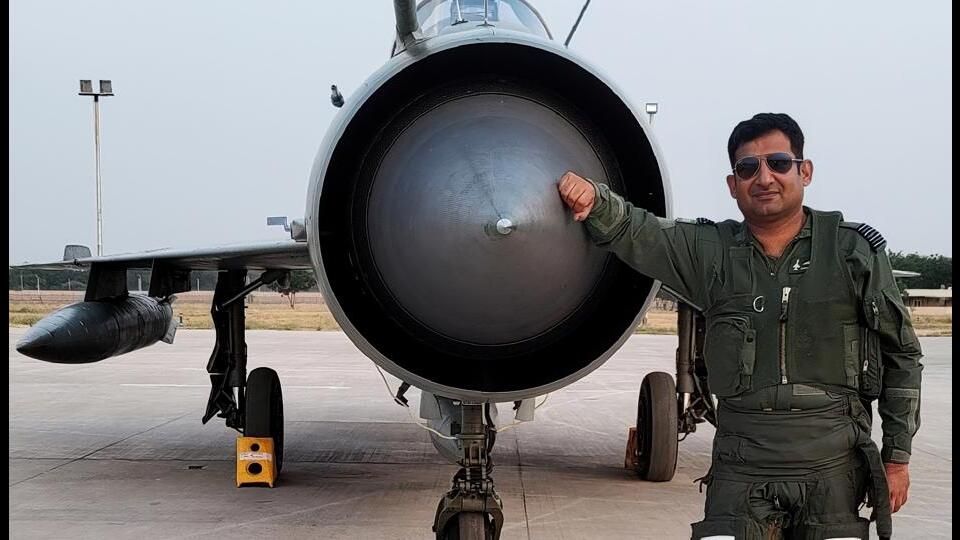
In an interview, Sharma talked about what makes the MiG-21 special, its capabilities, the safety record, how the Indian Air Force maintained the aircraft for so long and the glorious run of the workhorse.
Edited excerpts:
What makes the MiG-21 unique?
The Mikoyan-Gurevich designed the MiG-21 as a supersonic, all-weather interceptor aircraft. The design of this aircraft has a classical approach, with a small airframe wrapped around a very powerful engine and fitted with swept-back delta wings. This sleek aircraft with wedge-like wings looks like a dart flying in the sky. The aircraft’s simple flying controls, robust engine, modern weapons and avionics have allowed it to remain relevant even in today’s air warfare. The aerodynamic design allows it to perform exceedingly well in the supersonic regime and undertake all assigned operational roles efficiently. In 2000, IAF upgraded its MiG-21 Type-75 aircraft to the MiG-21 Bison. The upgrade involved re-equipping it with a modern radar, weapons and electronic warfare suite. The Bison has five hard points and can carry air-to-air and air-to-ground armament, besides an inbuilt 23 mm gun. It has a pulse Doppler radar to track and eliminate targets using the RVV-AE beyond visual range missile and the R-73E close combat missile.
The MiG-21’s safety record has been worrying and it has often been called an unforgiving fighter. More than 400 MiG-21s have been involved in accidents during the last six decades. Your thoughts?
IAF has been operating MiG-21s for six decades and in large numbers. Almost 1,000. It has operated a raft of MiG-21 variants -- Type 74, Type 76, Type 77, Type 96, Type 75 or MiG 21 Bis and the MiG-21 Bison. The MiG-21 has been the most flown fighter aircraft in IAF. Hence, the number of accidents may appear to be more when compared to other fighters, which have undertaken relatively lesser amount of flying. It would be wrong to term the aircraft unforgiving. There are generations of IAF pilots who have done their ab initio fighter flying training on this legend. To meet operational roles, any machine is required to be operated to its limits. The safety margin is comparatively narrower in fighter aircraft. Mission profiles dictate how an aircraft is to be operated. Demonising the venerable steed does it a great disservice.
How has IAF managed to keep them flying for so long?
Over the years, IAF has learnt a lot and evolved to maintain as well as upgrade a fleet of fighters which formed the backbone of the country’s air prowess for a long time. It is no mean feat to maintain an ageing fleet for so long. We were able to do so by adopting a slew of measures including efficient logistics management, accurate demand forecasting and extensive coordination with supply agencies. IAF has also aggressively pursued self-reliance by procuring spares from local sources. This greatly reduced dependence on foreign vendors and enabled better serviceability of aircraft. Besides, it has been the hard work, dedication and perseverance of the men behind the machine that has enabled the fleet to undertake the assigned task.
What is the status of MiG-21 flying operations at the Nal airbase?
I will be flying a night sortie after this interview. The squadron is flying by day and night to meet its commitments. We are combat-ready and capable of executing any mission assigned to us. The MiG-21 has still not run out of juice. It can hold its own in combat.
Can you share some history and achievements of the No 3 Squadron “Cobras”?
It was raised in Peshawar in 1941 as a fighter reconnaissance squadron with six Audax aircraft, eight officers and 78 airmen. During World War II, the squadron participated in operations in the North-West Frontier Province as well as in the Burma Campaign. After Independence, the squadron saw action during the wars of 1965 and 1971 with Pakistan. It has the rare distinction of operating 10 different types of aircraft. It has never been number-plated --- discontinued operations awaiting induction of new aircraft. Flight Lieutenant MM Engineer (later air marshal) of the squadron was awarded the Distinguished Flying Cross during the Burma Campaign of 1945. The squadron was awarded six Vir Chakras, three Vishisht Seva medals and seven mention-in-despatches for its role in the 1965 and 1971 wars. The Cobras have the proud distinction of producing six Chiefs of the Air Staff --- four for IAF and two for the Pakistan Air Force.
The Cobras are among the last generation of MiG-21 pilots in the country. What will you miss most about the MiG-21 era?
It is one of the most agile aircraft in the world. Despite its conventional controls, the MiG-21 can achieve a rolling rate of 270 degrees per second. It can be handled well at speeds ranging from less than 300 kmph to 1,300 kmph. It has a good thrust-to-weight ratio that makes it very potent in close combat. It will leave its own mark in the annals of Indian military history. It is an honour to be referred to as the last of the MiG-21 pilots.