
 E-Paper



HT Interview: No anti-incumbency in Chhattisgarh, says CM Baghel
Chhattisgarh Chief Minister Bhupesh Baghel, ahead of crucial assembly elections, says there is no anti-incumbency in the state and the Congress has ensured all-round development.

 Prefer HTon Google


Raipur
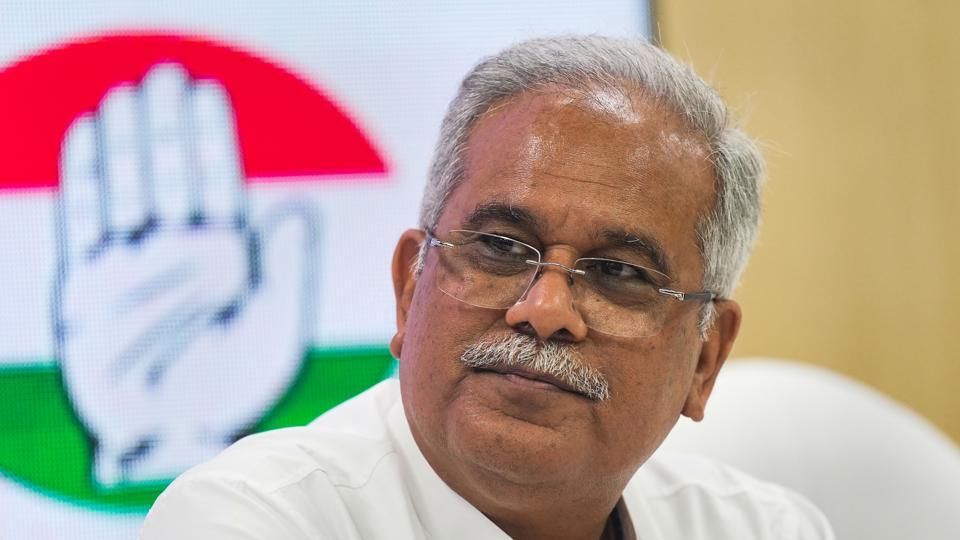
For five years, chief minister Bhupesh Baghel has led the Congress government in Chhattisgarh after the party swept to victory in 2018, defeating a three-term Bharatiya Janata Party (BJP) government led by Raman Singh. During his tenure, Baghel has faced several challenges, from investigating agencies alleging scams and arresting his officials, to murmurs of an internal Congress leadership squabble. But as crucial assembly elections are two weeks away, Baghel told Ritesh Mishra and Dipankar Ghose in an interview said that there was no anti-incumbency in the state, the Congress has ensured all round development of every section, the only target of ED and IT raids was to defame his government, why the Chhattisgarhiya identity he has nurtured was so important for the state and how it has reawakened a sense of pride among the people of the state. Edited excerpts:
Q: What is your assessment for the upcoming elections and what are your primary issues?
It will be a wonderful election. People have made up their minds that the Congress government will come back. For five years, we have served every section of the society. Whether it is farmers, labourers, women, youth, adivasis, or traders, we have brought economic betterment to their lives. We have strengthened health care and culture. The people are very enthusiastic and happy with the government.
Q: What three policies of yours do you think are benefitting you the most in the elections?
The first would be that we have bettered everyone’s financial condition. Second, we worked on strengthening health care in both rural and urban areas. Third, there has been significant improvement in education, we have reopened schools shut in Bastar, and started Swami Atmanand English schools and colleges(CHECK). Thus far, there were no government English medium school or colleges. Besides this, another crucial policy is our culture. Whether it is Ram Van Gaman Path, the Adivasi Nritya Mahotsav, Devgudis or Kabir Sarovar, we have worked on it all.
Q: That you are a Chhattisgarhiya and an OBC, is a very important part of your identity. Was this a targeted plan to awaken regional pride?
People in Chhattisgarh have always been ignored, and this was one of the big reasons behind the demand for a separate state in the first place. But over 18 years, Raman Singh didn’t touch this aspect, and in fact, tried to suppress it. When we came, we brought back Chhattisgarhi festivals and traditions, we brought the Chhattisgarhi Olympics, we strengthened the local dialects and languages, and introduced a state song. This resonated with people and they took pride in our traditions. They felt that their own rule has now arrived.
Q: But will this Chhattisgarhi sentiment translate into votes?
It is not important whether this gets converted into votes or not. It is important that the people of Chhattisgarh feel pride in Chhattisgarh. Their voices should be heard in the ministries. Earlier, you couldn’t talk in Chhattisgarhi in the mantralaya (secretariat), or to the officials. Now it’s not just Chhattisgarhi — it is Maria, Muria, Halbi, Gondi in Bastar or Surgujia. People feel happy about this.
Q: In Bastar, you swept the last elections, as you did in Surguja. Don’t you think there will be a dent in your tribal votes?
That won’t happen. People think this is our own government. Who wants to lose their own government? And their government can only come when they pick MLAs. They will save their own government.
Q: Bihar has done a caste count which the Congress has supported. Priyanka Gandhi Vadra said that Chhattisgarh, too, will conduct a caste survey if you come to power. Is this another big issue ahead of 2024?
The first thing is that they (the Union government) should have done the 2021 census. Besides, the data from the 2011 socio-economic caste census never came out. This is not just a political study, but an economic and social study. It is not just about OBCs. Among SCs, STs, OBCs and even the upper castes, there is always a section left behind in the race for development. Should there not be policies for them? Who was left behind? Why were they left behind? Should we not know? Governments will attend to them, policies will be made. This is not just a political conversation, but a conversation of the development of the entire country.
Q: But Raman Singh says some of this politics divides people, divides the state. He says it doesn’t matter if the CM is an OBC, SC or ST, it should be someone who will work.
I have already said that this is not just about politics, economical and social prosperity is important. For instance, we just gave 10,000 jobs to primitive tribes. Straight recruitment. Because even among the tribes, there are many who can’t even give competitive examinations. Where is the politics in this? Raman Singh is defining this all wrong. And they are the ones who divide, who set fire to society, with their communalism. They are talking about us?
Q: The Sahu votebank is the biggest OBC chunk in Chhattisgarh and voted for the Congress the last time. They have been inclined towards the BJP in the past, and after the BJP gave a ticket to the father of a boy killed in an alleged communal incident, do you think the Sahus will stay with you?
The murder of anyone is tragic. State government ensured they got justice. Police arrested the murderers. All the procedures were completed and the challan was presented to the court. The government also announced compensation and gave employment to the victim’s family. After all of this, if you are doing politics, it means you, the largest political party in the world, have no agenda left.
Q: Will the Sahu votes shift away though?
No, there will be no big difference. If we had done injustice to the family, it would have been another matter. It was a fight between two children. The fight escalated, and a murder took place. That a murder took place is wrong, there should never be violence. But it happened. We investigated and made no attempt to hide the truth. In other places, farmers were trampled and the Centre and state governments tried to save the accused. Here, there was no such attempt.
Q: You have dropped 18 MLAs, and some of them are angry. One has filed as an Independent. How will you tackle this?
This is not happening for the first time. When a ticket gets cut, someone will be angry. But they are part of the family, and we are talking internally. Most we have assuaged, some are left, we will talk to them too. There is still time left for the elections.
Q: You said that the BJP has spread communalism. But lots of people say that when the Congress focusses on Ram Van Gaman Path, or tries to cement the Hindu identity, they are playing on the BJP’s pitch. This brings a communal agenda to Chhattisgarh that may not have existed before.
Please understand one thing, our traditions and culture are part of our lives, and if we are furthering those, there is nothing wrong. We made the Ram Van Gaman Path in Rajim, Champaran and Chandkhuri. We installed Ram statues in all these places. We are not playing politics with his name. We are not saying we have set up so many statues of Lord Ram, vote for us. This is Chhattisgarh’s identity. Ram came here when he was sent to the forests. He is the Ram of adivasis, Sabri’s Ram, Kaushalya’s Ram. Kaushalya is Chhattisgarh’s daughter. There are many who value Kabir here, and we are making a sarovar. There are lots of adivasis and we organise an adivasi mahotsav. Tell me where else this happens. People would only know Chhattisgarh from the prism of Naxalism.
Q: There have been ED and I-T raids on your government, and this is a big part of the BJP campaign, that your government has been scam ridden, from coal to liquor.
In 2020, the BJP lost the Jharkhand elections and soon after there were Income Tax raids here. They revealed nothing. Then in those same places, against those same officers, the ED (Enforcement Directorate) conducted raids. Some they arrested. Now they are telling the high court there should be a CBI enquiry. If there are such big agencies, IT and ED, why do they go to court three years later and say CBI probe? That means they have found nothing. The other thing is that they are entering anywhere without so much as a predicate offence. They are doing what they want.
Q: Will this not affect the elections though?
The people of Chhattisgarh have seen through this.
Q: They sent officials close to you to jail. Are you the target?
It is clear that they want to defame the government. In the Mahadev app case, for instance. We started the investigation. In how many states is that app functional? Did they investigate? No, we did. We arrested 450 people. We seized assets, from mobiles, gadgets, laptops. We are investigating and suddenly they have jumped in a targeted manner. The question is when you want to act against Mahadev, state governments cannot do it alone, Chhattisgarh can’t either. We have written to the centre that this is being operated from abroad, they should shut it down. Why aren’t they doing it? This is the biggest question. Are you sure you haven’t taken any election donations from him?
Q: You have changed 18 MLAs and while you say people are happy with you and the government, will anti-incumbency against your legislators be a problem?
There is no anti-incumbency against the government. If there is a little bit, I do not know, but broadly it is not there. In some places there may be anti incumbency against legislators, sometimes this comes up among party workers. The party decided that some legislators will have to be changed. It is possible that some people may fight Lok Sabha elections. That is why some are dropped. The party works according to a strategy, how can we reveal everything all at once.
Q: Last question, how many seats will you win?
More than 75.
-kW0H-U20214218012MgB-250x250%40HT-Web.jpg)


