
 E-Paper



HT This Day: April 14, 1950 -- Million people take a dip in Ganga
Kumbh Mela,’ world’s greatest fair, was celebrated today amidst scenes which for colour, drama and action make it the most unique among the ‘melas’ in India. It is estimated that the crowd today numbered about 2 million although not more than a million found it possible to have a dip in the sacred pool during the auspicious hours.


Kumbh Mela,’ world’s greatest fair, was celebrated today amidst scenes which for colour, drama and action make it the most unique among the ‘melas’ in India. It is estimated that the crowd today numbered about 2 million although not more than a million found it possible to have a dip in the sacred pool during the auspicious hours.
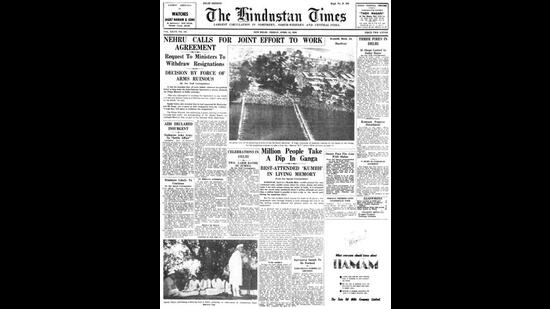
But for one incident which caused the death of 28 persons, the programme went through without a hitch although the control of the milling crowds imposed the greatest strain on the mela authorities.
It is gathered that a magisterial ioquiry has been ordered into the cause of the accident when two large crowds, one coming from the railway station and the other going after having a bath in the Brahma Kund tried to rush the barrier with the result that when one of the barriers was suddenly closed 28 persons were crushed to death against the iron bar.
The real attraction of the Kumbh Mela for the tamasha-minded folk was the procession of various akharas (spiritual centres). From time immemorial these akharas have enjoyed precedence over the general public in having a dip in the sacred pool. The sadhus of these akharas moved in procession with the glitter and glamour that would be the envy of rajas and maharajas. A score of elephants with silver howdahs and a dozen silver palanquins gave touch of pomp which pleased the crowds. The head of one of the akharas gave modern touch by using a jeep but did not complete the journey and had to abandon it.
NUDE SADHUS
Perhaps the most unique aspect of the mela is that among the processionists were about 2,000 nude sadhus with ash-besmeared bodies who walked in the presence of 2 million spectators. That none felt horrified and many devotees bowed their heads in reverence is explained by the fact that orthodox Hindus place the renunciation of worldly things as the highest ideal and the nude sadhus seem to them to symbolize that faith.
But not all who participated in the procession were genuine sadhus. Some worldly persons who have taken shelter in the various akhara headquarters put on saffron clothes for the day to have the privilege of a bath in the sacred pool in the style of the elite. For, the common people were held in check until all the akharas, according to the warrant of precedence fixed from time immemorial had their bath.
Since the adherents of this half a dozen akharas numbered about 1,50,000 they occupied the pool in turn for six hours. Thus it was not until 9 p.m. that the general public got the chance of having a dip in the Brahma Kund and bathing by them continued well past midnight. The mela area resounded throughout the day with cries of Ganga Mai Ki Jai.
The VIP’s who rode half a dozen elephants, and the common folk, 5,000 of whom rushed to the narrow over-bridge and occupied it contrary to instructions, had the grand-stand view of the mela. Considerable excitement was caused when an aeroplane of the Hindustan Times flew over the mela area ana took pictures of the crowd.
The mela arrangements were completely successful in the matter of providing shelter and food and keeping control on disease. The antimalaria measures were so effective that residents of Hardwar said that they had not known such relief from mosquitoes at any time. Old residents of the town stated that this year’s mela was the most elaborately arranged affair and that it had beer: the best-attended m living memory.


