E-Paper



Document vaccination status when testing for Covid-19: ICMR to labs
The Indian Council of Medical Research has directed hospitals and diagnostic centres to document the vaccination status of individuals being tested for Covid-19 infections. The data will be collected for further analysis, including breakthrough infections after two doses of vaccination. The advisory also dissuades needless testing, and recommends testing for symptomatic cases, at-risk contacts of confirmed cases and in hospitals for severe acute respiratory infection. Testing should not delay emergency procedures, and patients should not be referred to other facilities for lack of a testing facility.

 Prefer HTon Google


Hospitals and diagnostic centres must document the vaccination status of individuals being tested for Covid-19 infections, the Indian Council of Medical Research (ICMR) has directed.
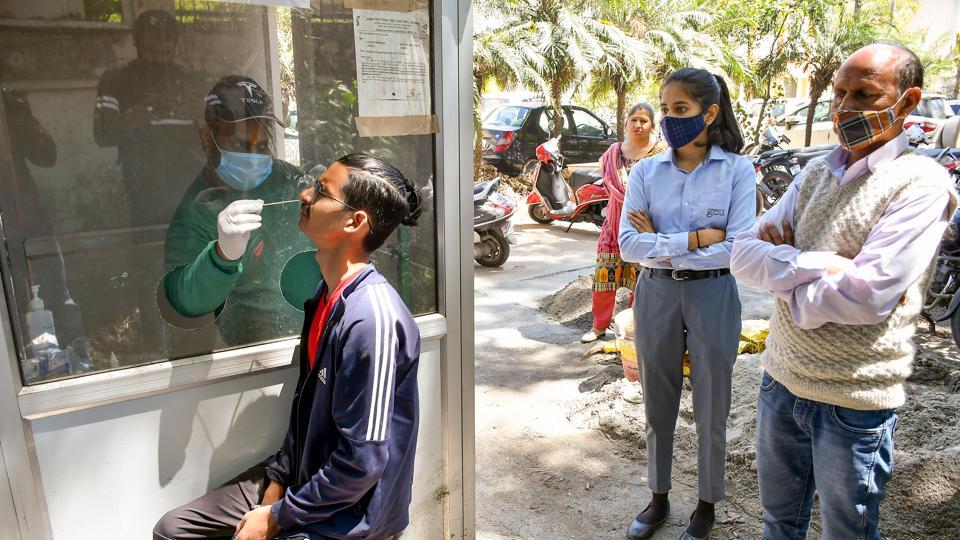
“The vaccination status of all individuals tested for COVID-19 must be entered into the Sample Referral Form (SRF) in the RTPCR app both for individuals tested by rRTPCR and RAT. This information is of critical importance,” the apex biomedical research body said in an advisory accessed by HT.
The data will be collected for further analysis, according to people familiar with the matter. The central government has not made public the rate of breakthrough Covid-19 infections so far in the country, although an earlier ICMR study found fewer hospitalisations (9.8%) and deaths (0.4%) in people having experienced breakthrough Covid-19 infection after two doses of vaccination, highlighting their efficacy.
“There may be no immediate use as such but the sub-data will be used for detailed analysis on vaccination and breakthrough infections, etc., for future use. It was already expected of labs to collect this data, but there were some that were not documenting it properly,” a government official said, requesting anonymity.
ICMR issued a revised advisory last month as well on purposive testing strategy for Covid-19 in India, which dissuades needless testing.
The scope for such testing was early detection of symptomatic cases for quick isolation and care; early detection of infections in the elderly and individuals with co-morbidities (diabetes, hypertension, chronic lung or kidney disease, malignancy, obesity, etc.) for quick care; and to detect and limit the spread of any new variant of concern or of interest circulating in the country.
In community settings, those who are symptomatic (cough, fever, sore throat, loss of taste or smell, breathlessness or other respiratory symptoms); at-risk contacts of laboratory confirmed cases such as people above 60, co-morbid, etc., need to be tested, according to the ICMR document. Also, wherever there is clustering of cases or unusual presentation of cases, samples mandatorily need to be lifted for testing.
In hospitals, all admitted cases for severe acute respiratory infection must be tested for Covid-19, along with 5% of the out patient department cases in hospitals suffering from acute respiratory infection, and influenza like illness, advises ICMR.
While the advisory said testing may be undertaken as per discretion of the treating doctor, it mentioned that no emergency procedure, including surgeries and deliveries, should be delayed for lack of a test.
“Patients should not be referred to other facilities for lack of a testing facility. All arrangements should be made to collect and transfer samples to testing facilities, mapped to the health facility. Asymptomatic patients undergoing surgical or non-surgical invasive procedures including pregnant women in or near labour, who are hospitalized for delivery, should not be tested unless warranted or symptoms develop,” it said.
Admitted patients have been advised to not be tested more than once a week. ICMR said that whole genome sequencing should be done for surveillance purposes and is not required to be undertaken for treatment.
Therefore, genome sequencing is to be performed only in a subset of positive samples as per recommendations of the Indian SARS-CoV-2 Genomic Surveillance Consortium.
Persons who came in contact with known cases of Covid-19 have been advised to wait for at least five days to get themselves tested for Covid-19.
“ICMR’s advisory is generic in nature and may be modified as per discretion of the state health authorities for specific public health and epidemiological reasons,” the document said.