
 E-Paper



Impact of Indian armed forces felt as far as Rawalpindi: Rajnath Singh
Rajnath Singh said that India's Operation Sindoor is not just a military action, but a symbol of India's political, social and strategic will.

 Prefer HTon Google


Union defence minister Rajnath Singh on Sunday said that the impact of India's armed forces was felt as far as Pakistan's Rawalpindi, where the headquarters of the Pakistani army is located. He said the Indian forces delivered to Islamabad a strong message by striking their military positions.
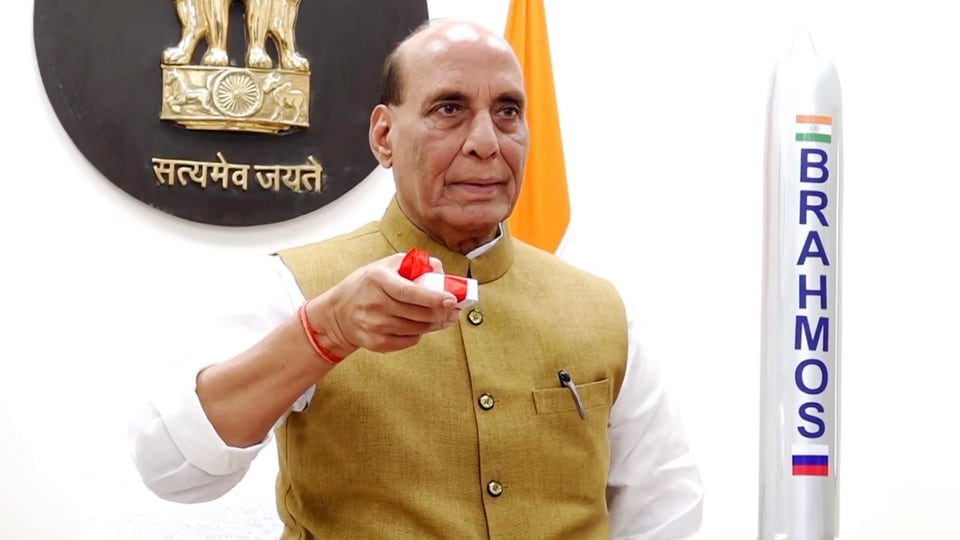
“The Indian Army has not only demonstrated valour and courage but also restraint, delivering a strong response by striking multiple Pakistani military positions,” Rajnath Singh said. Follow live updates.
“Our action was not limited to military posts near the border. In fact, the impact of India's armed forces was felt as far as Rawalpindi, where the headquarters of the Pakistani army is located,” he added.
Singh made the remarks during the inauguration of the BrahMos Aerospace Integration and Testing Facility at the Uttar Pradesh Defence Industrial Corridor in Lucknow. He inaugurated the facility virtually from Delhi.
During his address, Singh said that India's Operation Sindoor is not just a military action, but a symbol of India's political, social and strategic will.
“We showed that whenever India takes action against terrorism, even land across the border will not be safe for terrorists, their masters,” the defence minister said during the inauguration of the facility.
Also Read | Ceasefire after 4 days of fighting: What weapons did India, Pakistan use?
The ₹300 crore facility is a key part of the Uttar Pradesh Defence Industrial Corridor and represents India's commitment to self-reliant defence manufacturing, the Ministry of Defence said.
"It includes not only missile production but also testing, integration, and a materials complex for aerospace-grade components. A major leap toward #AtmanirbharBharat and a strategic boost to regional industrial growth," the Ministry of Defence said on X.
India-Pakistan ceasefire
India and Pakistan on Saturday agreed to immediately cease all hostilities across land, air, and sea, following four days of intense cross-border drone and missile strikes.
In press briefing, Misri said that the Director General of Military Operations (DGMO) of Pakistan had called his Indian counterpart at 3:35pm IST.
“The Director General of Military Operations of Pakistan called the Director General of Military Operations of India at 15:35 hours Indian Standard Time earlier today. It was agreed between them that both sides would stop all firing and military action on land, in the air, and at sea, with effect from 17:00 hours IST today,” Misri said.
Also Read | Pakistan’s dubious record casts shadow over ceasefire deal
As reported by Hindustan Times, Pakistan sustained its worst damage in the early hours of May 10, when the Indian Air Force struck eight military sites—including airbases, radar units, and ammunition depots—using air-launched precision weapons.
The IAF targeted military facilities in Rafiqui, Murid, Chaklala, Rahim Yar Khan, Sukkur, Chunian, Pasrur, and Sialkot. The overnight developments marked the fiercest exchange between the two militaries since India launched Operation Sindoor.
The strikes came in response to Pakistan’s aggressive attacks on Indian military infrastructure and civilian areas using fighter jets, unmanned combat aerial vehicles (UCAVs), and missiles.


