
 E-Paper



In a first, Supreme Court nixes collegium decision by a judicial order
Allowing the petition by two senior-most district judges and holding the plea to be maintainable, the top court nixed the collegium’s selection process carried out earlier this year

 Prefer HTon Google


The Supreme Court on Friday, for the first time, quashed a decision of the Himachal Pradesh collegium disregarding the candidature of two senior district judges for their elevation to the high court.
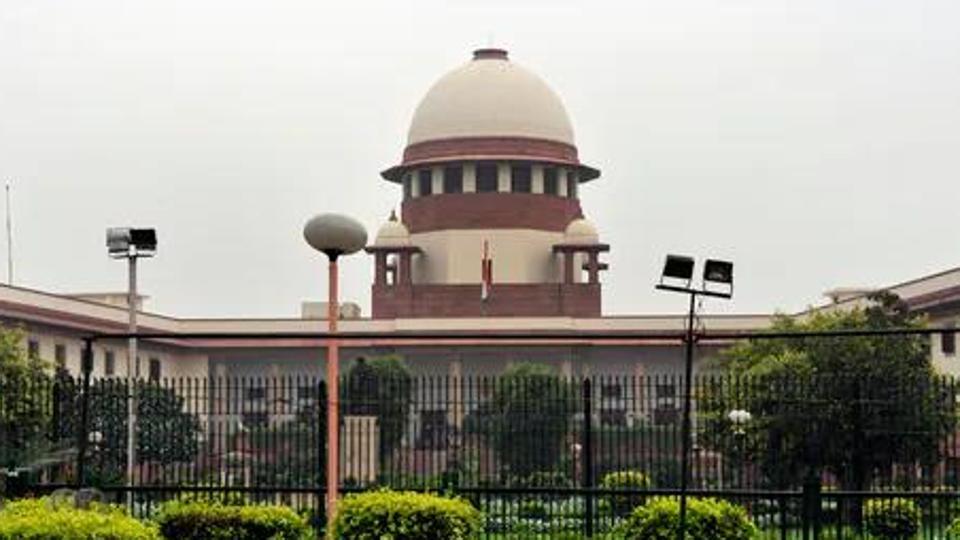
Allowing the petition by two senior-most district judges and holding the plea to be maintainable, the top court nixed the collegium’s selection process carried out earlier this year.
A bench comprising justices Hrishikesh Roy and Prashant Kumar Mishra held that the decision of the collegium was vitiated by lack of consultation because the chief justice of the high court individually made the decision not to reconsider the names of the two district judges.
Ruling that the chief justice of the high court ought to have made the decision in consultation with the other judges in the collegium, the bench quashed the decision over “lack of effective consultation”.
Also Read: Right to liberty key: SC on bail matters
The court directed that the high court collegium must now reconsider the names of the two district judges in accordance with the norms laid down for the selection mechanism under the memorandum of procedure (MoP), which guides the appointment of judges to the constitutional courts.
The ruling marks the first instance of the Supreme Court interfering with the decision of a collegium on the judicial side. Such matters are usually dealt with by the court administratively while exercising a hands-off approach in entertaining petitions against the collegium decisions.
District judges Chirag Bhanu Singh of Bilaspur and Arvind Malhotra of Solan had approached the top court in May, alleging that the Himachal Pradesh High Court collegium disregarded both their merit and seniority, as well as a specific recommendation from the Supreme Court collegium to consider their names for appointment as high court judges. Singh had earlier also served as a registrar in the Supreme Court on deputation.
In their joint petition, Singh and Malhotra sought a directive to the high court collegium to reconsider their names, citing a resolution passed by the SC collegium on January 4, 2024.
Senior advocate Arvind Datar, representing the district judges, argued that junior judicial officers had been recommended for the high court judgeship under the in-service quota, bypassing the petitioners who were more senior. He pointed out that despite the SC collegium’s advice and a subsequent communication from the Union law minister requesting reconsideration of Singh and Malhotra’s names, the Himachal Pradesh High Court collegium failed to act accordingly.
According to the petition, the SC collegium’s January 4 resolution and the Union Ministry of Law and Justice’s communication to the Himachal Pradesh High Court mandated that the petitioners’ names be considered. However, instead of adhering to this advice, the HC collegium allegedly ignored their candidacies and began seeking judgments from junior officers, effectively sidelining the more experienced judicial officers.
The petitioners argued that the actions of the HC collegium violated their constitutional right to be considered for the position, given their “unblemished judicial track record,” merit, and seniority.
The plea pointed out their names were initially recommended by the HC collegium last year but were deferred by the SC collegium in July 2023. The SC collegium later remitted their names for reconsideration on January 4, 2024, but the HC collegium reportedly ignored this directive last month, recommending the names of two junior officers instead.
The petition claimed that the process adopted by the high court collegium is “procedurally and substantially vitiated” and contradicts established constitutional conventions. It seeks the Supreme Court’s intervention to stay the consideration of the junior judicial officers’ names by the SC collegium until the grievances of Singh and Malhotra are addressed.
By sidelining the senior judges and promoting junior officers, the petitioners asserted that the HC collegium’s actions undermine their constitutional rights, including the right to be fairly considered for the position of high court judge.



