
 E-Paper



In Dharavi, cramped quarters and squalor make Covid-19 fight difficult
The neighbourhood also has 91 shops, all of which have been ordered shut. On Thursday, an additional 2,500 people were home-quarantined, and will probably be tested for the virus.

 Prefer HTon Google


Mumbai’s overworked public health workers have a new, daunting challenge on their hands--Dharavi.
After a 56-year-old garment shop owner died of the coronavirus disease (Covid-19) in India’s largest slum on April 1, two teams of 50 officers and volunteers arrived in Dharavi to spread awareness of Sars-Cov-2, the virus that causes the disease, and to quarantine 70 high-risk residents of the eight-building Slum Rehabilitation Authority complex in which the man stayed.
Click here for the complete coverage of the Covid-19 pandemic
The neighbourhood also has 91 shops, all of which have been ordered shut. On Thursday, an additional 2,500 people were home-quarantined, and will probably be tested for the virus.
On Thursday morning, just as the two teams plus 800 more community health volunteers were getting ready for another busy day in Dharavi, a second case emerged – a municipal conservancy worker from south Mumbai who was assigned to the area tested positive for Sars-Cov-2. Twenty of his friends and co-workers were quarantined.
Neither the garment shop owner nor the conservancy worker has a recent travel history, according to information released by the city’s health department.
“It is going to be an uphill task identifying asymptomatic patients in an area that has more than 850,000 people,” said Kiran Dighavkar, assistant commissioner of the Brihanmumbai Municipal Corporation and the officer in charge of the city’s G ward, where Dharavi is situated.
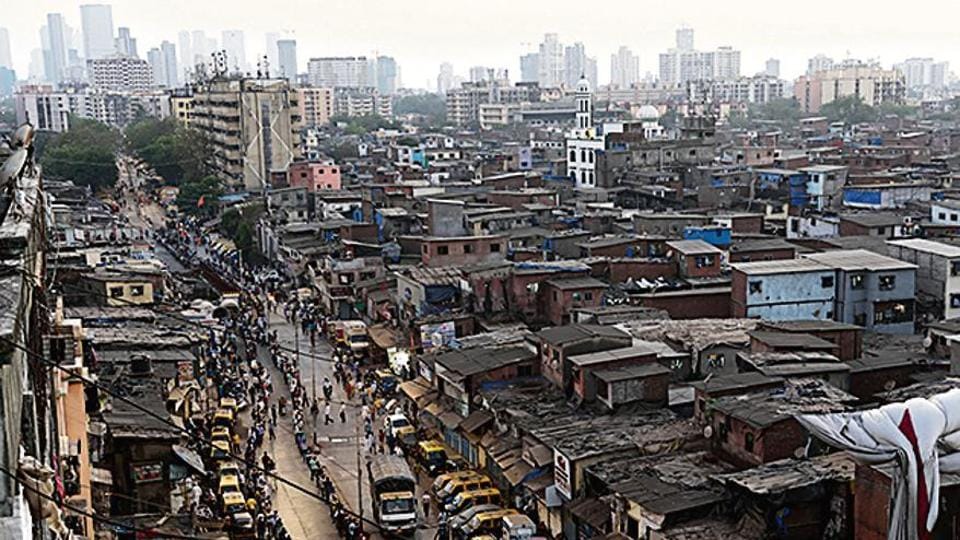
It is not just about Dharavi’s population. Its inhabitants live in some of the most cramped spaces in the country. In an area measuring 2.1 sq km, the slum has over 57,000 shanties, huts and small flats, almost all of them illegal.
Its estimated population density – 66,000 people per square kilometre – is more than double that of Mumbai (32,303 people per square kilometre), the fifth most-densely populated city in the world, according to a United Nations Population Prospects study released in July 2019.
Mumbai is also the city worst hit by Covid-19 in India, with at least 238 people having teste positive and nine deaths reported as of 6 pm on April 2. With private laboratories also testing for Covid-19, this number will only rise, health officials said.
Also Read: ‘Lockdown in India was early, far-sighted and courageous’: WHO envoy
Mumbai’s – and Dharavi’s – population numbers make social distancing – one of the key preventive measures recommended by the World Health Organisation (WHO) – almost impossible to implement.
“It is almost certain that the cases will spike in Dharavi due to overpopulation,” said Baburao Mane, a former state legislator from Dharavi. “There are, on average, 10-12 people living in thousands of 250 sq ft huts. As summer approaches and the temperature soars, it will be almost impossible to prevent home-quarantined people from coming out of their cramped spaces.”
For Dharavi, BMC has put a special plan in place. It has created two teams of 25 people each that work round the clock in two shifts. These teams include a sanitary inspector, medical officers, police personnel and community volunteers. In addition, the ward officer has on board 800 community health volunteers whose primary responsibility will be to trace vulnerable residents such as senior citizens, patients with respiratory ailments and pregnant women.
Also Read: Coronavirus: How world reached a million cases in 93 days
“I have sought permission to convert the Rajiv Gandhi District Sports club into a quarantine facility with 300 beds,” said Dighavkar. “Once approved, we will shift high-risk people {to the facility}.”
The primary concern of health officers is the people’s cooperation. “People in slums don’t cooperate. The statements given by the dead man’s wife and children have confused us. We are unable to trace his contacts. We don’t even know if he had visited his shop during the lockdown. Despite symptoms, has he roamed around the slum? The family can’t confirm his activity, and we don’t know how many people he may have infected.”
Sanitation and water supply are the other issues . In line with WHO recommendations, the Maharashtra state health department has advocated regular hand-washing with water and soap to avoid any possible transmission of Sars-Cov-2. In Dharavi, this is a distant dream.
Neena More, a local social activist ,said the slum averages one toilet per 500 people and most residents use the nearby Mahim creek for urinating and defecation.
“Every morning, people stand in long queues to use the toilets making them susceptible to the infection,” she says.
And then there is economic desperation. Almost every family in Dharavi faces the prospect of spending more than two months without wages on account of the nationwide lockdown and shutting of private business establishments.
Shibani Salvi, a 26-year-old mother of two, lost her source of income in the third week of March. Prior to the lockdown, she earned Rs 20,000 a month working as a maid in five flats in the neighbourhood. “Now,” she said, “I cannot even go out of my house to collect my salary even though one of my employers called me. We have enough food to last only three more days. I don’t have money to buy even masks or sanitisers for my family.”
One of Salvi’s employers is Divya Dhar, a 36-year-old designer who stays with her mother and two-year-old daughter in the affluent Shivaji Park. Even after the lockdown began, she would drive to Dharavi to fetch her maid and cook.
Starting On Wednesday – the day the news broke about the first Covid-19 fatality in Dharavi – Dhar stopped the practice. “I can’t risk {the health of} my daughter, who is already an asthma patient. I will get tested. Until then, I have locked myself in a room,” Dhar said.
Drinking water is another of Dharavi’s challenges. Qamruddin Sheikh, who runs a non-government organisation (NGO) named Bal Vikas Shikshan Sanstha in the area, said that in an area that has scant drinking water, it was impractical to think residents will keep washing their hands.
“People are using handkerchiefs and cotton masks, both of which are of no use to stop the virus transmission. BMC should provide quarantined people with proper masks and hand sanitisers,” he said.
The primary challenge for health officers will be tracing the people who were in close contact with infected patients. One health officer HT spoke to said on the condition of anonymity that “Many of the shops in Dharavi are illegal, and people do not share information openly. Getting accurate information here is the work of a full-time detective.”
According to the ward officer, BMC has been providing rice, wheat and dal to those in home quarantine, but residents HT spoke to said the rations do not include essentials such as oil and vegetables.
Sagar Kamble, a Dharavi resident, said: “Almost 80% of the slum-dwellers here are uneducated and do not understand the gravity of the situation. Only a few gated colonies in the area have locked their premises; the rest of the population is roaming around freely.”
Mane said this was the main reason he has been asking for compulsory screening of all of Dharavi’s residents. “BMC needs to screen all the locals and if needed, send them back to their respective villages using available public transport. There is no other way to enforce social distancing or to contain the virus,” he said.
But this is not possible, according to the BMC. The city’s health officers have overruled the possibility of running universal tests in Dharavi. “There are just not enough test kits,” said a health officer. “There is a shortage of masks and sanitisers in the slum, so with the help of NGOs and philanthropists, we are trying to procure protective masks for quarantined people.”
He added: “There is also large-scale ignorance. When our volunteers counsel residents on the importance of sanitation and social distancing, many from the Muslim community respond by saying their immunity is high as they eat meat. It’s not going to be easy at all.”


