
 E-Paper



In Telangana, BJP pitch to mark ‘Liberation Day’ gets louder
This year, Union home minister and former BJP national president Amit Shah has been invited to address a public meeting in Telangana’s Nirmal district for the same reason.


Ever since Telangana was carved out of Andhra Pradesh in 2014, the Bharatiya Janata Party has been demanding that the state government officially observe ‘Liberation Day’ on September 17 -- the day the princely state of Hyderabad (of which Telangana was a part) was annexed to India in 1948.
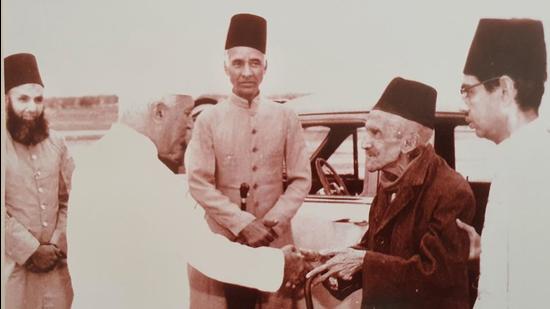
With each year, BJP’s voice to observe ‘Telangana Liberation Day’ is getting shriller. This year, Union home minister and former BJP national president Amit Shah has been invited to address a public meeting in Telangana’s Nirmal district for the same reason. “There would be a mega rally at Yedi Udala Marri in Nirmal district which the home minister will address and we would again demand celebration of September 17 as Liberation Day from the Nizams,” Telangana BJP president Bandi Sanjay said on September 8.
The Hyderabad princely state was the last to join the Indian union on September 17, 1948. It was made a part of India through Operation Polo, a military operation led by JN Choudhuri from the Indian army. What the BJP primarily raises is the violence unleashed on people by the Razakars, a militia led by Qasim Razvi, the then president of the Majilis-e-Ittehadul Muslimeen (MIM), especially in certain parts of the state before its annexation to India.
The demand to observe ‘Liberation Day’ comes from the BJP though the party did not exist at the time of the annexation; nor did its parent organisation, the Rashtriya Swayamsevak Sangh (RSS), have any major role to play in what transpired then. The BJP has been celebrating September 17 as Liberation Day since creation of separate Telangana state and claiming that a large number of Hindus were killed in clashes with militia.
Soon after independence, the last Nizam of Hyderabad, Osman Ali Khan (1888-1967), began negotiating with the Indian government about his state’s future. During his rule, the erstwhile state of Hyderabad (which was trifurcated in 1956 on linguistic lines) comprised 16 districts, half of which were in Telangana, five in Maharashtra and three in Karnataka.
It was a multilingual state, with half the population speaking Telugu (Telangana). Hindus in the state comprised about 85% of the population, while about 10% were Muslims (with a Muslim elite occupying a good chunk of the administration). Problems arose when Khan refused to join India or Pakistan and tried to stay independent in 1947, a provision which the British government allowed for rulers of princely states. What complicated the matters was a Communist Party of India-led peasant uprising against state-appointed jagirdars (feudal landlords) in 1946, which is called the Telangana Armed Struggle. This continued even after Operation Polo till 1951, when the CPI leadership called it off and decided to participate in the first general elections of 1951-52.
“What is this liberation day? Where was the BJP then in 1948? What right do they have to even speak about that? Police action was also set forth as the Nizam and the Indian government stuck a deal, because the Nizam’s government could not handle the Telangana Communist movement. They are now trying to create communal tensions,” said Mohd Khaja Moinuddin, a 93-year-old CPI veteran from Siddipet.
Moinuddin had gone underground in 1947-48, as the CPI was banned (along with the Congress) by the Hyderabad state government in the days preceding Operation Polo. The senior citizen, who is a freedom fighter, recalled that Telangana Armed Struggle was very successful, and said that the CPI was banned till 1951. “The Indian army’s troops remained in Telangana after 1948 to suppress the CPI’s movement,” he added.
The Armed Struggle (1946-51) is also something that is largely forgotten though it was the CPI which actually fought against the ruling landlords under the Nizam, especially in rural areas, said Moinuddin, who fought alongside CPI legends from Telangana like Ravi Narayan Reddy (former Lok Sabha MP) and Makhdoom Mohiuddin. “In fact, we were the ones fighting with the Razakars in the districts of Telangana,” he claimed.
The Indian government, led by then Prime Minister Jawaharlal Nehru and then home minister Sardar Vallabhai Patel, were wary of the situation with Hyderabad after independence. In fact, both sides even signed the ‘Standstill Agreement’ on November 29 to sort out the issue through negotiations. The Indian government was also aware of the Communists’ challenge in Telangana.
Historian and author of ‘VP Menon: The Unsung Architect of Modern India (2020)’, Narayani Basu, whose book goes into the annexation of princely states into India, said everyone on the Indian side, ranging from Nehru to Patel, was wary of the issue regarding Hyderabad.
“In fact VP Menon was one of the trustees of the Nizam’s wealth on behalf of the government of India. Sardar Patel deeply mistrusted the Nizam, who was also too weak to deal with what was happening. He had allowed the MIM (and Razakars) to gain a lot of power.,” Basu said. On the discussions between India and Hyderabad that preceded Operation Polo, Basu pointed out that there were several proposals in the early stages during negotiations after independence in 1947.
The BJP in Telangana has been taking an aggressive stance, and is now being looked at as a challenger to the ruling Telangana Rashtra Samithi (TRS), led by K. Chandrasekhar Rao (KCR).
“In Karnataka and Maharashtra, September 17 is celebrated officially, and we are demanding the same be celebrated here. Many people were affected under the Nizam, so officially it should be held as Telangana Liberation Day. People who were killed should be remembered,” said NV Subhash, BJP spokesperson from Telangana.
He added that be it CPI leaders or anyone else, whoever fought in the “struggle” for Hyderabad should be remembered. “The whole of Telangana was part of Hyderabad state, so why not? When we come into power…” Subhas added.
In the aftermath of Operation Polo, Hyderabad state had a military governor for 18 months, after which the state went to polls during the first general elections of 1951-52. While the Congress, with Burgula Ramakrishna Rao as chief minister, came to power in the 175-member assembly of the state, the CPI (which contested under the banner of People’s Democratic Front) won as many as 42 of 77 seats in Telangana.
The Hyderabad state was, however, trifurcated in 1956 on linguistic basis, and Telangana was merged with the Telugu-speaking coastal Andhra and Rayalaseema regions of the Madras Presidency to create the joint Andhra Pradesh state. The joint state of AP existed till 2014, till Telangana was bifurcated as a new state.


