
 E-Paper



10 things to know about Covid-19 R-value in India and its states
Karnataka has an increasing trend of Covid's reproduction number. Delhi has a stable trend and Maharashtra has a decreasing trend, according to health ministry data.


Reproduction or reproductive number, known as the R-value of Covid, has become a closely followed measurement across the world and in India. It is a scientific concept which is the average number of new infections generated by one infected individual during the entire infectious period. One infected person is able to spread the SARS-CoV-2 infection to over 200 persons, but R factor is the real number of how many people are being infected from one affected person. The Union health ministry this week raised alarm over the R factor of eight states which are more than the national average.
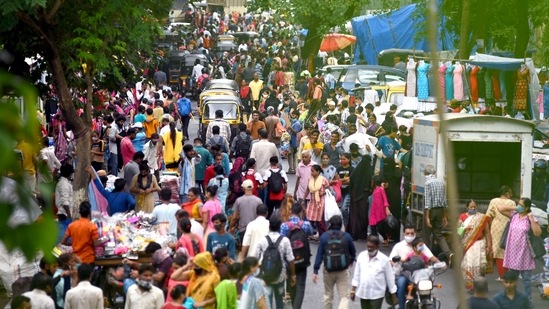
Delhi, Chennai, Kolkata, Bengaluru have Covid R-value over 1, reveals study. What it means
10 things to know about R-value and what in an increasing trend of R-value
1. India's R-value, according to the health ministry data published this week, is 1.2. This means 100 infected people in India are infecting around 120 people.
2. As it is a mathematical concept, the value is dynamic. It reflects changes every week.
3. R-value of 1 and below is considered safe as that means that 100 people are infecting either the same number of people or less. This is an indication that the number of new infections is not more than the number of existing infections.
4. The United States, Canada, Australia also have an R-value of 1.2 which explains why there is a global rise in the number of new Covid infections, which is being seen as the tip of a fresh wave.
5. According to health ministry data, Himachal Pradesh, Jammu & Kashmir, Lakshadweep, Tamil Nadu, Mizoram, Karnataka, Puducherry and Kerala have high reproductive numbers.

6. Nagaland, Meghalaya, Haryana, Goa, Jharkhand, Delhi, West Bengal, Andhra Pradesh, Maharashtra have a reproductive value of 1.
7. States which are reporting a higher R-value are also reporting an increasing trend that is the transmission of the infection to more and more people are taking place at a fast rate.
8. Decreasing trend suggests that though the R-value might be 1, the potency of transmission from one infected person to another is slowing down. This may happen if there are local restrictions, Covid appropriate behaviour etc.
9. For example, Maharashtra and Delhi both have an R-value of 1. But in Maharashtra, it showed decreasing trend, while in Delhi, it was stable.
10. The transmission and its rate is crucial to indicate the rise and fall of a wave. It also indicated the chances of mutation of a strain as the more transmission happens, the virus gets more chances to mutate.


