
 E-Paper



Piped water now in 2/3 rural households in India: Government data
The mission’s upcoming focus will be on speeding up “laying of water infrastructure in some states which are lagging”, aspirational districts

 Prefer HTon Google


India crossed a key milestone this week, according to government data — two of every three rural households in the country now have a piped water connection.
Read here: Free 20 litre water per day at 500 water ATMs: Delhi CM Kejriwal
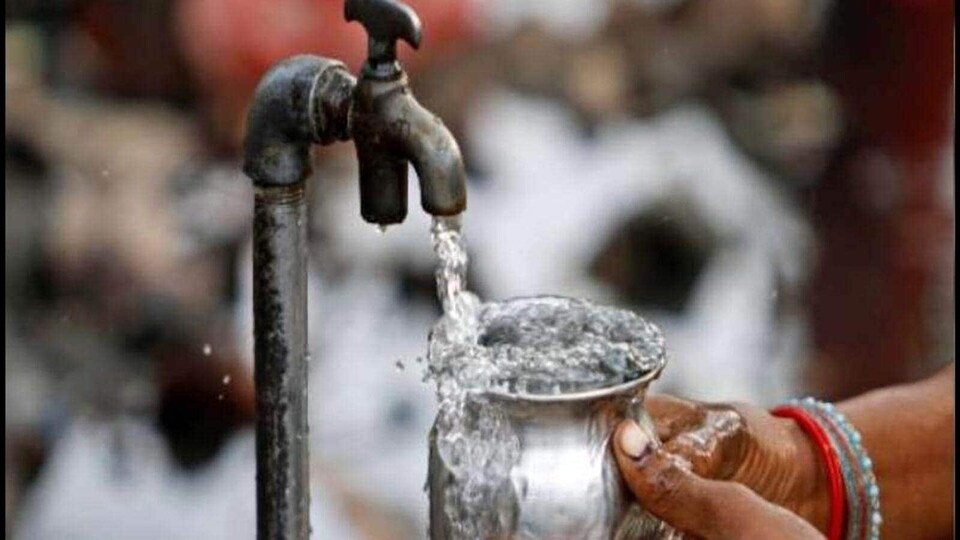
On the dashboard of the Union government’s flagship drinking water programme, Jal Jeevan Mission, as on Thursday, 128.5 million rural households, or 66.80% of the total number of such households in the country, now have a functional water tap connection. A baseline survey showed that less than 17% or 32.3 million households had a tap connection in 2019, when the mission was launched.
The scheme aims to connect each of India’s 194.2 million rural households with tap water connections by the end of 2024. Under the mission, a family is provided 55 litres of clean water per day per person.

According to a 2018 NITI Aayog report, India is undergoing the worst water crisis in its history and nearly 600 million people face high to extreme water stress. According to a National Sample Survey Organisation survey, in Jharkhand, it takes women 40 minutes one way, without taking into account the waiting time. In Bihar, it’s 33 minutes. Rural Maharashtra clocks an average of 24, and Uttar Pradesh 38 minutes. The Jal Jeevan Mission, launched by Prime Minister Narendra Modi in 2019, aims to rid rural India of this drudgery.
The mission’s upcoming focus will be on speeding up “laying of water infrastructure in some states which are lagging”, aspirational districts, which have lower-than-average socio-economic indicators, and also international collaboration on technology solutions in the water sector, an official said, requesting anonymity.
On July 31, Union minister of state for Jal Shakti, Prahlad Singh Patel, said in a written reply in Rajya Sabha that nearly 55% of Scheduled Tribe rural households in the country had been provided with a tap water connection under the mission till July 26, 2023.
The United Nations Office for Project Services (UNOPS) has entered into a partnership with the Denmark government to support the Jal Jeevan Mission in Uttar Pradesh, the official cited above said. The state’s coverage of rural households under the scheme stands at 57.39% as on date.
The goal of the partnership between the Denmark and UNOPS is to provide “strategic technical support to Jal Jeevan Mission”, a Jal Shakti ministry note seen by HT states. “ UNOPS shall be focusing on instituting scalable delivery models in focused 11 water-scarce districts of Uttar Pradesh in Bundelkhand and Vindhya regions as per the priorities laid down in the operational guidelines of Jal Jeevan Mission,” it says.
Under the mission, 30% weightage is assigned for difficult terrains and 10% weightage is assigned for population residing in SC/ ST dominated areas while allocating the funds to prioritize coverage in these areas.
The Jal Jeevan Mission is one of the largest infrastructure-building programmes in the country, which involves installing source-to-household water tap connections. Under the programme, fund-sharing pattern between the Centre and States as well as Union Territories (UTs) is 100% for UTs without a legislature; 90:10 for northeastern states and UTs with a legislature; and 50:50 for all other states.
Experts have cautioned that while connecting households is a critical step, the real challenge is ensuring the long-term availability of water.
“The crux of the matter with the Jal Jeevan Mission is the issue of sustainability. While connecting households with a water source is the easier part, past experience has shown that maintaining sustainability of the source is critical for longer-term availability of water,” said Avadh Kumar, a former water policy consultant with the erstwhile Planning Commission.
Read here: Jal Jeevan Mission achieves 60% of its target, says govt
The official cited in the first instance said the programme has created direct and indirect employment in rural areas. “A preliminary survey by IIM Bangalore has assessed that about 1,47,55,980 person-year of employment can be created during the five-year period of implementation of JJM”, adding “this works out to be an average of 29,51,196 people employed in each year for the full year in the construction phase of the mission”.


