E-Paper



India backs early elections in Bangladesh, expresses concern at ban on Awami League
Bangladesh has banned the Awami League and its affiliates under the Anti-Terrorism Act till the trial of party leaders and members are completed

 Prefer HTon Google


NEW DELHI: India on Tuesday expressed concern at the Bangladesh interim government’s decision to ban all activities of former premier Sheikh Hasina’s Awami League party and called for the early holding of free, fair and inclusive elections in the neighbouring country.
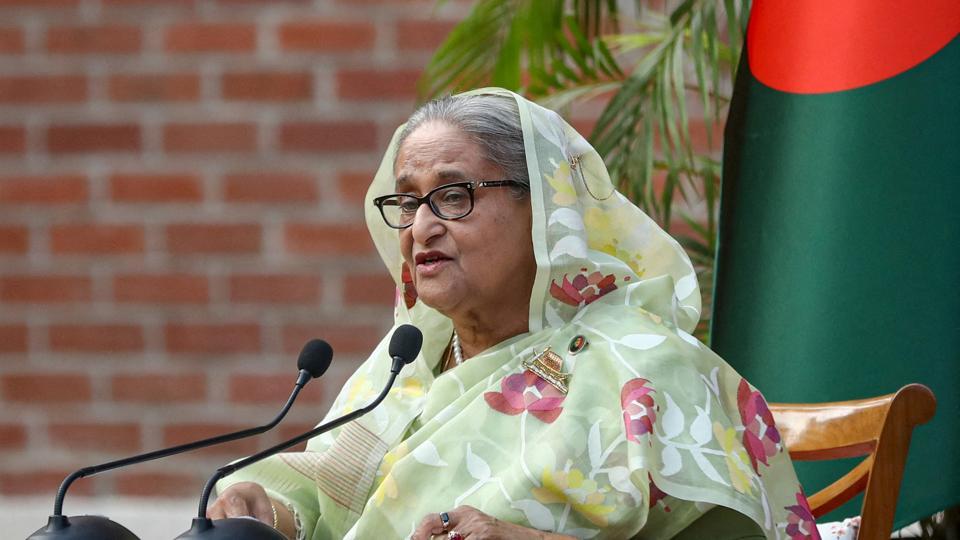
The interim cabinet headed by Nobel laureate Muhammad Yunus decided to ban the Awami League under the Anti-Terrorism Act on May 12. Hasina has lived in self-exile in India since she fled Bangladesh last August after her government was ousted by a student-led uprising.
Bangladesh’s interim government has said all activities of the Awami League and all its affiliated bodies and entities would be banned until the trial of party leaders and members, including Hasina, are completed by the International Crimes Tribunal.
Also Read: Ban on Awami League is bad news for democracy | HT Editorial
When external affairs ministry spokesperson Randhir Jaiswal was asked at a weekly media briefing about the development, he replied: “The ban on the Awami League without due process is a concerning development.
“As a democracy, India is naturally concerned at curtailment of democratic freedoms and shrinking political space. We strongly support the early holding of free, fair and inclusive elections in Bangladesh,” he said.
Over the past few months, the external affairs ministry has repeatedly said that India stands for a “democratic, inclusive and prosperous Bangladesh”. The two sides have also clashed repeatedly over the issue of the interim government’s handling of attacks on Bangladesh’s minorities, especially Hindus.
Shortly after the external affairs ministry expressed concern at the ban on the Awami League, Yunus’s spokesperson Shafiqul Alam said in a statement that the ban is necessary to protect Bangladesh’s national security and sovereignty, ensure the safety of activists who participated in the movement against Hasina’s government, and to safeguard plaintiffs and witnesses of the International Crimes Tribunal.
The Awami League destroyed Bangladesh’s democratic fabric, “severely squeezed our political space and compromised our sovereignty during its 15-year-long” rule, he said.
Alam added that Bangladesh’s elections are “entirely our internal matter” and called on other countries to “respect the sovereign will of our people in matters relating to elections”. He said the Awami League “resorted to grossly farcical elections” and damaged electoral processes. “We are engaged in a reform process to rebuild our democratic system,” he said.