
 E-Paper



India called Pakistan's 'nuclear bluff' during Operation Sindoor, says Vice Admiral AN Pramod
Speaking of future challenges, Vice Admiral AN Pramod said India will not merely respond, but shape the battle space from the outset.

 Prefer HTon Google


By attacking the terror hubs in the heart of Pakistan, India effectively called the bluff on Islamabad's nuclear blackmail, Vice Admiral AN Pramod said on Thursday.
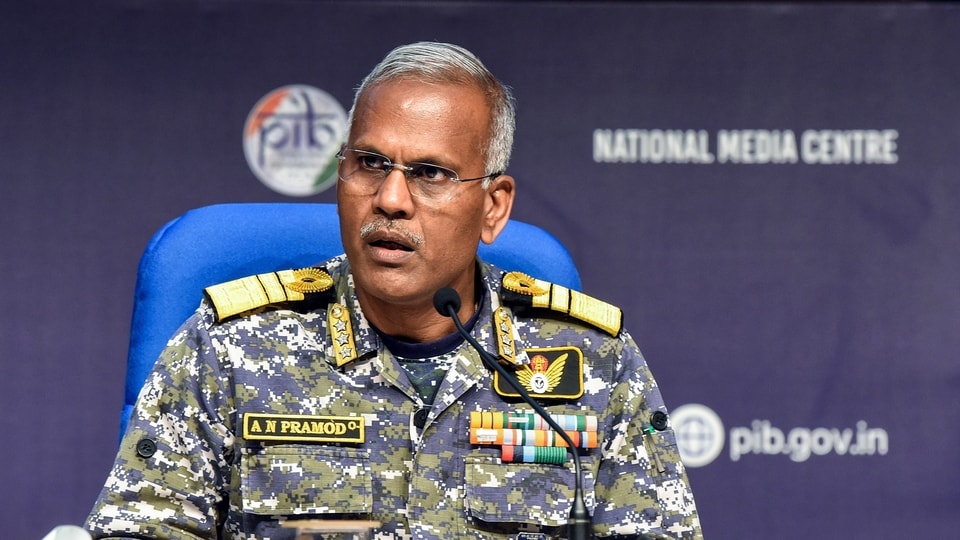
While speaking on the anniversary of Operation Sindoor, the Director General Naval Operations said that while the operation against Pakistan was a proof of calibrated resolve, the next response will be about sustained overmatch.
"By striking the terror hubs in the heart of Pakistan using long-range precision weapons, India effectively called the bluff on Pakistan's nuclear blackmail. The growing relevance of uncrewed and autonomous systems, as seen in the recent conflicts, reinforces the need for accelerated integration into our operational constructs," Pramod said.
The nuclear bluff factor has been reiterated by India time and again. Defence Minister Rajnath Singh, while slamming Pakistan as the "epicentre of International Terrorism", said India did not fall for the "bluff" of a nuclear attack.
Also Read: 9 terror camps, 11 airfields, 13 aircraft: India lists Pakistan losses on Op Sindoor anniversary
In the military operations starting May 7, 2025, India struck deep into Pakistani territory in a coordinated operation, targeting nine high-value terrorist launch pads across Pakistan and Pakistan-occupied Kashmir (PoK), dismantling hubs of Lashkar-e-Taiba, Jaish-e-Mohammed, and Hizbul Mujahideen.
India remains prepared for future operations
AN Pramod said the operation reflected India's strategic resolve, operational preparedness and growing indigenous defence capabilities. He further said India remains focused on inducting niche capabilities and constantly reviews concepts of operations to remain ahead of the adversary.
"The performance of indigenous ships such as the aircraft carrier Vikrant, Kolkata and Visakhapatnam class destroyers validated the Indian Navy's investment in indigenous capability, blue water readiness and integrated war fighting, thus reaffirming Atmanirbharta as a critical enabler for operational success," he said.
Speaking of future challenges, he said India will not merely respond, but shape the battle space from the outset.
Also Read: 'Sirf hungama khada karna maqsad nahi': Team Operation Sindoor's big message to Pakistan
"If Operation Sindoor was proof of calibrated resolve, our next response will be about sustained overmatch. If challenged again, we will not merely respond, we'll shape the battle space from the outset," he added.
India destroyed 13 Pakistani aircraft and struck 11 airfields
Indian officials also laid out the scale of damage inflicted on Pakistan during Operation Sindoor, with Deputy Chief of Air Staff, Air Marshal Awadhesh Kumar Bharti, saying that during the 2025 strikes, Indian forces "destroyed 13 Pakistani aircraft" and struck "11 airfields".
"We struck and decimated their 9 terrorist camps on 7th May. The proof is there for everybody to see. We struck 11 of their airfields. We destroyed 13 of their aircraft either on the ground or in the air, including one high-value airborne asset at a record distance of 300 kilometres plus," Awadhesh Kumar Bharti said.


